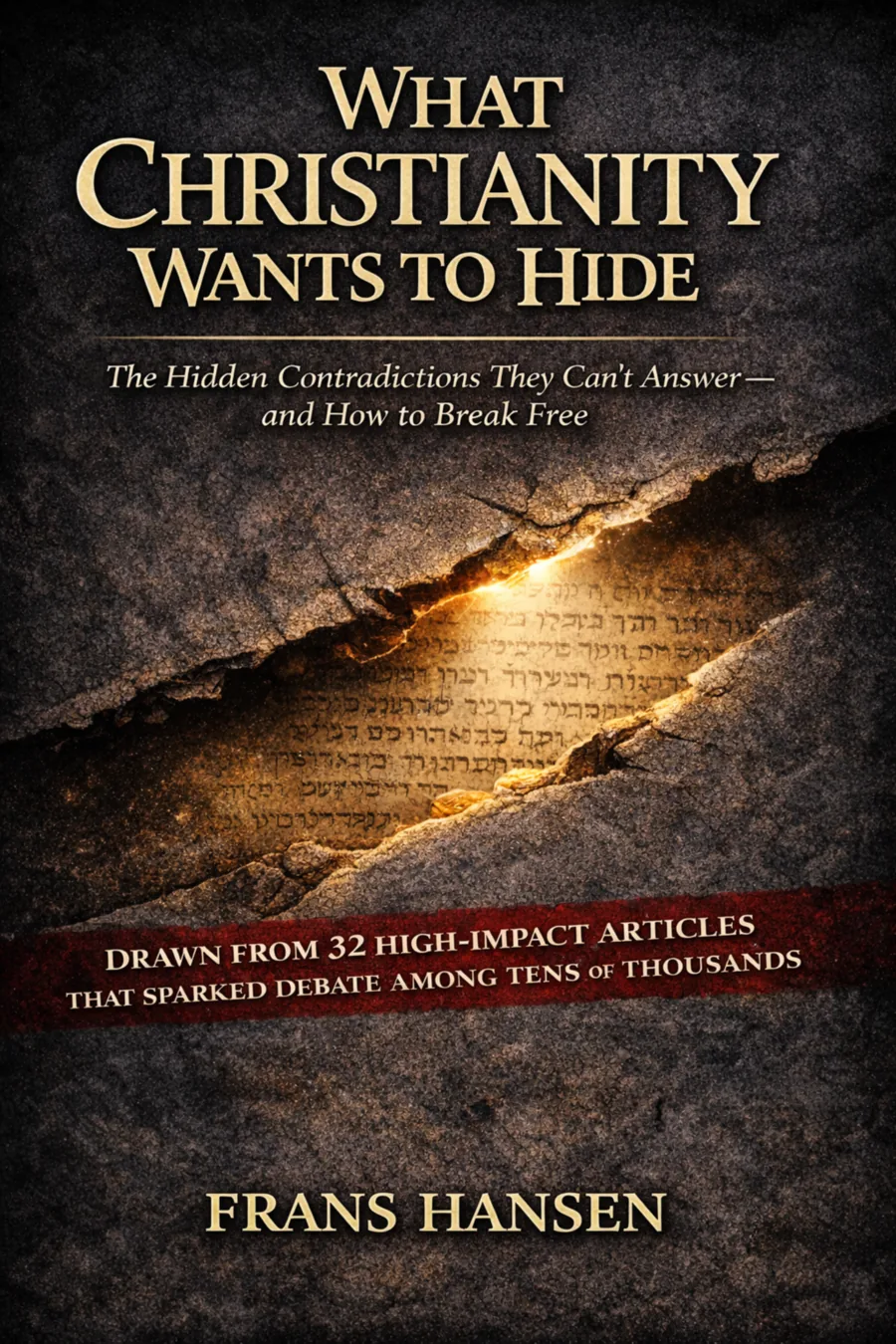
High reader demand
What Christianity Wants to Hide
A hard-hitting Torah-first investigation of Christianity’s core claims. Exposes covenant rupture, mistranslations, false continuity, and missionary deception.
See the book
Test the claim. Read the evidence. Decide for yourself.
FransHansen.com tests Christian claims against Torah, Hebrew wording, context, the wider Tanakh, and observable fulfillment. Start with the question in front of you—not with a catalogue.
Evidence first. Book second. No claim gets a shortcut.
Start with the question
These routes take you to the evidence first. From there, continue to the full investigation only if you need it.
Proven reader demand
These books receive priority because current sales and reading data show active demand. The catalogue remains available, but not every title needs equal homepage weight.
High reader demand
A hard-hitting Torah-first investigation of Christianity’s core claims. Exposes covenant rupture, mistranslations, false continuity, and missionary deception.
See the book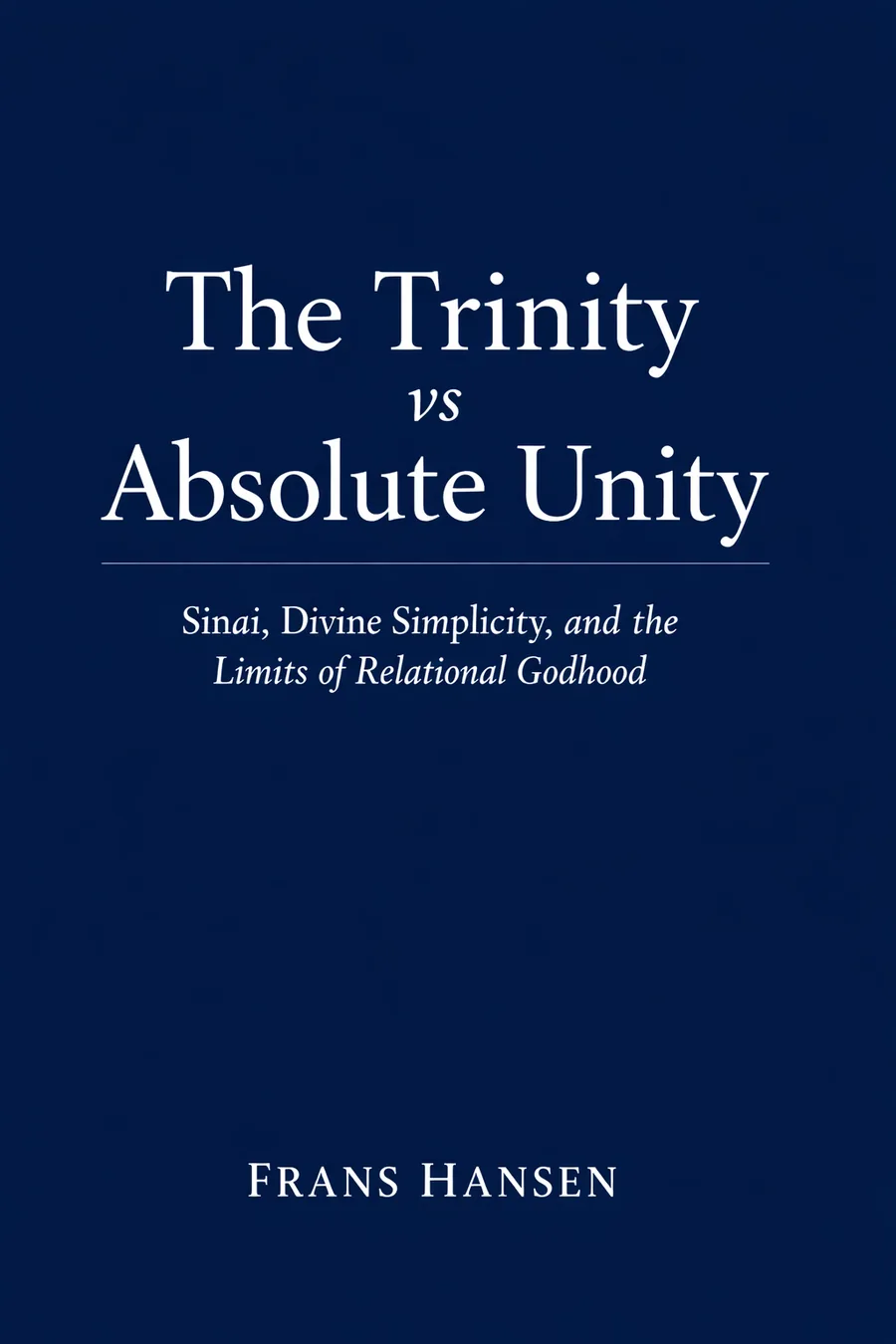
Strong current reading
A rigorous 150,000-word investigation asking whether Trinitarian doctrine coheres with the ontological revelation at Sinai—tested under divine simplicity.
See the book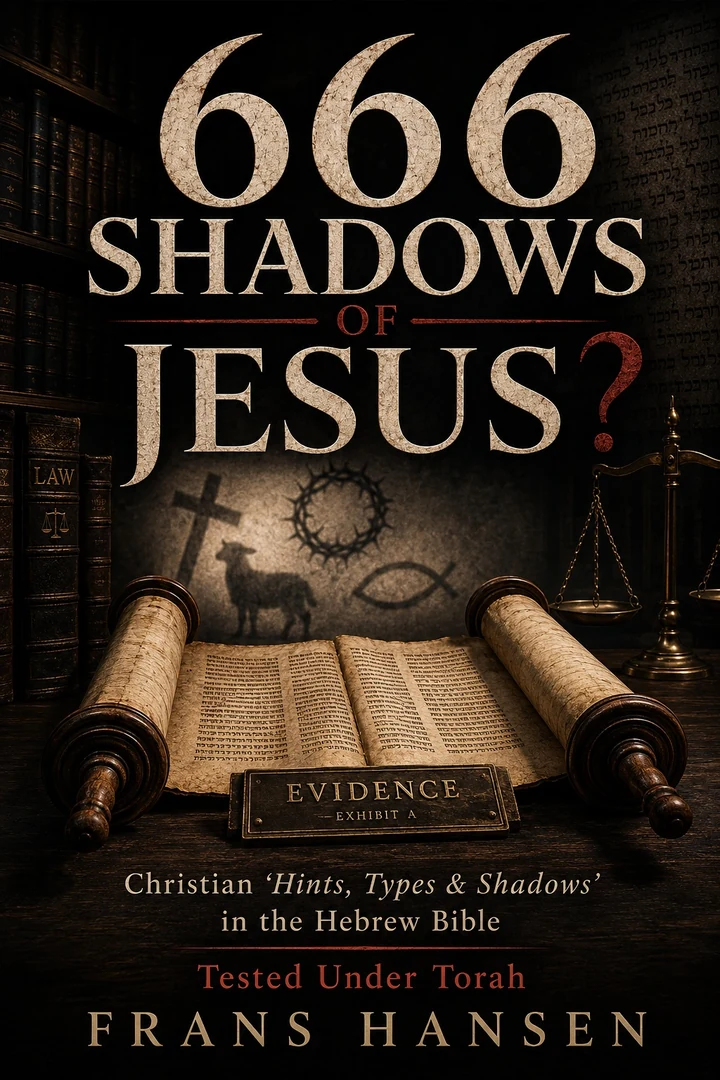
Fresh paperback demand
A flagship Torah-first audit of 666 Christian hints, types, shadows, parallels, codes, and prooftexts tested under the Hebrew Bible’s own covenantal rules.
See the book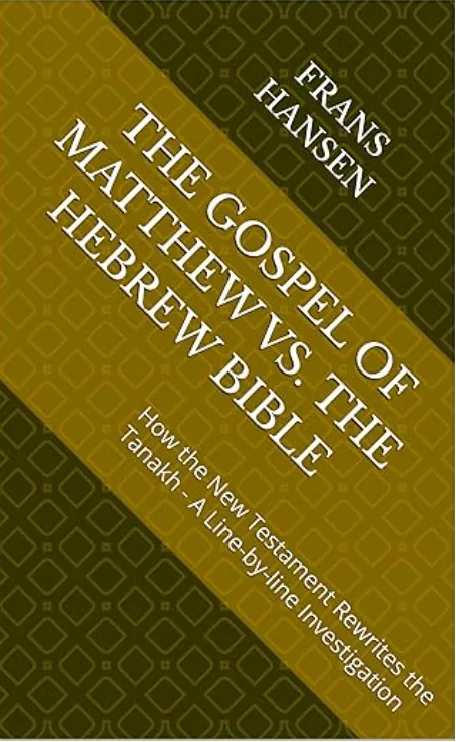
Established demand
Follow Matthew's quotations and fulfillment claims back to their Hebrew Bible context.
See the bookThe method behind the books
The Seven Gates are not where a new visitor has to begin. They are the method behind the evidence: text, immediate context, original audience, Torah authority, the wider Tanakh, public outcome, and burden of proof.
Choose the depth you need
Use a focused evidence page when you have one claim in front of you.
Find a claimUse the blog when you want the longer argument, sources, and context.
Read the researchUse the books when you want the full case rather than one disputed text.
Choose a bookNot sure where to begin?
You do not need to understand the whole site first. Choose the verse, doctrine, or question in front of you. The site will take you from evidence to the full investigation.
Choose my route