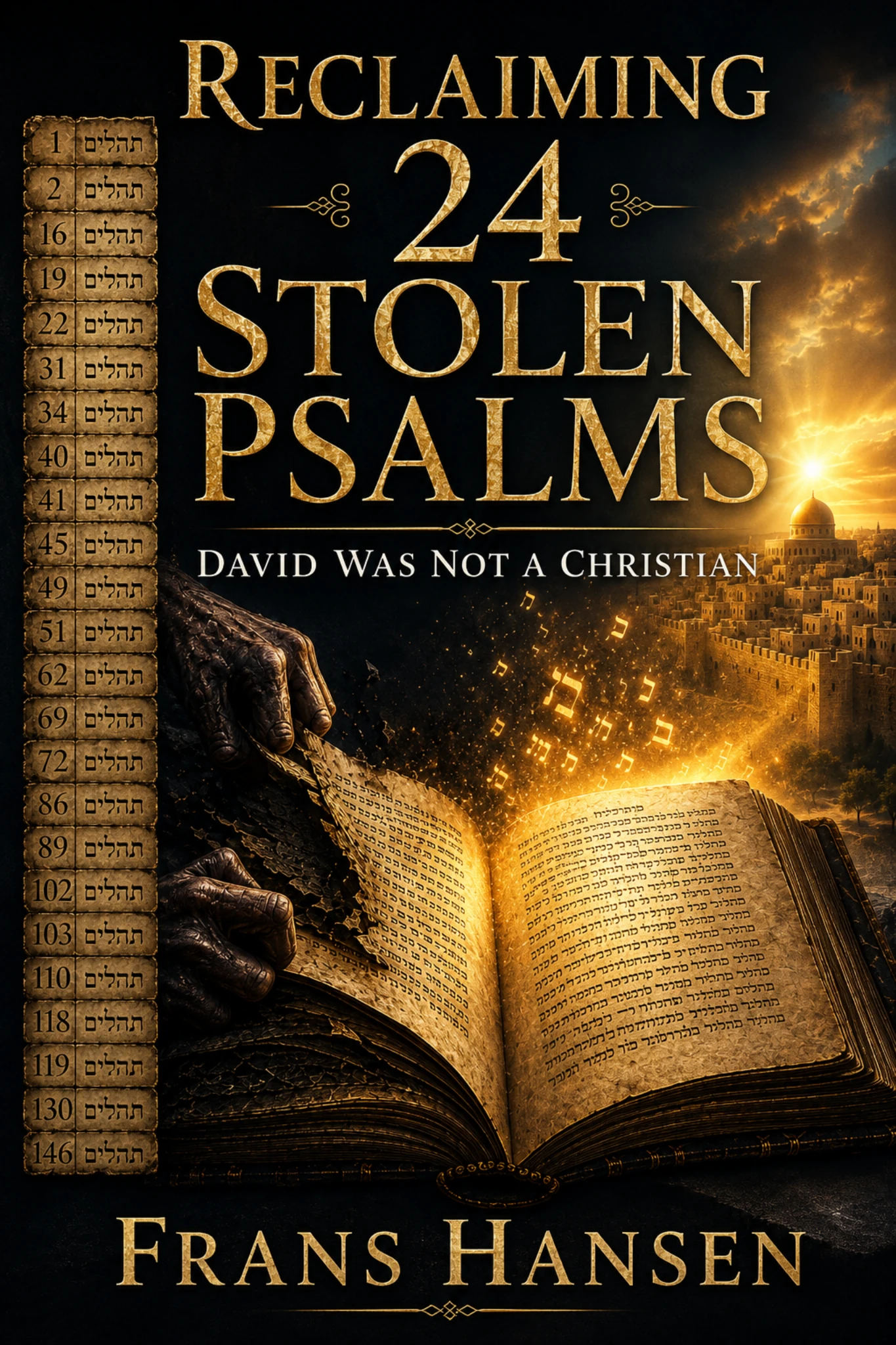
Reclaiming 24 Stolen Psalms cover

Hebrew text · Greek witness · whole psalm

Does Psalm 22 predict the crucifixion?

Psalm 22 contains a disputed line about hands and feet and a vivid scene of suffering. Here is the actual textual question, the ancient Greek evidence, and what the psalm says happens next. A resemblance to a later event is a claim to examine, not a conclusion supplied by one word.

The verse under dispute

What does the line about hands and feet say?

In the Hebrew Masoretic text, Psalm 22:17 (22:16 in many English Bibles) reads כארי ידי ורגלי, commonly rendered “like a lion [at] my hands and my feet.” The wording is compressed, which makes the line hard to translate smoothly. The ancient Greek Psalter, numbered Psalm 21:17, instead has ὤρυξαν χεῖράς μου καὶ πόδας: “they dug my hands and feet.” Some English translations express this as “they pierced my hands and feet.” Those English words do not remove the difference between the Hebrew and Greek witnesses.

A responsible case must name the witness it follows and explain the variant. It must not present “pierced” as if every ancient text says exactly that, or dismiss the Greek witness as if it did not exist. The textual question is real; the conclusion “therefore this psalm predicts a Roman crucifixion” is an additional interpretation.

Follow the whole lament, not one image

1. The speaker suffers

The psalm opens with abandonment language and describes mockery, surrounded enemies, bodily distress, and the dividing of garments (22:1–19). These details explain why a later reader could hear an echo of Jesus’ passion narrative.

2. The speaker asks for rescue

The lament turns into a direct plea: “save me from the lion’s mouth” (22:22 in the Hebrew edition; 22:21 in many English editions). Read the request before assigning an outcome to the story.

3. The speaker praises God

The speaker promises to recount God’s name in the congregation and says God heard the afflicted one (22:23, 25 Hebrew numbering). The psalm moves from danger to public thanksgiving and widening praise.

What the Christian reading can and cannot establish

The Gospel passion accounts draw on Psalm 22 language, including the opening cry and the casting of lots. That reuse matters for understanding the Gospels. It shows a later author’s interpretation; by itself, it does not prove that the psalm’s original speaker predicted a specific execution method, named Jesus, or revoked any covenant law.

The strongest Christian response says that the psalm can describe Davidic suffering and also acquire a fuller meaning in Jesus. That is a theological reading worth stating fairly. To call it a prediction established by the Hebrew Bible, however, the interpreter still needs to show why this psalm’s own wording, speaker, and outcome require that identification. A variant at the hands-and-feet line cannot carry the whole burden.

Try the text yourself

  1. Read Psalm 22:1–31 without stopping at the hands-and-feet line.
  2. Compare Hebrew 22:17 with Greek Psalm 21:17; write down what each witness actually says.
  3. Mark the speaker’s request, the reported answer, and the public response.
  4. Then compare the Gospel use and identify which conclusions come from the later narrative.

For a printable version of this test, use the free Psalm 22 preview. Reclaiming 24 Stolen Psalms develops the broader set of psalms and the Seven Gate method.