franshansen.com
Book

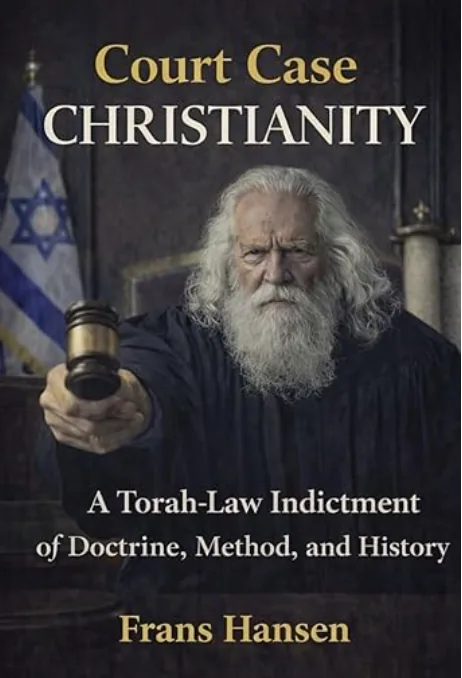
Court Case Christianity: A Torah-Law Indictment of Doctrine, Method, and History

A structured indictment: doctrines, methods, and historical claims tested under Torah categories—what’s assumed, what’s smuggled in, what survives.

Author: Frans Hansen

What this book covers

Full detailed extended sales pitch from the sales-pitch workbook, column G.

COURT CASE CHRISTIANITY

What if Christianity were not debated — but tried? Not in a church. Not in a seminary. Not through tradition. Not through emotion. Not through “faith.” But before the court of the Torah it claims to fulfill. Court Case Christianity places the entire Christian system on trial before the Hebrew Bible. Not one verse. Not one doctrine. Not one Gospel. The whole case. Its claims. Its messiah. Its theology. Its prooftexts. Its history. Its missionary tactics. Its treatment of Israel. Its claim to replace, complete, or reinterpret the Torah.

The charge is simple:

Christianity claims authority from the God of Israel while repeatedly violating the standards God gave Israel for testing religious claims. That is the case. This book does not ask whether Christianity is meaningful, popular, emotional, sincere, or historically powerful.

It asks the only question that matters under Torah jurisdiction:

Is Christianity lawful under the standards of Sinai? The answer is tested chapter by chapter. Inside, you will see Christianity examined under the Torah’s own legal filters:

This is not a vague theological critique. It is a courtroom brief. The book begins where every honest case must begin: with the foundation.

  • No additions to Torah
  • No subtractions from Torah
  • No new object of worship
  • No mediator replacing direct access to God
  • No signs or miracles overriding commandments
  • No failed prophecy rescued by delay
  • No human sacrifice as atonement
  • No inherited guilt
  • No transferred sin
  • No replacement of Israel
  • No Greek theology overriding Hebrew meaning
  • No new canon overruling Sinai
  • No missionary deception disguised as love

PART I — THE FOUNDATION: TORAH IS UNBREAKABLE

Torah is divine. Torah is near. Torah is doable. Torah does not need a replacement. Torah does not authorize human sacrifice. Torah does not permit a later system to alter what God declared binding. The opening section establishes the legal standard: Christianity does not get to define the rules by which it is judged. Torah does.

PART II — THE TRANSGRESSION: A FALSE MESSIAH MEASURED BY TORAH

The book then places the messianic claim under examination. Did Jesus bring universal peace? No. Did he gather Israel’s exiles? No. Did he rebuild the Temple? No. Did he reign as Davidic king on earth? No. Did he end idolatry? No — Christianity spread worship of a human figure across the world. The book tests genealogy, birth narratives, resurrection claims, prophecy claims, Isaiah 7:14, Hosea 11:1, Psalm 22, Isaiah 53, Zechariah 12:10, Greek dependence, anonymous Gospels, forged verses, missing letters, Paul, Hebrews, the Trinity, faith alone, original sin, and Logos theology. This is where the system starts bleeding.

PART III — THE WOUND: WHAT CHRISTIANITY DID TO US

This section turns from doctrine to damage. Replacement theology. Missionary manipulation. Antisemitic Scripture readings.

John 8:44.

Church Fathers. Crusades. Inquisitions. Pogroms. Forced conversions. Colonial missions. Child baptisms. Slavery. Cultural destruction. Missionary exploitation. The demonization of Pharisees. The slander of Oral Torah. The historical laundering of Rome and blame-shifting onto Jews. The book does not claim every Christian is evil. It indicts the system where doctrine became a weapon. That distinction matters. People may be kind. A theology can still be false. A missionary may smile. The method can still be theft.

PART IV — THE COLLAPSE

Then comes the demolition. Forgiveness does not require blood. Hosea 14 proves repentance can return a person to God. Jonah proves an entire city can be forgiven without sacrifice. Ezekiel 18 proves no one dies for another person’s sin. Jeremiah 31 proves the covenant with Israel is not replaced. Deuteronomy 6:4 annihilates the Trinity. Deuteronomy 12:31 forbids human sacrifice. Isaiah identifies the servant as Israel. Malachi still commands remembrance of the Torah of Moses. Deuteronomy 13 warns that signs, wonders, love language, and religious intensity cannot validate a system that leads people away from Torah. The conclusion is not soft. Christianity does not merely misunderstand the Hebrew Bible. It reverses it. It turns Torah into curse. Commandments into burden. Israel into rejected people. God into man. Repentance into blood payment. Forgiveness into substitution. Prophecy into wordplay. Hebrew into Greek leverage. Covenant into church claim. Mission into identity theft. That is why this book is structured as a trial. Because when a system claims divine authority while altering divine law, debate is no longer enough. The claim must be judged.

Court Case Christianity gives the reader:

This book is for Jews who were told their covenant was obsolete. For Christians brave enough to test what they inherited. For ex-Christians trying to understand why the system no longer holds. For Noahides who want to honor the God of Israel without stealing Israel’s covenant. For anti-missionary educators who need structure, not scattered replies. For anyone who has heard the words “fulfilled,” “grace,” “new covenant,” “faith alone,” or “Jesus is the Jewish Messiah” and thought: Wait. Who gave them permission to change the rules? That is the question this book forces into the open. Because if Christianity truly comes from the Hebrew Bible, it should survive the Hebrew Bible. If Jesus truly fulfills Torah, he should pass Torah’s tests. If Paul truly teaches Israel’s God, he should not need to reverse Sinai. If the New Testament truly continues the Tanakh, it should not need mistranslation, allegory, delay, replacement, or fear. And if the system collapses when Torah is restored, then the problem was never Jewish blindness. The problem was Christian overreach. Court Case Christianity is not written to comfort inherited beliefs. It is written to put them under oath. The evidence is entered. The standards are read. The claims are tested. The verdict is delivered. Read it with a Tanakh open.

  • a Torah-first legal framework
  • a full indictment of Christian doctrine
  • a direct challenge to messianic claims
  • a dismantling of New Testament prooftexts
  • a critique of missionary tactics
  • a historical account of doctrine becoming violence
  • a defense of Jewish covenant identity
  • a path back to direct prayer, teshuvah, mitzvot, and the God of Israel
  • a final verdict under Sinai’s standards

Then ask the question Christianity has avoided for two thousand years:

Does it actually pass Sinai? Where belief meets evidence. Where prooftexts face Hebrew. Where doctrine faces Torah. Where Christianity stands trial.

Visual sales pitch

A quick visual case summary for this book.

Visual sales pitch for Court Case Christianity: A Torah-Law Indictment of Doctrine, Method, and History

Related reading