
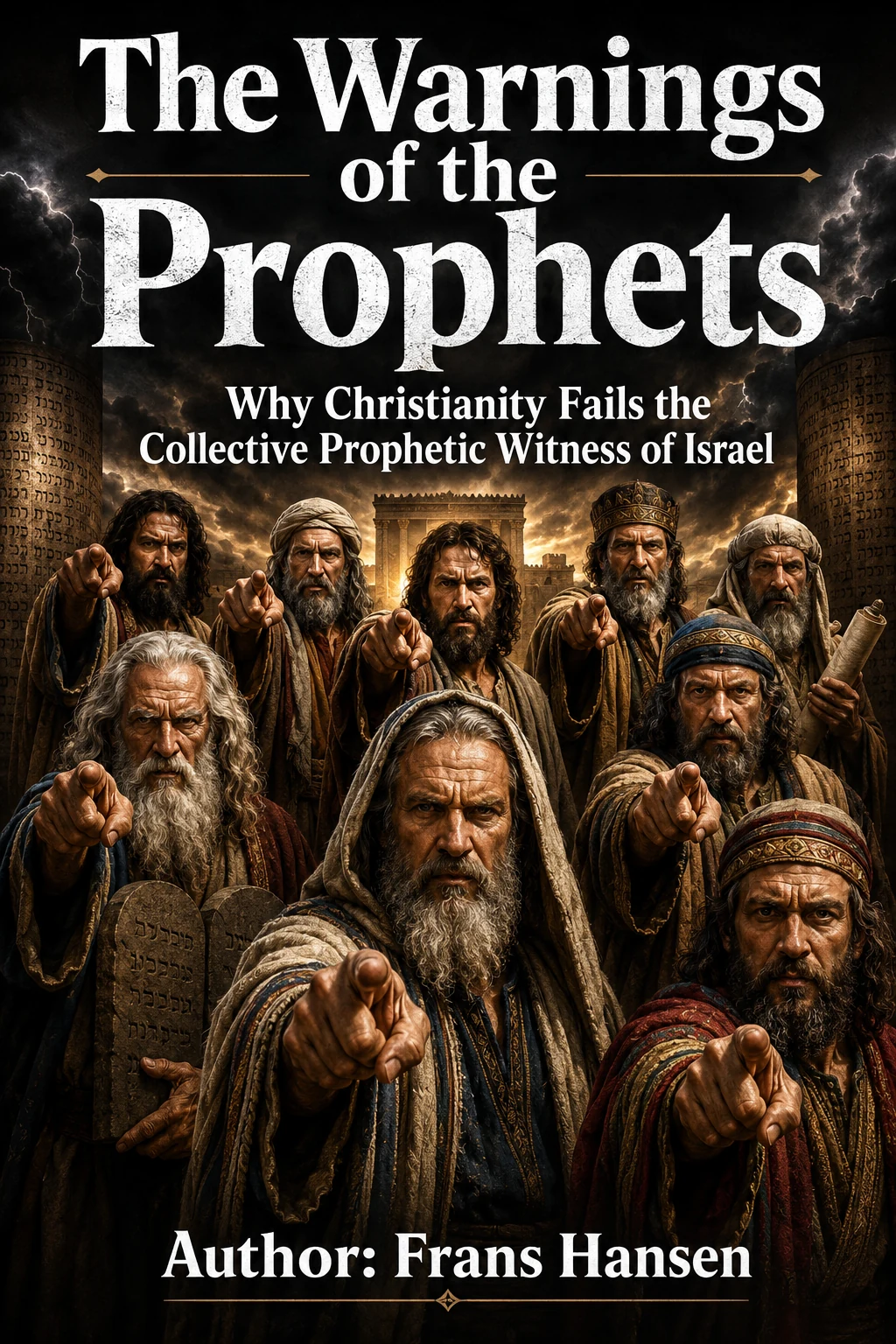
New release
The Warnings of the Prophets
A Torah-first courtroom case against Christian claims. Moses controls the jurisdiction, the prophets testify together, and Christianity must survive Tanakh’s covenant categories before the New Testament is allowed to speak.
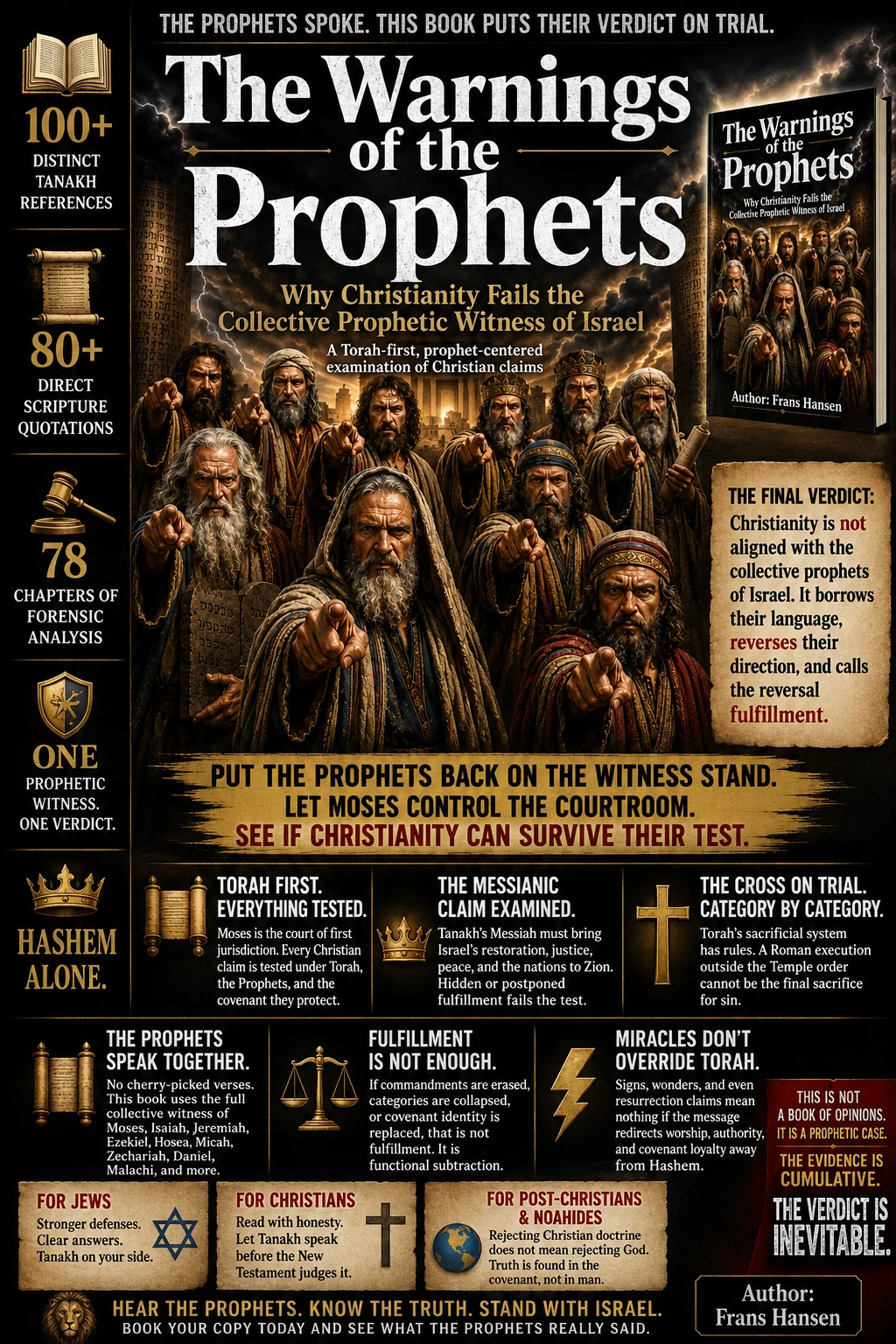
What this book tests: The Warnings of the Prophets
Would Tanakh authorize Christianity at all, if Moses and the Prophets were allowed to judge the claim on their own terms?
This is not a loose pile of objections. It is a forensic test of Christian theology under Israel’s covenant evidence. Christianity quotes the Hebrew Bible constantly, but quoting a court record is not the same as surviving its judgment.
Christianity borrows Israel’s prophetic language, reverses its direction, and calls the reversal fulfillment.
Who should read it: The Warnings of the Prophets
- Jewish readers who want sharper defenses and clearer counter-missionary categories.
- Christians willing to let the Hebrew Bible judge the New Testament instead of the other way around.
- Post-Christians and Noahides who need to see that rejecting Christian doctrine does not mean rejecting God.
How to use it: The Warnings of the Prophets
- 1Sinai as the court of first jurisdiction, not a prologue waiting for later override.
- 2Deuteronomy 13 and the warning that signs, wonders, and miracle claims do not cancel Torah.
- 3Isaiah’s insistence that Hashem alone is God, Savior, and recipient of glory.
- 4Hosea and Numbers against the God-man claim.
- 5Jeremiah’s new covenant with Israel and Judah, not a renamed Church contract.
- 6Ezekiel’s Spirit-led obedience to statutes and judgments.
- 7The cross tested by Torah’s sacrificial categories: altar, priesthood, blood, place, repentance, restitution, and covenant procedure.
- 8The messianic deliverables: Israel restored, justice established, peace made public, Torah going forth from Zion, and the nations recognizing Hashem.
Free PDF and buying options: The Warnings of the Prophets
Use this book when the debate moves from isolated prooftexts to the collective witness of Moses and the Prophets. It forces incarnation, cross-atonement, fulfilled Torah, Church authority, miracle claims, and typology to stand beneath Tanakh’s own covenant controls.
- 1Moses controls the courtroom before later theology speaks.
- 2The collective prophets are read together, not sliced into isolated prooftexts.
- 3Miracles and fulfillment claims are tested by Deuteronomy 13.
- 4Messiah, sacrifice, covenant, Torah, Israel, and the nations remain in Tanakh’s categories.
- 5Christianity must survive the prophetic witness without making the New Testament judge.
Where to go next: The Warnings of the Prophets
Read it with the Seven Gate methodology and the wider counter-missionary library when the discussion shifts from Daniel prooftexts to jurisdiction, covenant authority, messiahship, resurrection, sacrifice, and fulfillment.