
New release
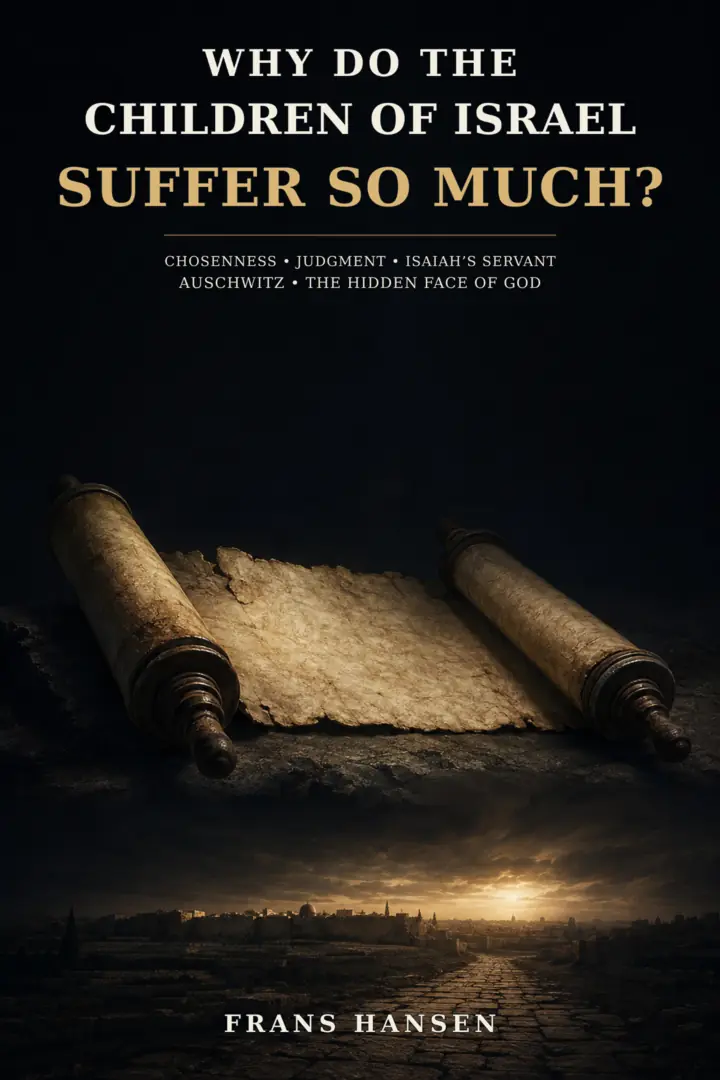
Why Do the Children of Israel Suffer So Much?
A Torah-first answer to Jewish suffering after Auschwitz, separating covenant consequence from victim-blaming, Isaiah’s servant from missionary misuse, and hidden providence from easy excuses.
Why this book
Accounts of Jewish suffering can collapse into victim-blaming, theological abstraction, or Christian appropriation unless covenant, exile, human guilt, hester panim, Isaiah’s servant, and hope are held together. That is the problem this book addresses. A Torah-first answer to Jewish suffering after Auschwitz: covenant, exile, hester panim, Isaiah’s servant, human guilt, and hope without victim-blaming.
The book keeps the stated claim and its evidence in focus, testing the issue from the Hebrew Bible outward with Torah-first controls rather than allowing a later conclusion to define the starting point.
Who this is for
Jewish readers wrestling with chosenness, exile, Auschwitz, covenant judgment, Isaiah’s servant, and the hidden face of God, plus teachers and serious readers seeking an answer that avoids victim-blaming.
About this book
This book faces the question many religious explanations try to escape: if Israel is chosen and loved by Hashem, why has Jewish history carried exile, persecution, Auschwitz, and so much unanswered grief? Frans Hansen refuses the two cheap answers. He does not erase covenant consequence from Tanakh, and he does not turn murdered Jews into evidence against themselves.
The argument moves from Torah, Iyov, Psalm 44, hester panim, Isaiah’s servant, Rome and Edom, post-Shoah theology, and modern Jewish sovereignty toward one disciplined verdict. Jewish suffering is not treated as a divine quota, a sacrifice, or proof that Christianity replaced Israel. The book separates what Tanakh states, what Chazal develop, what Orthodox Jewish thinkers dispute, and what the author proposes as interpretation.
For questioning Christians, Jews facing missionary claims, Noahides, Messianic readers, and serious Bible students, the benefit is clarity under pressure. You get a sober framework for covenant, history, human guilt, hidden providence, resurrection, and restoration without buying faith at the expense of the victims.