
Evidence bridge
3 (“from the mouths of infants”) Problem: How can weakness establish strength?
The goal is to know exactly where the evidence ends at “3 (“from the mouths of infants”) Problem: How can weakness establish strength?”, so later theology cannot borrow certainty from a source that never supplied it.
What this article established
Psalm 8 moves from God’s majestic name to the speech of infants, then to the vast heavens and finally to frail humanity given dominion. Weakness establishing strength is not a defect in the poem; it is the poem’s architecture.
- Verified: Psalm 8 deliberately places infant weakness beside divine strength.
- Verified: the full Psalm contrasts human smallness with dignity granted by Hashem.
- Verified: the Psalm’s direct object of praise is Hashem.
- Possible: Matthew makes a meaningful typological or thematic application of the infant line.
- Unsupported from Psalm 8 itself: claiming the verse originally predicted children praising Jesus in the Temple.
The question that still remains
After resolving “3 (“from the mouths of infants”) Problem: How can weakness establish strength?”, does the wider case across All 150 Psalms read as covenant speech with structural, contextual, and Hebrew precision survive the same test, especially the Psalm in full, its superscription and literary voice where relevant, parallelism?
Why this book is the next step
TEHILLIM In Its Own Voice: Reading All 150 Psalms As Covenant Speech is the narrowest catalogue match because its stated scope is All 150 Psalms read as covenant speech with structural, contextual, and Hebrew precision; that directly answers the remaining problem after mouths, infants, Problem, How, whereas a general counter-missionary title would broaden too far. The match is therefore between unresolved scope and book scope, not between repeated keywords. The worked hinge that makes this assignment specific is mouths / infants / Problem / How / weakness.
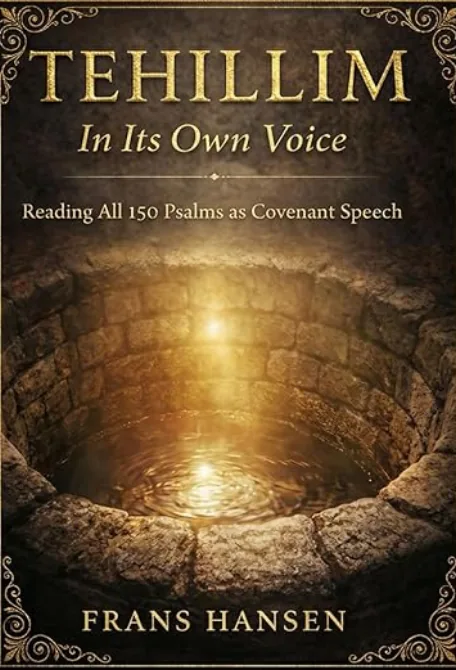
The landing page for “3 (“from the mouths of infants”) Problem: How can weakness establish strength?” has done its job when the reader can see why TEHILLIM In Its Own Voice: Reading All 150 Psalms As Covenant Speech—not a generic anti-Christian title—continues this exact problem across All 150 Psalms read as covenant speech with structural, contextual, and Hebrew precision.