
Evidence bridge
Can a royal psalm be turned into Trinitarian theology without violating the Hebrew Bible’s own categories?
The reader wants to be able to explain “Can a royal psalm be turned into Trinitarian theology without violating the Hebrew Bible’s own categories?” from the Shema, Torah’s anti-image and divine-unity language, the specific prooftext, and the distinction between divine title, agency, honor, and ontology without relying on denominational authority or counter-missionary slogans.
What this article established
Psalm 110 is a royal and exaltation text, but an exalted lord beside God is not automatically a second divine person. The psalm must first be read through its own speakers, Hebrew titles, and delegated authority.
- Verified: Psalm 110 presents an exalted lord receiving authority from Hashem.
- Possible: the psalm can be read messianically.
- Not established by the psalm alone: that the lord is ontologically God or a second divine person.
- Therefore: royal exaltation cannot simply be converted into Trinitarian theology without additional premises.
The question that still remains
If “Can a royal psalm be turned into Trinitarian theology without violating the Hebrew Bible’s own categories?” is settled from the sources, what survives when the inquiry expands to Major Psalms restored to Torah, Israel and Tanakh context under the Shema, Torah’s anti-image and divine-unity language, the specific prooftext?
Why this book is the next step
The commercial bridge is valid only because the evidence bridge is valid: from the local royal, psalm, turned, Trinitarian verdict to the wider Major Psalms restored to Torah, Israel and Tanakh context audit handled by Reclaiming 24 Stolen Psalms: David Was Not a Christian. This keeps the sale downstream of the evidence: first royal / psalm / turned / Trinitarian, then the larger Major Psalms restored to Torah, Israel and Tanakh context audit. The worked hinge that makes this assignment specific is royal / psalm / turned / Trinitarian / theology.
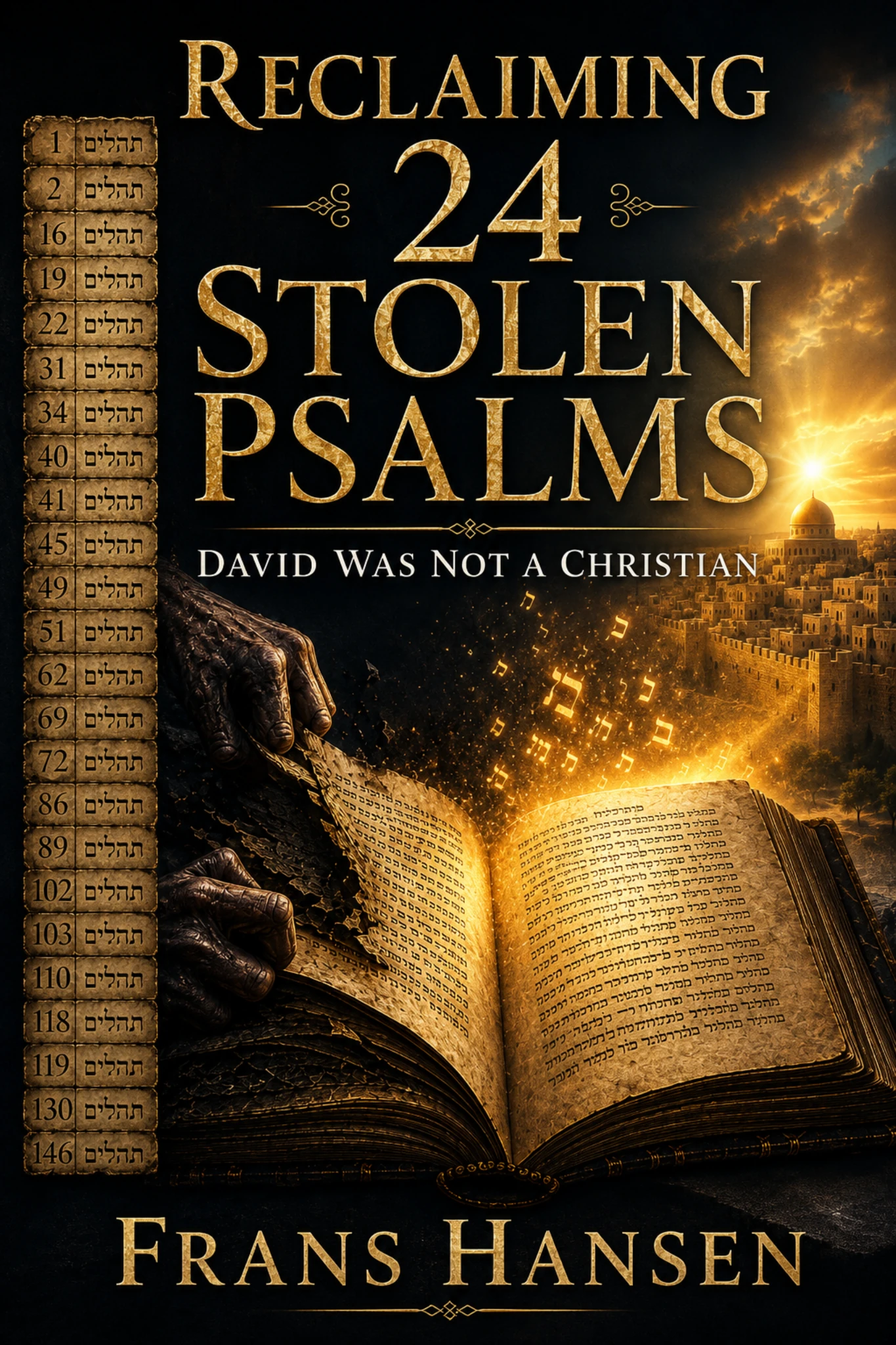
The landing page for “Can a royal psalm be turned into Trinitarian theology without violating the Hebrew Bible’s own categories?” has done its job when the reader can see why Reclaiming 24 Stolen Psalms: David Was Not a Christian—not a generic anti-Christian title—continues this exact problem across Major Psalms restored to Torah, Israel and Tanakh context.