
Evidence bridge
Can the Messiah be God if Torah’s messianic model is a human Davidic king who serves Hashem?
The reader wants to be able to explain “Can the Messiah be God if Torah’s messianic model is a human Davidic king who serves Hashem?” from the controlling Torah/Prophetic statements about Hashem’s role, the human Davidic model, and the text claimed to transfer the prerogative without relying on denominational authority or counter-missionary slogans.
What this article established
The dominant messianic texts distinguish Hashem from the Davidic ruler: the king descends from Jesse and David, receives God’s spirit, keeps God’s law, and serves under God. Exalted language does not erase that controlling category.
- Verified: Torah’s king is a human Israelite under Torah.
- Verified: the Prophets describe the future Davidic ruler as descendant, servant, recipient of Hashem’s spirit, and king under Hashem.
- Verified: some Tanakh passages use highly exalted language that Christians read messianically.
- Possible: Christians may construct a later cumulative divine-Messiah argument from those difficult texts.
- Contradicted by the controlling Davidic category: identifying the Davidic servant with Hashem without an explicit authorization that overcomes the repeated distinction between God and king.
- Once “Can the Messiah be God if Torah’s messianic model is a human Davidic king who serves Hashem?” is settled, what remains defensible across Whether Trinitarian doctrine coheres with Sinai and divine simplicity when the test is controlled by the controlling Torah/Prophetic statements about Hashem’s role, the human Davidic model?
The question that still remains
Once “Can the Messiah be God if Torah’s messianic model is a human Davidic king who serves Hashem?” is settled, what remains defensible across Whether Trinitarian doctrine coheres with Sinai and divine simplicity when the test is controlled by the controlling Torah/Prophetic statements about Hashem’s role, the human Davidic model?
Why this book is the next step
The commercial bridge is valid only because the evidence bridge is valid: from the local Messiah, messianic, model, human verdict to the wider Whether Trinitarian doctrine coheres with Sinai and divine simplicity audit handled by The Trinity vs Absolute Unity: Sinai, Divine Simplicity, and the Limits of Relational Godhood. That distinction matters here because the messianic king's role versus God's unique roles requires more than another isolated response to Messiah / messianic / model / human. The worked hinge that makes this assignment specific is Messiah / messianic / model / human / Davidic.
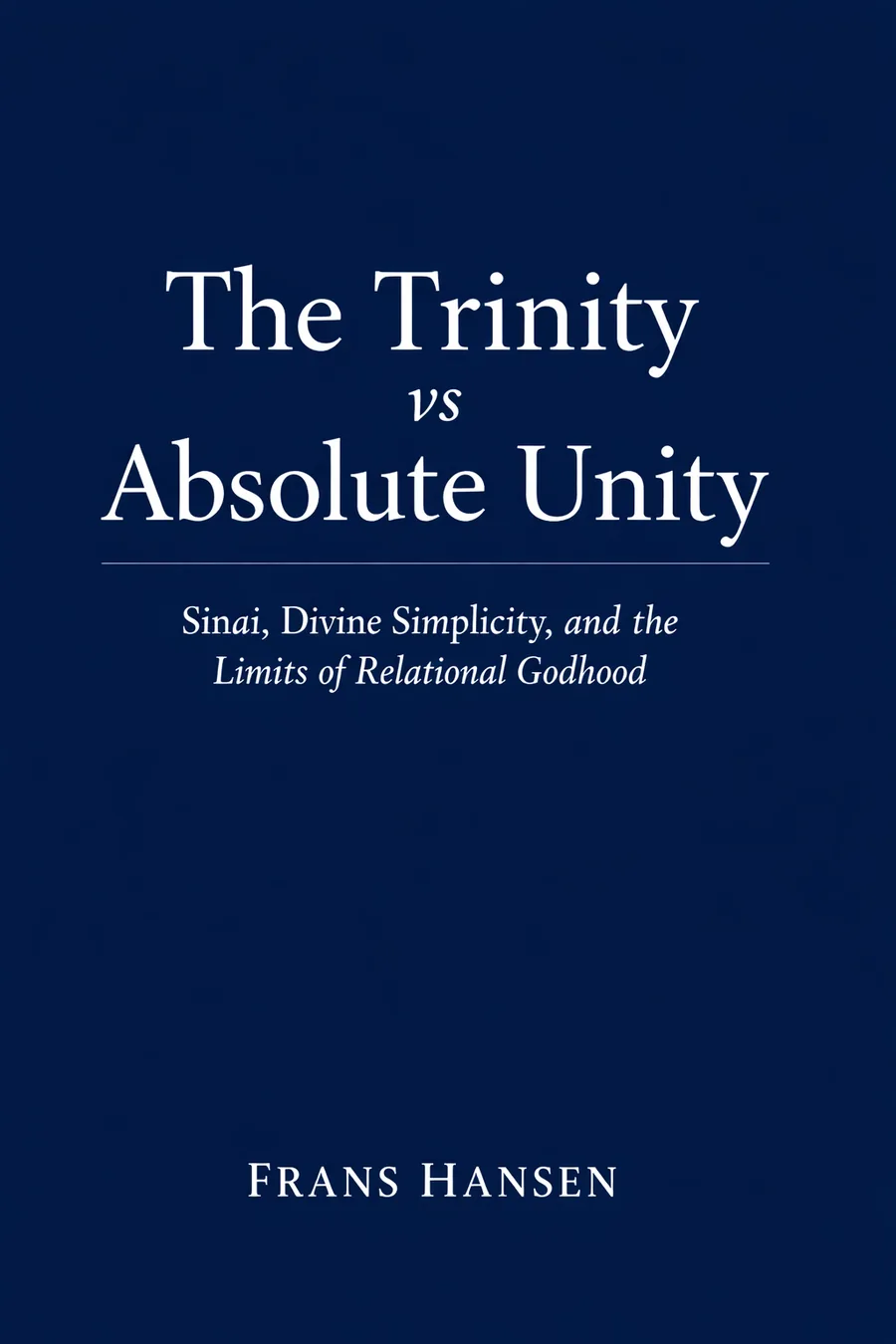
Only after the wider problem behind “Can the Messiah be God if Torah’s messianic model is a human Davidic king who serves Hashem?” is clear should the book enter. Here that book is The Trinity vs Absolute Unity: Sinai, Divine Simplicity, and the Limits of Relational Godhood, built to examine Whether Trinitarian doctrine coheres with Sinai and divine simplicity.