
Evidence bridge
Can typology be spiritually meaningful without pretending the earlier event was a prediction?
The goal is to know exactly where the evidence ends at “Can typology be spiritually meaningful without pretending the earlier event was a prediction?”, so later theology cannot borrow certainty from a source that never supplied it.
What this article established
A later community can see patterns, analogies and spiritual meaning in an earlier biblical event without changing that event’s peshat into prediction. The decisive distinction is between application and prophecy.
- Verified: every text has an original literary and historical setting that controls peshat.
- Possible: later readers can draw typological or spiritual meaning from earlier events.
- Possible: a divinely authorized later revelation could disclose a fuller intended pattern.
- Not automatically established: that the earlier event was a prediction of the later one.
- Unsupported: “The later event resembles the earlier one, therefore the earlier text prophesied it.”
The question that still remains
If the evidence settles “Can typology be spiritually meaningful without pretending the earlier event was a prediction?”, does Christian hints, types, shadows, parallels, codes and prooftexts under Torah rules confirm the same conclusion once peshat, original speaker/audience, textual markers of futurity, literary category is kept in control?
Why this book is the next step
The reason for this book is structural, not topical coincidence: typology, spiritually, meaningful, pretending opens into If the evidence settles “Can typology be spiritually meaningful without pretending the earlier event was a prediction?”, does Christian hints, types, shadows, parallels, codes and prooftexts under Torah rules confirm the same conclusion once peshat, original speaker/audience, textual markers of futurity, literary category is kept in control? and the book is specifically organized around Christian hints, types, shadows, parallels, codes and prooftexts under Torah rules. A broader title would dilute the typology / spiritually / meaningful / pretending evidence family; a narrower article would not reach the cross-text question. The worked hinge that makes this assignment specific is typology / spiritually / meaningful / pretending / earlier.
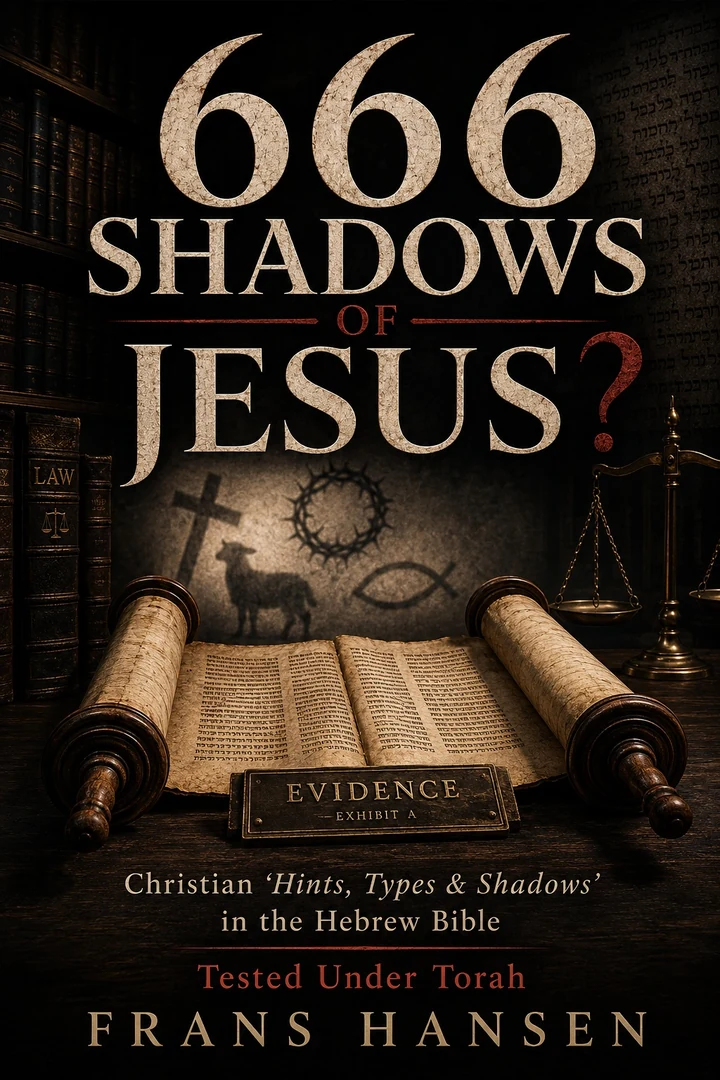
Only after the wider problem behind “Can typology be spiritually meaningful without pretending the earlier event was a prediction?” is clear should the book enter. Here that book is 666 Shadows of Jesus?: Christian “Hints, Types & Shadows” in the Hebrew Bible Tested Under Torah, built to examine Christian hints, types, shadows, parallels, codes and prooftexts under Torah rules.