
Evidence bridge
Deuteronomy 18 prophet like Moses: Jesus specifically or prophetic office/tests?
The desired certainty is not absolute certainty about every doctrine. It is enough precision to say why “Deuteronomy 18 prophet like Moses: Jesus specifically or prophetic office/tests?” is Verified, Possible, Disputed, Unsupported, or Contradicted by the controlling source.
What this article established
Acts 3 identifies Jesus with Deuteronomy 18’s “prophet like Moses,” but the Torah passage itself sits inside Moses’ rules for how Israel will receive legitimate prophetic guidance after rejecting divination. The surrounding verses immediately give tests for future prophets. A Jesus-specific reading is a later Christian identification, not the explicit peshat of Deuteronomy 18.
- Verified: Deuteronomy 18 promises prophetic guidance from among Israel and immediately establishes rules for distinguishing true and false prophets.
- Verified: the original literary setting is Israel's replacement of forbidden divination with authorized prophecy.
- Possible: a later writer may see a particular prophet as a climactic or typological realization of the “like Moses” pattern.
- Disputed: whether Jesus qualifies under every relevant Torah prophetic test.
- Unsupported by the controlling Torah text: the claim that Deuteronomy 18, by itself, specifically identifies Jesus or predicts a uniquely Christian messianic figure.
The question that still remains
If “Deuteronomy 18 prophet like Moses: Jesus specifically or prophetic office/tests?” is settled from the sources, what survives when the inquiry expands to Where theology becomes policy and breaks from Torah categories are justified under the original narrative, its stated purpose, any textual signal of future reference?
Why this book is the next step
The commercial bridge is valid only because the evidence bridge is valid: from the local Deuteronomy, prophet, like, Moses verdict to the wider Where theology becomes policy and breaks from Torah categories are justified audit handled by THE BOOK OF ACTS VS. THE HEBREW BIBLE: How the New Testament Rewrites the Tanakh. The reason is methodological continuity: the book applies the same source controls beyond the single Deuteronomy / prophet / like / Moses hinge. The worked hinge that makes this assignment specific is Deuteronomy 18 / Deuteronomy / prophet / like / Moses.
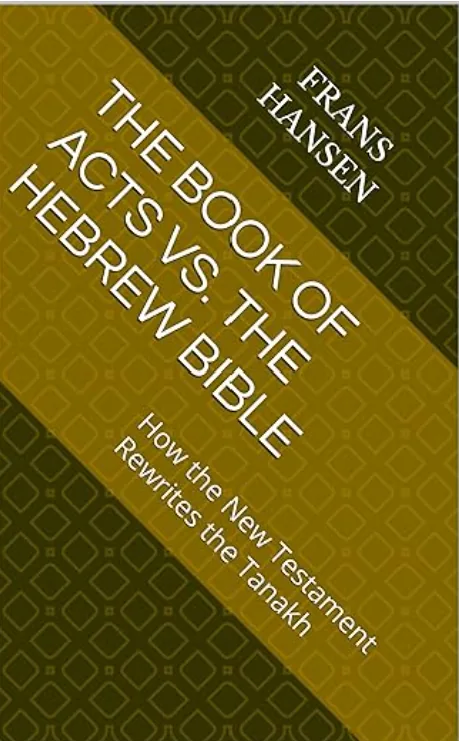
After the wider source map for “Deuteronomy 18 prophet like Moses: Jesus specifically or prophetic office/tests?”, the book fit becomes testable: THE BOOK OF ACTS VS. THE HEBREW BIBLE: How the New Testament Rewrites the Tanakh is the book-length investigation for Where theology becomes policy and breaks from Torah categories are justified. Open the book page only if that is the field you still need examined.