
Evidence bridge
Did English Bible translators create a theological conclusion by translating homage, bowing, and service with the single word ‘worship’?
The reader wants to be able to explain “Did English Bible translators create a theological conclusion by translating homage, bowing, and service with the single word ‘worship’?” from the lexical range of hishtachavah/proskuneō, the separate vocabulary of sacred service, and the action actually described in context without relying on denominational authority or counter-missionary slogans.
What this article established
Hebrew hishtachavah and Greek proskuneō can mean bowing or homage, while avodah/latreia marks a narrower service category. Some English renderings can obscure that distinction, but translation choices vary. The lexical problem is real without inventing a universal translator conspiracy.
- Verified: Hebrew *hishtachavah* and Greek *proskuneō* can describe homage before non-divine figures.
- Verified: sacred-service vocabulary is a distinct, narrower category.
- Possible and often appropriate: translating *proskuneō* as “worship” when context clearly supports religious worship.
- Potentially misleading: treating the English gloss “worship” as though it were a lexical proof of deity.
- Unsupported: claiming English translators as a class deliberately created one coordinated theological deception.
The question that still remains
Does the method used to answer “Did English Bible translators create a theological conclusion by translating homage, bowing, and service with the single word ‘worship’?” produce the same result across Where Greek religious categories pull readers away from Hebrew Bible controls and reshape Hebrew concepts when the lexical range of hishtachavah/proskuneō, the separate vocabulary of sacred service controls the test?
Why this book is the next step
Another book might discuss Christianity generally, but Hebrew Words, Greek Religion: The Greek Testament Under Torah's Court follows the exact evidence family left open here—Where Greek religious categories pull readers away from Hebrew Bible controls and reshape Hebrew concepts—so the transition does not manufacture a new problem. A broader title would dilute the English / translators / create / theological evidence family; a narrower article would not reach the cross-text question. The worked hinge that makes this assignment specific is English / translators / create / theological / conclusion.
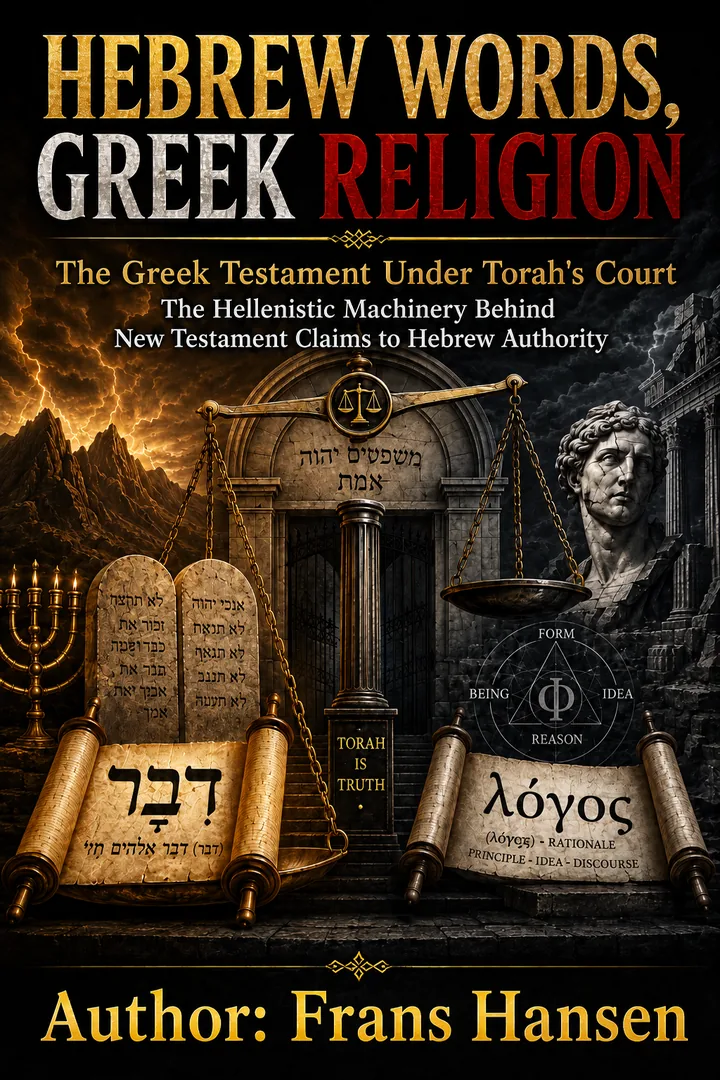
From the wider question raised by “Did English Bible translators create a theological conclusion by translating homage, bowing, and service with the single word ‘worship’?”, the book choice becomes specific: Hebrew Words, Greek Religion: The Greek Testament Under Torah's Court carries the investigation into Where Greek religious categories pull readers away from Hebrew Bible controls and reshape Hebrew concepts.