
Evidence bridge
Does it respect the priesthood, the sacrificial system, and Israel’s obligations before God?
The reader wants a bounded verdict: what “Does it respect the priesthood, the sacrificial system, and Israel’s obligations before God?” establishes, what remains possible, and what it does not authorize, using Jeremiah 31, Torah’s priesthood and atonement rules, the named covenant partners, and Hebrews’ interpretive steps.
What this article established
Does Christianity respect the priesthood, the sacrificial system and Israel’s obligations before God? Hebrews says yes.
- Verified: Torah’s priesthood is Aaronide and legally defined.
- Verified: Torah’s sacrificial system is diverse and not presented merely as an illustration of one future death.
- Verified: Hebrews reinterprets priesthood, sacrifice and covenant around Jesus.
- Christian claim: this is fulfillment of the system’s intended purpose.
- Torah-first verdict: intention must be demonstrated from the source law, not inferred only from the later Christian explanation.
The question that still remains
If “Does it respect the priesthood, the sacrificial system, and Israel’s obligations before God?” is settled from the sources, what survives when the inquiry expands to Better covenant, priesthood, covenant and atonement tested inside Torah rules under Jeremiah 31, Torah’s priesthood and atonement rules, the named covenant partners?
Why this book is the next step
The fit is narrower than 'same biblical book' or 'same doctrine.' The unresolved test is If “Does it respect the priesthood, the sacrificial system, and Israel’s obligations before God?” is settled from the sources, what survives when the inquiry expands to Better covenant, priesthood, covenant and atonement tested inside Torah rules under Jeremiah 31, Torah’s priesthood and atonement rules, the named covenant partners?, and THE EPISTLE TO THE HEBREWS VS. THE HEBREW BIBLE: How the New Testament Rewrites the Tanakh - A Line-by-line Investigation supplies the broader treatment of Better covenant, priesthood, covenant and atonement tested inside Torah rules needed to run it. The book earns the bridge by expanding the evidence set while keeping the same burden of proof used at respect / priesthood / sacrificial / system. The worked hinge that makes this assignment specific is respect / priesthood / sacrificial / system / Israel.
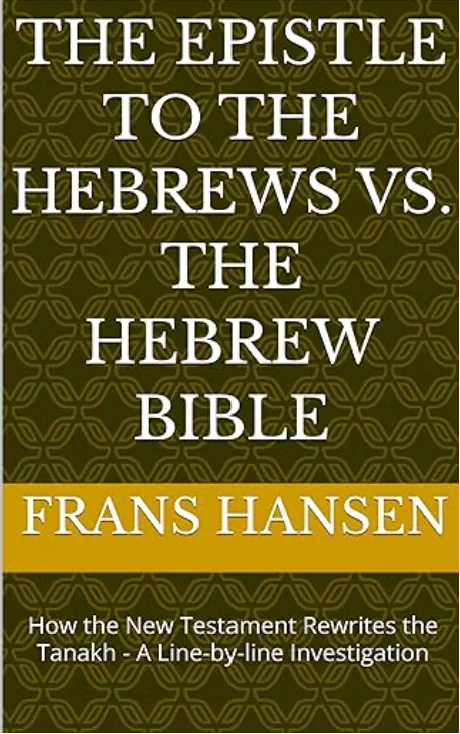
The source map beyond “Does it respect the priesthood, the sacrificial system, and Israel’s obligations before God?” points to one book-length continuation: THE EPISTLE TO THE HEBREWS VS. THE HEBREW BIBLE: How the New Testament Rewrites the Tanakh - A Line-by-line Investigation, whose scope is Better covenant, priesthood, covenant and atonement tested inside Torah rules. Open the book page for the full treatment.