
Evidence bridge
Does “new covenant” mean “new religion”?
The target state is evidentiary clarity: a fair Christian formulation, a controlled reading of “Does “new covenant” mean “new religion”?”, an explicit concession, and a narrow verdict.
What this article established
Jeremiah 31 says no such thing. The phrase בְּרִית חֲדָשָׁה, brit chadashah, is real.
- Verified: Jeremiah promises a new covenant.
- Verified: the parties are Israel and Judah.
- Verified: God's Torah is written within them.
- Verified: Israel's national continuity is reaffirmed in the same chapter.
- Christian theological claim: the new covenant is inaugurated through Jesus and interpreted authoritatively by Hebrews.
- Not contained in the phrase “new covenant” itself: “new religion,” “Church replaces Israel,” or “Torah becomes obsolete.”
The question that still remains
When “Does “new covenant” mean “new religion”?” is no longer left vague, can the surrounding argument still be sustained across Better covenant, priesthood, covenant and atonement tested inside Torah rules from Jeremiah 31, Torah’s priesthood and atonement rules, the named covenant partners?
Why this book is the next step
Separate what the passage says, what it permits, and what a later reader adds. named / new / covenant / mean: the problem has moved from one Jeremiah 31 ruling into the exact scope of THE EPISTLE TO THE HEBREWS VS. THE HEBREW BIBLE: How the New Testament Rewrites the Tanakh - A Line-by-line Investigation. A wider verdict needs a fresh source. Map the legal category under the same rule for both sides. Weigh the historical referent before identity pressure enters; keep the concrete markers Jeremiah, 31, Hebrews, Torah’s, priesthood visible.
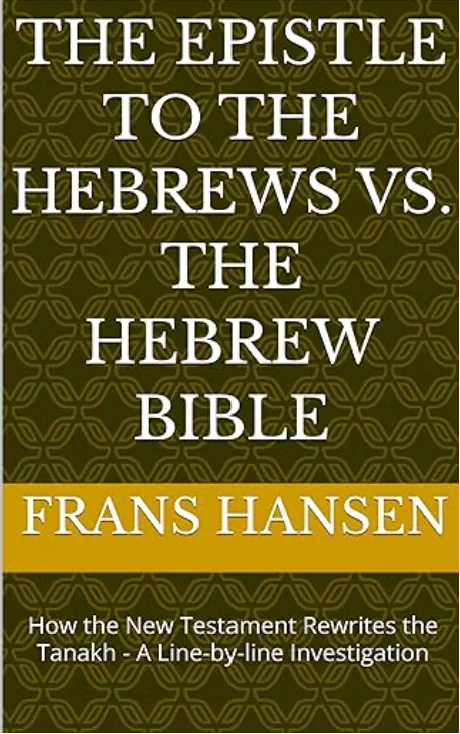
Only after the wider problem behind “Does “new covenant” mean “new religion”?” is clear should the book enter. Here that book is THE EPISTLE TO THE HEBREWS VS. THE HEBREW BIBLE: How the New Testament Rewrites the Tanakh - A Line-by-line Investigation, built to examine Better covenant, priesthood, covenant and atonement tested inside Torah rules.