
Evidence bridge
Does Psalm 110 prove Jesus sits at God’s right hand?
The goal is to know exactly where the evidence ends at “Does Psalm 110 prove Jesus sits at God’s right hand?”, so later theology cannot borrow certainty from a source that never supplied it.
What this article established
Psalm 110 gives an exalted lord a place at Hashem’s right hand and promises victory over enemies. That establishes delegated honor in the psalm. It does not by itself identify Jesus, prove resurrection, or turn the recipient into God.
- Verified: Psalm 110 presents a highly exalted lord at Hashem’s right hand.
- Possible: a messianic interpretation.
- Christian identification: Jesus is this lord, vindicated by resurrection.
- Not established by Psalm 110 alone: Jesus’ identity, resurrection, deity, or Trinitarian ontology.
The question that still remains
When “Does Psalm 110 prove Jesus sits at God’s right hand?” is no longer left vague, can the surrounding argument still be sustained across Major Psalms restored to Torah, Israel and Tanakh context from the Psalm in full, its superscription and literary voice where relevant, parallelism?
Why this book is the next step
Read the evidence in chronological order before judging the doctrine. Psalms / full / superscription / literary: the problem has moved from one Psalm 110 ruling into the exact scope of Reclaiming 24 Stolen Psalms: David Was Not a Christian. Possibility is not promoted to proof by repetition. Sequence the referent under the same rule for both sides.
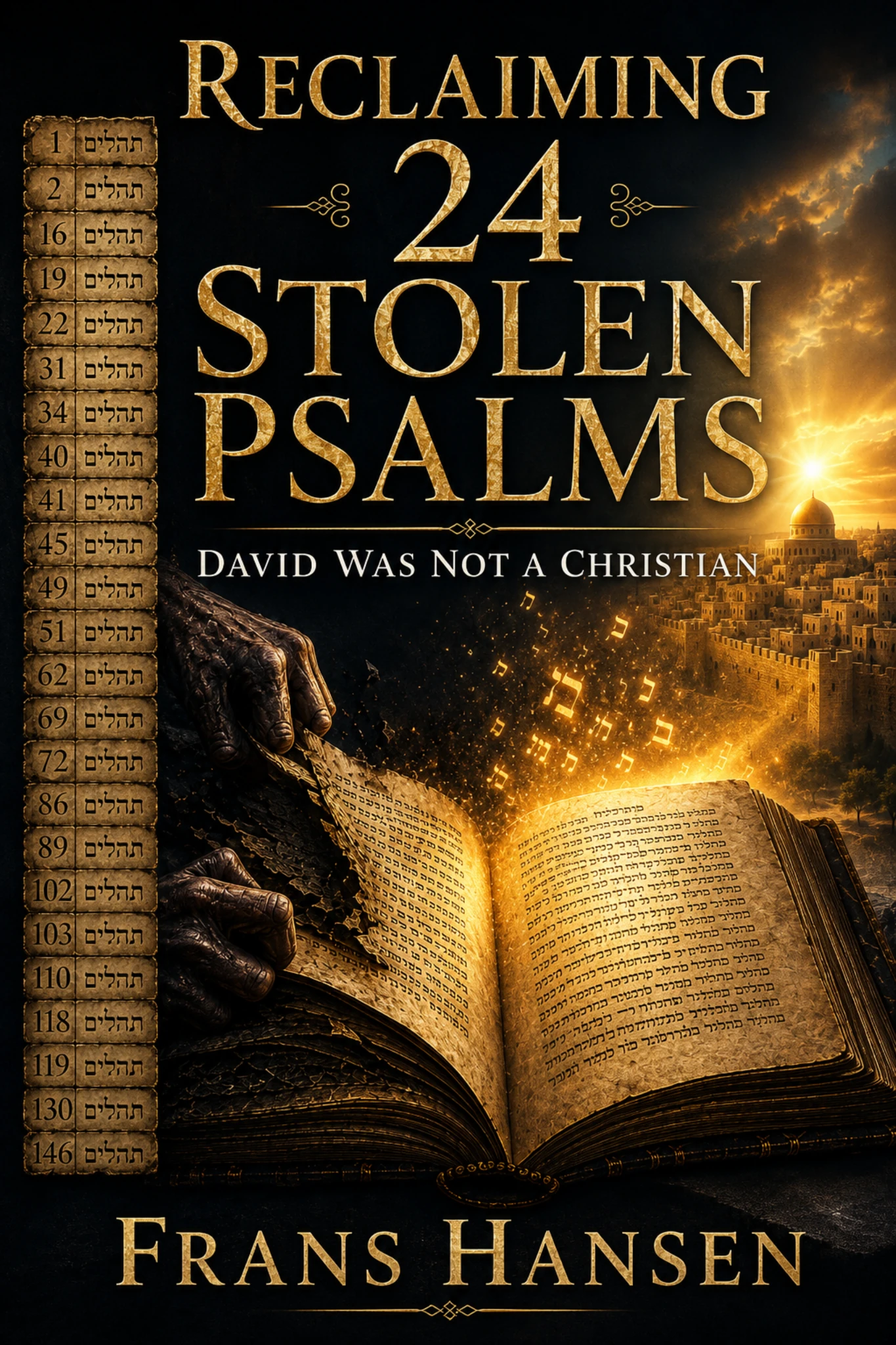
If the wider question after “Does Psalm 110 prove Jesus sits at God’s right hand?” is genuinely Can the larger claim still stand when Major Psalms restored to Torah, Israel and Tanakh context is tested with the Psalm in full, its superscription and literary voice where relevant, parallelism kept in control?, the next destination is Reclaiming 24 Stolen Psalms: David Was Not a Christian, because its scope is Major Psalms restored to Torah, Israel and Tanakh context.