
Evidence bridge
If doubt is automatically blamed on the devil, how can a Christian ever test whether the doctrine itself is wrong?
The reader wants a bounded verdict: what “If doubt is automatically blamed on the devil, how can a Christian ever test whether the doctrine itself is wrong?” establishes, what remains possible, and what it does not authorize, using Tanakh’s praise of wisdom, knowledge, testing, public revelation, and the difference between humble inquiry and rebellion.
What this article established
A belief system becomes self-sealing when every objection is reclassified as spiritual attack. Tanakh does not praise every doubt, but it repeatedly values wisdom, evidence, public revelation and the testing of claims.
- Verified: Torah gives tests for later religious claims.
- Verified: Tanakh praises wisdom, knowledge and discernment.
- Possible: a particular doubt can arise from bad motives.
- Unsupported: “This objection is false because the devil caused you to ask it.”
- Methodologically dangerous: any doctrine that classifies all disconfirming evidence as spiritual attack.
The question that still remains
If “If doubt is automatically blamed on the devil, how can a Christian ever test whether the doctrine itself is wrong?” is settled from the sources, what survives when the inquiry expands to Method for testing religious claims by text, context, covenant, prophetic outcome and burden of proof under Tanakh’s praise of wisdom, knowledge, testing, public revelation?
Why this book is the next step
The commercial bridge is valid only because the evidence bridge is valid: from the local doubt, automatically, blamed, devil verdict to the wider Method for testing religious claims by text, context, covenant, prophetic outcome and burden of proof audit handled by The Frans Hansen Seven Gate Torah Verification System: A Torah-based procedure for testing any religious claim by text, context, covenant, prophetic outcome, and burden of proof.. The reason is methodological continuity: the book applies the same source controls beyond the single doubt / automatically / blamed / devil hinge. The worked hinge that makes this assignment specific is doubt / automatically / blamed / devil / how.
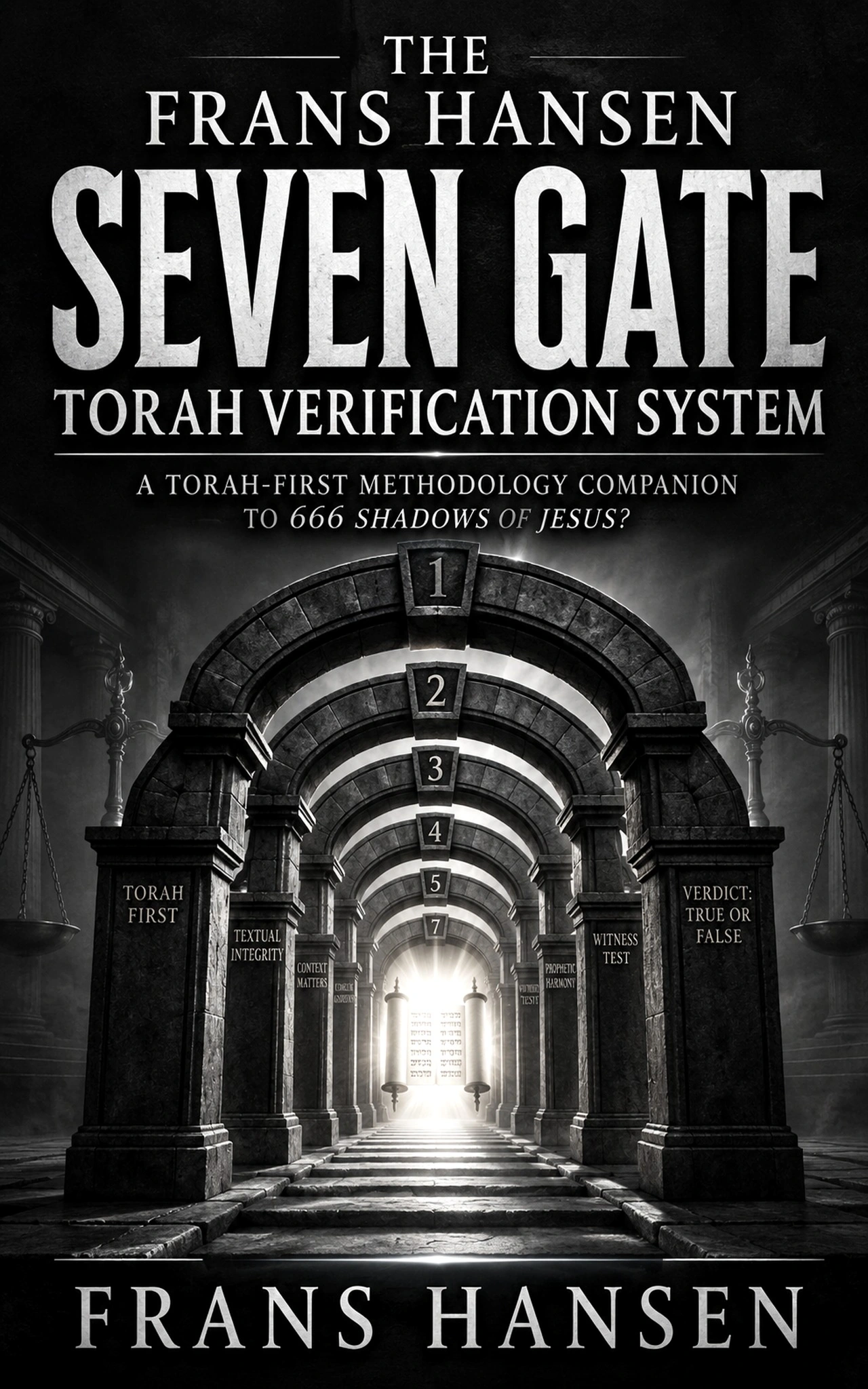
Only after the wider problem behind “If doubt is automatically blamed on the devil, how can a Christian ever test whether the doctrine itself is wrong?” is clear should the book enter. Here that book is The Frans Hansen Seven Gate Torah Verification System: A Torah-based procedure for testing any religious claim by text, context, covenant, prophetic outcome, and burden of proof., built to examine Method for testing religious claims by text, context, covenant, prophetic outcome and burden of proof.