
Evidence bridge
If God commands imperfect humans to obey, does Torah really assume obedience is impossible?
The desired certainty is not absolute certainty about every doctrine. It is enough precision to say why “If God commands imperfect humans to obey, does Torah really assume obedience is impossible?” is Verified, Possible, Disputed, Unsupported, or Contradicted by the controlling source.
What this article established
Torah assumes human beings can obey, repent when they fail, and return. Deuteronomy 30 explicitly says the command is not too hard or too distant. That is different from claiming anyone achieves flawless sinlessness.
- Verified: Torah commands real human obedience and describes that obedience as achievable.
- Verified: Torah also assumes human beings can sin and therefore supplies covenantal means of repentance and atonement.
- Possible as later Christian theology: one may argue that human obedience cannot provide the kind of justification Paul describes.
- Contradicted by the controlling Torah text: the claim that Moses teaches the commandments are impossible to do.
The question that still remains
Beyond “If God commands imperfect humans to obey, does Torah really assume obedience is impossible?”, can the larger claim be established across Paul's claims on law, faith, circumcision, Sinai, Jerusalem and Israel while Torah’s sacrificial categories, prophetic repentance texts, examples of forgiveness without blood remains controlling?
Why this book is the next step
The fit is narrower than 'same biblical book' or 'same doctrine.' The unresolved test is Beyond “If God commands imperfect humans to obey, does Torah really assume obedience is impossible?”, can the larger claim be established across Paul's claims on law, faith, circumcision, Sinai, Jerusalem and Israel while Torah’s sacrificial categories, prophetic repentance texts, examples of forgiveness without blood remains controlling?, and GALATIANS vs. THE HEBREW BIBLE: Paul’s War on Sinai supplies the broader treatment of Paul's claims on law, faith, circumcision, Sinai, Jerusalem and Israel needed to run it. The reader is not being moved sideways to a related product; the same unresolved sin, repentance, forgiveness, sacrifice, and personal responsibility problem is being followed outward. The worked hinge that makes this assignment specific is commands / imperfect / humans / obey / really.
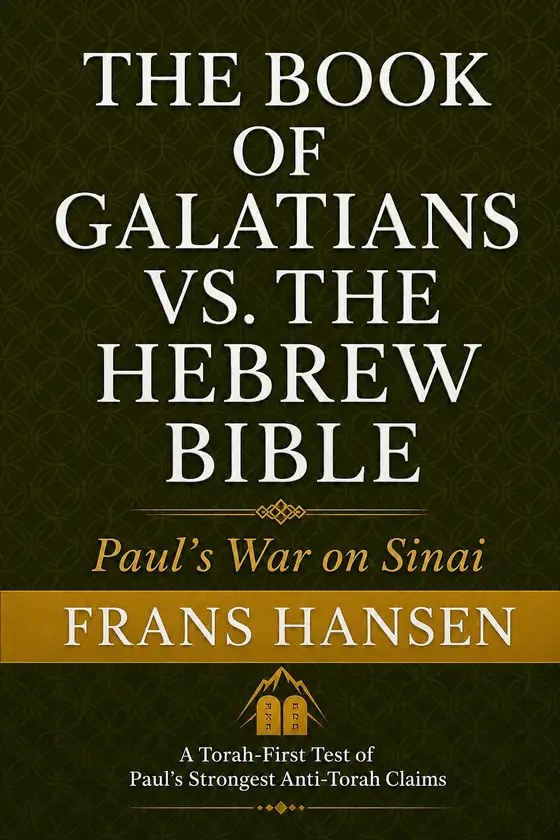
From the wider question raised by “If God commands imperfect humans to obey, does Torah really assume obedience is impossible?”, the book choice becomes specific: GALATIANS vs. THE HEBREW BIBLE: Paul’s War on Sinai carries the investigation into Paul's claims on law, faith, circumcision, Sinai, Jerusalem and Israel.