
Evidence bridge
If Isaiah 7:14 commands a name, what happens when Jesus was never given that name?
The reader wants to be able to explain “If Isaiah 7:14 commands a name, what happens when Jesus was never given that name?” from the Masoretic wording, the cited passage’s historical horizon, Matthew’s quotation form, and any material Septuagint difference without relying on denominational authority or counter-missionary slogans.
What this article established
It creates a real fulfillment question. It does not, by itself, destroy every Christian reading.
- Verified: Isaiah 7:14 says the child will be called Immanuel.
- Verified: Matthew gives Jesus the personal name Jesus while applying Isaiah's Immanuel statement to him.
- Plausible Christian defense: Immanuel functions as a title or theological description, “God with us,” rather than the child's ordinary personal name.
- Still unresolved by that defense: why Isaiah's Ahaz-era sign should be relocated to Jesus seven centuries later.
The question that still remains
Beyond “If Isaiah 7:14 commands a name, what happens when Jesus was never given that name?”, can the larger claim be established across Matthew's quotations, fulfillment claims, and messianic arguments against the Hebrew text while the Masoretic wording, the cited passage’s historical horizon, Matthew’s quotation form remains controlling?
Why this book is the next step
commands / name / happens / never: the problem has moved from one Isaiah 7:14 ruling into the exact scope of THE GOSPEL OF MATTHEW UNDER THE TORAH TEST: Quotations, “Fulfillment,” and Messianism Tested Against the Hebrew Text. A wider verdict needs a fresh source. Test the claim under the same rule that would be accepted if the conclusion were reversed. Isolate the promised outcome before the verdict widens. Corroborate the source chronology before a later author supplies the answer; keep the concrete markers cited, Isaiah, 7:14, commands, name visible.
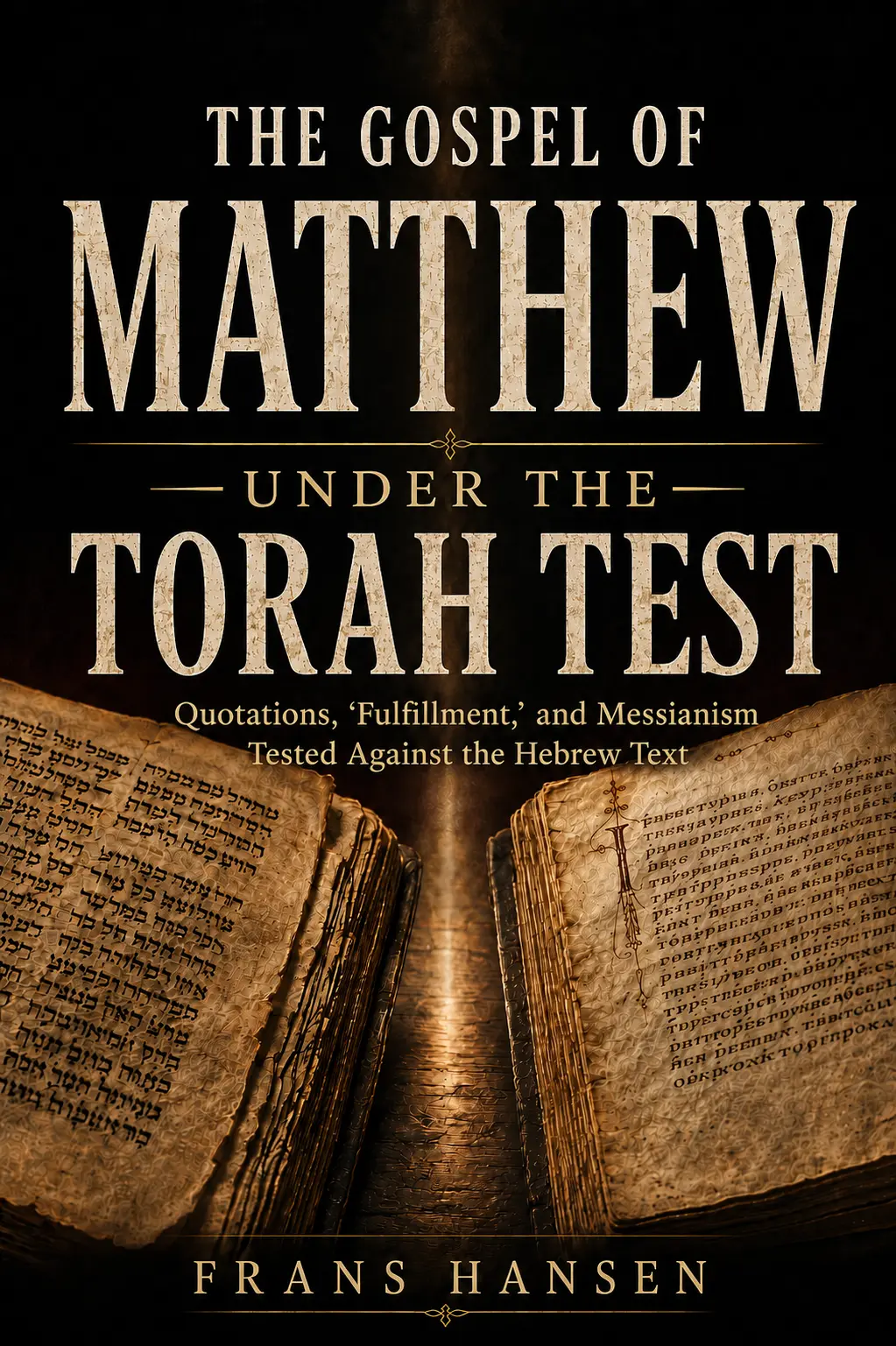
From the wider question raised by “If Isaiah 7:14 commands a name, what happens when Jesus was never given that name?”, the book choice becomes specific: THE GOSPEL OF MATTHEW UNDER THE TORAH TEST: Quotations, “Fulfillment,” and Messianism Tested Against the Hebrew Text carries the investigation into Matthew's quotations, fulfillment claims, and messianic arguments against the Hebrew text.