
Evidence bridge
What does the controlling Tanakh evidence establish about this claim: Leviticus 5 flour sin offering versus absolute blood-only forgiveness?
The goal is to know exactly where the evidence ends at “Leviticus 5 flour sin offering versus absolute blood-only forgiveness”, so later theology cannot borrow certainty from a source that never supplied it.
What this article established
Leviticus 5:11–13 explicitly allows a poor sinner to bring flour as a sin offering, after which the priest makes atonement and the person is forgiven. Blood is central in Torah’s sacrificial system, but the absolute claim that forgiveness is impossible without blood is contradicted by Torah’s own exception.
- Verified: blood has a central atoning function in Torah’s sacrificial system.
- Verified: Leviticus 5:11–13 permits fine flour as a sin offering for a person too poor to bring birds.
- Verified: Torah says the priest makes atonement through that procedure and the sinner is forgiven.
- Contradicted by Leviticus 5: the absolute slogan that forgiveness is impossible without blood in every case.
- Possible as Christian theology: Christians may argue that all forgiveness ultimately depends on Christ’s blood even when an earlier ritual contained none.
The question that still remains
Beyond “What does the controlling Tanakh evidence establish about this claim: Leviticus 5 flour sin offering versus absolute blood-only forgiveness?”, can the larger claim be established across Better covenant, priesthood, covenant and atonement tested inside Torah rules while Jeremiah 31, Torah’s priesthood and atonement rules, the named covenant partners remains controlling?
Why this book is the next step
THE EPISTLE TO THE HEBREWS VS. THE HEBREW BIBLE: How the New Testament Rewrites the Tanakh - A Line-by-line Investigation is the narrowest catalogue match because its stated scope is Better covenant, priesthood, covenant and atonement tested inside Torah rules; that directly answers the remaining problem after Leviticus, flour, sin, offering, whereas a general counter-missionary title would broaden too far. The assignment would fail if the remaining question were different; its fit depends on the exact move from Leviticus / flour / sin / offering into Better covenant, priesthood, covenant and atonement tested inside Torah rules. The worked hinge that makes this assignment specific is Leviticus 5 / Leviticus / flour / sin / offering.
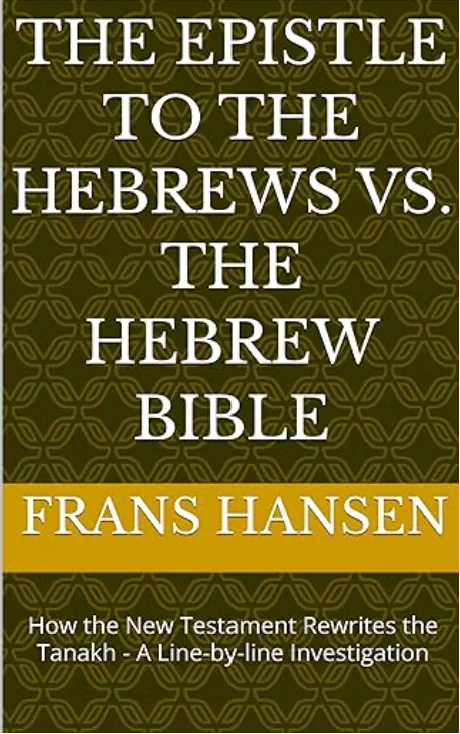
The landing page for “What does the controlling Tanakh evidence establish about this claim: Leviticus 5 flour sin offering versus absolute blood-only forgiveness?” has done its job when the reader can see why THE EPISTLE TO THE HEBREWS VS. THE HEBREW BIBLE: How the New Testament Rewrites the Tanakh - A Line-by-line Investigation—not a generic anti-Christian title—continues this exact problem across Better covenant, priesthood, covenant and atonement tested inside Torah rules.