
Evidence bridge
Matthew “Nazarene” from Isaiah 11 netzer?
The reader wants to be able to explain “Matthew “Nazarene” from Isaiah 11 netzer?” from the Masoretic wording, the cited passage’s historical horizon, Matthew’s quotation form, and any material Septuagint difference without relying on denominational authority or counter-missionary slogans.
What this article established
Matthew 2:23 says the prophets foretold that Jesus would be called a Nazarene, yet Tanakh contains no such quotation. Isaiah 11:1 uses netzer, “branch,” not “Nazarene,” and the ancient Greek renders it as a flower. Netzer may support wordplay; it cannot become the missing verse.
- Verified: No Tanakh verse says, “He shall be called a Nazarene.”
- Verified: Isaiah 11:1 contains netzer, “branch.”
- Possible: Matthew may be using wordplay or a thematic prophetic summary.
- Unsupported: Isaiah 11:1 is the direct textual source of the sentence Matthew quotes.
The question that still remains
When “Matthew “Nazarene” from Isaiah 11 netzer?” is no longer left vague, can the surrounding argument still be sustained across Matthew's quotations, fulfillment claims, and messianic arguments against the Hebrew text from the Masoretic wording, the cited passage’s historical horizon, Matthew’s quotation form?
Why this book is the next step
THE GOSPEL OF MATTHEW UNDER THE TORAH TEST: Quotations, “Fulfillment,” and Messianism Tested Against the Hebrew Text earns the slot because the reader's unresolved question moves from Matthew, Nazarene, Isaiah, netzer to Matthew's quotations, fulfillment claims, and messianic arguments against the Hebrew text, precisely the domain this title was built to audit. The match is therefore between unresolved scope and book scope, not between repeated keywords. The worked hinge that makes this assignment specific is Isaiah 11 / Matthew / Nazarene / Isaiah / netzer.
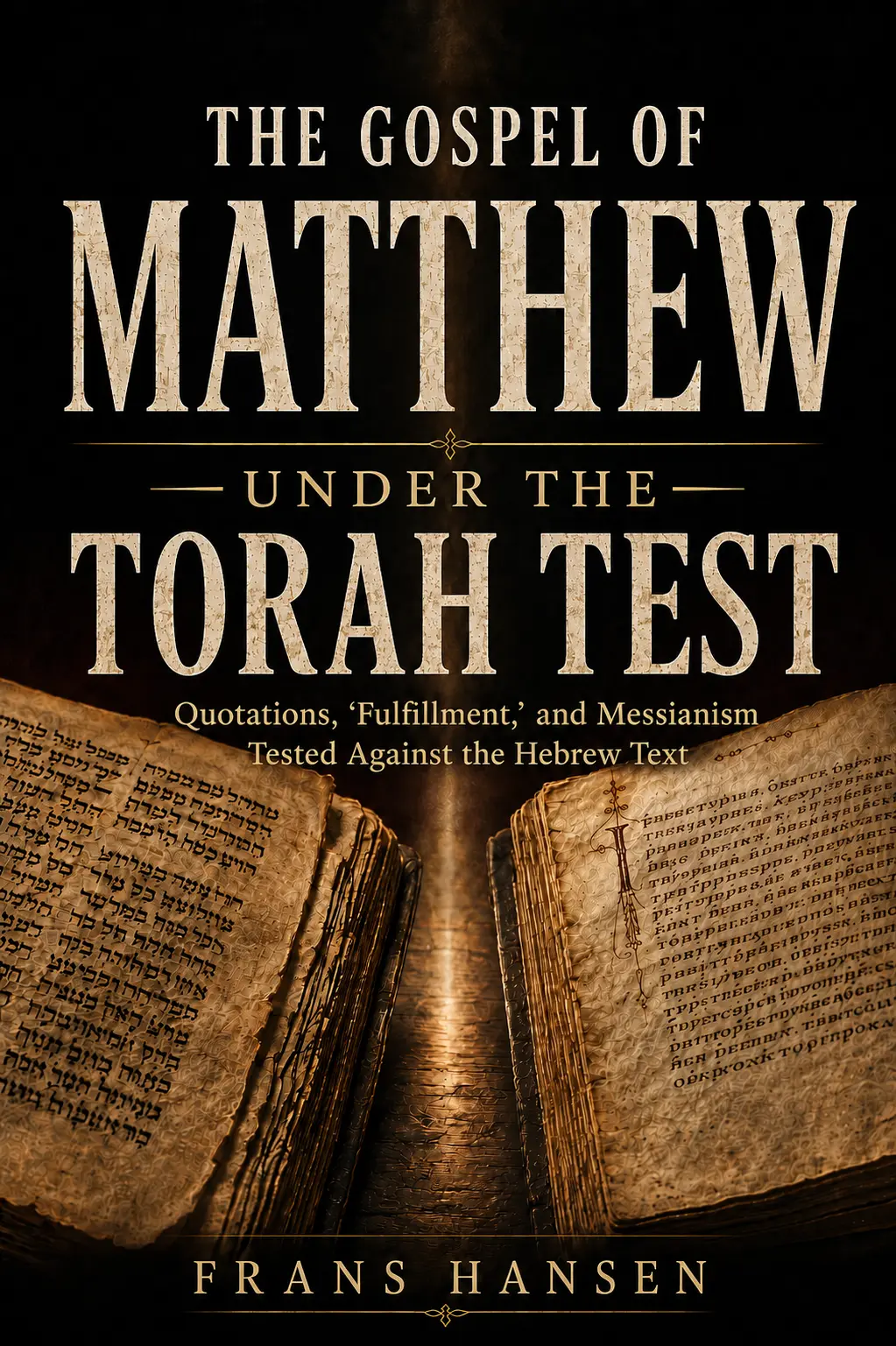
If the wider question after “Matthew “Nazarene” from Isaiah 11 netzer?” is genuinely When “Matthew “Nazarene” from Isaiah 11 netzer?” is no longer left vague, can the surrounding argument still be sustained across Matthew's quotations, fulfillment claims, and messianic arguments against the Hebrew text from the Masoretic wording, the cited passage’s historical horizon, Matthew’s quotation form?, the next destination is THE GOSPEL OF MATTHEW UNDER THE TORAH TEST: Quotations, “Fulfillment,” and Messianism Tested Against the Hebrew Text, because its scope is Matthew's quotations, fulfillment claims, and messianic arguments against the Hebrew text.