
Evidence bridge
Psalm 16:10: resurrection prediction or Acts' later messianic use?
The desired certainty is not absolute certainty about every doctrine. It is enough precision to say why “Psalm 16:10: resurrection prediction or Acts' later messianic use?” is Verified, Possible, Disputed, Unsupported, or Contradicted by the controlling source.
What this article established
Psalm 16 says God will not abandon the speaker to Sheol or let His faithful one see the pit or corruption. Acts argues that David died, so the words point beyond David to Jesus’ resurrection. That is a later messianic argument; the Psalm itself is written as the speaker’s trust in God’s preservation and does not name a future Messiah.
- Verified: Psalm 16:10 is first-person language of trust that God will not abandon the speaker to Sheol or the pit/corruption.
- Verified: Acts 2 and Acts 13 apply the verse to Jesus’ resurrection.
- Possible: a later reader can treat the verse typologically or prophetically beyond David.
- Disputed: whether the wording is an absolute prediction requiring a referent other than the Psalm’s speaker.
- Unsupported by Psalm 16 alone: the claim that the verse specifically predicts Jesus’ resurrection.
The question that still remains
After resolving “Psalm 16:10: resurrection prediction or Acts' later messianic use?”, does the wider case across Where theology becomes policy and breaks from Torah categories are justified survive the same test, especially the Torah/Tanakh text Acts invokes, the exact policy conclusion drawn from it?
Why this book is the next step
The reason for this book is structural, not topical coincidence: Psalm, 16:10, resurrection, prediction opens into After resolving “Psalm 16:10: resurrection prediction or Acts' later messianic use?”, does the wider case across Where theology becomes policy and breaks from Torah categories are justified survive the same test, especially the Torah/Tanakh text Acts invokes, the exact policy conclusion drawn from it? and the book is specifically organized around Where theology becomes policy and breaks from Torah categories are justified. The reason is methodological continuity: the book applies the same source controls beyond the single Psalm / 16:10 / resurrection / prediction hinge. The worked hinge that makes this assignment specific is Psalm 16:10 / Psalm / 16:10 / resurrection / prediction.
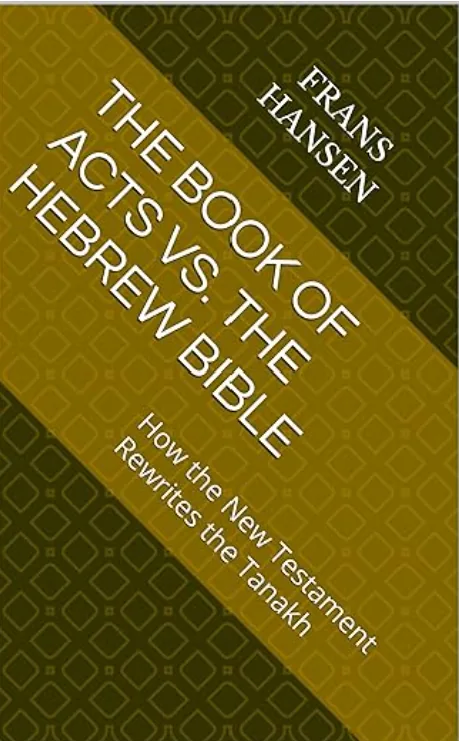
If the wider question after “Psalm 16:10: resurrection prediction or Acts' later messianic use?” is genuinely After resolving “Psalm 16:10: resurrection prediction or Acts' later messianic use?”, does the wider case across Where theology becomes policy and breaks from Torah categories are justified survive the same test, especially the Torah/Tanakh text Acts invokes, the exact policy conclusion drawn from it?, the next destination is THE BOOK OF ACTS VS. THE HEBREW BIBLE: How the New Testament Rewrites the Tanakh, because its scope is Where theology becomes policy and breaks from Torah categories are justified.