
Evidence bridge
Psalm 45 elohim king: deity or royal/grammatical language?
The target state is evidentiary clarity: a fair Christian formulation, a controlled reading of “Psalm 45 elohim king: deity or royal/grammatical language?”, an explicit concession, and a narrow verdict.
What this article established
Psalm 45 contains difficult royal language that can be translated vocatively: “Your throne, O God, is forever.” That reading should not be denied. But the same royal ode immediately says “therefore God, your God, has anointed you,” placing the honored king under God. The Psalm can support exalted royal language; it does not establish Trinitarian ontology.
- Verified: Psalm 45 uses *elohim* in connection with the royal figure.
- Possible and grammatically defensible: “Your throne, O God, is forever” as a vocative translation.
- Verified: the same figure is then addressed as one whose “God” anoints him.
- Possible: later Christian theology can read the two lines through a Father/Son distinction.
- Disputed: the precise force of *elohim* in the royal address.
- Unsupported by Psalm 45 alone: Trinitarian ontology or the claim that the royal king is God in the same unqualified sense as Hashem.
The question that still remains
If “Psalm 45 elohim king: deity or royal/grammatical language?” is settled from the sources, what survives when the inquiry expands to Whether Trinitarian doctrine coheres with Sinai and divine simplicity under the Shema, Torah’s anti-image and divine-unity language, the specific prooftext?
Why this book is the next step
royal / grammatical / language / Trinity: the problem has moved from one Psalm 45 ruling into the exact scope of The Trinity vs Absolute Unity: Sinai, Divine Simplicity, and the Limits of Relational Godhood. Nothing outside this scope is decided without another evidentiary step. Separate what the passage says, what it permits, and what a later reader adds. Classify the burden shift without letting familiarity count as proof.
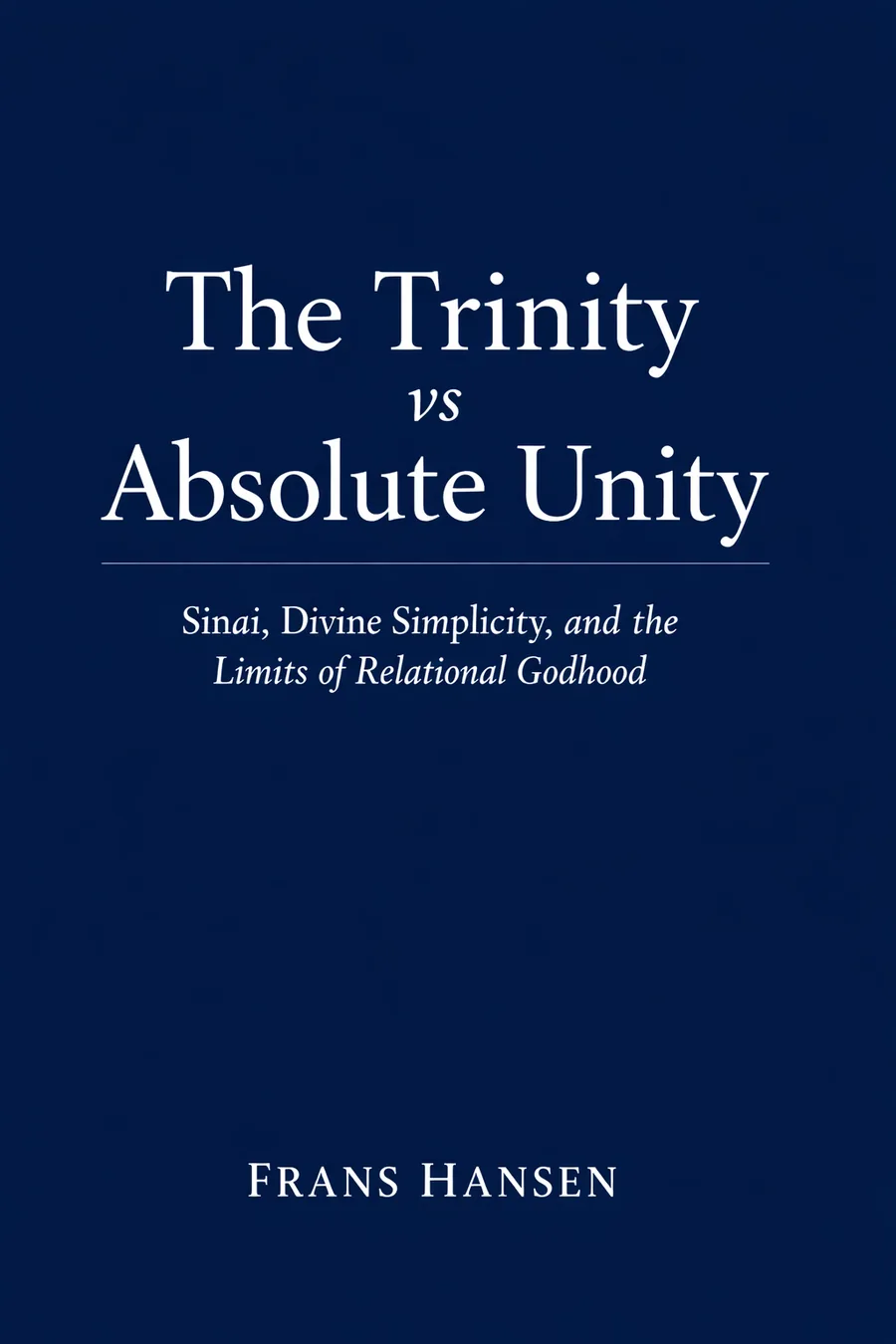
From the wider question raised by “Psalm 45 elohim king: deity or royal/grammatical language?”, the book choice becomes specific: The Trinity vs Absolute Unity: Sinai, Divine Simplicity, and the Limits of Relational Godhood carries the investigation into Whether Trinitarian doctrine coheres with Sinai and divine simplicity.