
Evidence bridge
What does the controlling Tanakh evidence establish about this claim: Psalm 51 God does not delight in sacrifice: reconcile with Torah system?
The reader wants to be able to explain “Psalm 51 God does not delight in sacrifice: reconcile with Torah system” from Jeremiah 31, Torah’s priesthood and atonement rules, the named covenant partners, and Hebrews’ interpretive steps without relying on denominational authority or counter-missionary slogans.
What this article established
Psalm 51 says God does not delight in sacrifice in the speaker’s present condition, but the Psalm ends by anticipating righteous sacrifices and burnt offerings in a restored Zion. David is not contradicting Torah; he is subordinating ritual to repentance and integrity.
- Verified: Psalm 51 prioritizes contrition and repentance over empty sacrificial performance.
- Verified: the Psalm does not present ritual as a substitute for moral return.
- Verified: its closing verses anticipate righteous sacrifices and bulls on the altar.
- Unsupported: “Psalm 51 proves God never wanted sacrifices.”
- Also unsupported: “Psalm 51 predicts a final human sacrifice replacing Temple worship.”
The question that still remains
Beyond “What does the controlling Tanakh evidence establish about this claim: Psalm 51 God does not delight in sacrifice: reconcile with Torah system?”, can the larger claim be established across Better covenant, priesthood, covenant and atonement tested inside Torah rules while Jeremiah 31, Torah’s priesthood and atonement rules, the named covenant partners remains controlling?
Why this book is the next step
Put the later interpretation in the witness box rather than on the judge’s bench. new / controlling / establish / Psalm: the problem has moved from one Psalm 51 ruling into the exact scope of THE EPISTLE TO THE HEBREWS VS. THE HEBREW BIBLE: How the New Testament Rewrites the Tanakh - A Line-by-line Investigation. The conclusion stops where the controlling source stops. Locate the translation step before the verdict widens. Challenge the inferential bridge under the Hebrew wording first; keep the concrete markers reconcile, system, Jeremiah, 31, Hebrews visible.
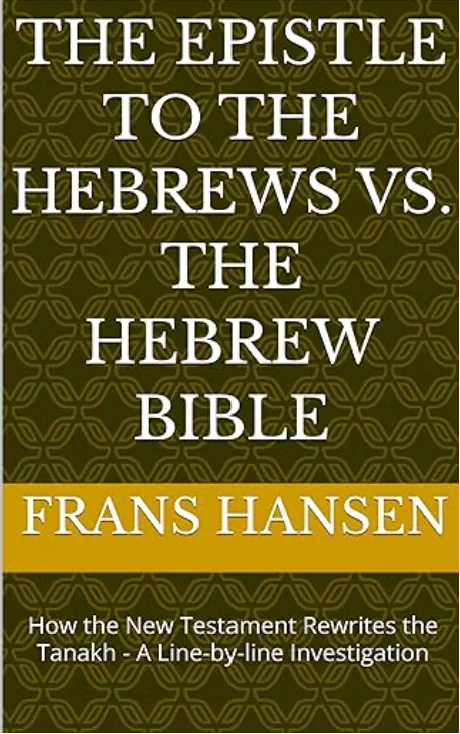
If the wider question after “What does the controlling Tanakh evidence establish about this claim: Psalm 51 God does not delight in sacrifice: reconcile with Torah system?” is genuinely Beyond “What does the controlling Tanakh evidence establish about this claim: Psalm 51 God does not delight in sacrifice: reconcile with Torah system?”, can the larger claim be established across Better covenant, priesthood, covenant and atonement tested inside Torah rules while Jeremiah 31, Torah’s priesthood and atonement rules, the named covenant partners remains controlling?, the next destination is THE EPISTLE TO THE HEBREWS VS. THE HEBREW BIBLE: How the New Testament Rewrites the Tanakh - A Line-by-line Investigation, because its scope is Better covenant, priesthood, covenant and atonement tested inside Torah rules.