
Evidence bridge
Does this claim survive a Torah-first reading: Psalm 74, Redemption, and the Torah That Could Not Die?
The goal is to know exactly where the evidence ends at “Psalm 74, Redemption, and the Torah That Could Not Die”, so later theology cannot borrow certainty from a source that never supplied it.
What this article established
Psalm 74 does not use the word Torah as its central legal term, but it does something decisive: after sanctuary catastrophe, Israel still appeals to God’s covenant as an operative basis for complaint and redemption. That supports covenant continuity, while stopping short of proving every later halachic question by itself.
- Verified: Psalm 74 is a communal lament over sanctuary catastrophe and national humiliation.
- Verified: the Psalm explicitly appeals to the covenant with הַבֵּט לַבְּרִית, “Look to the covenant.”
- Verified: the destruction of the sanctuary is therefore not treated by the Psalm as proof that the covenant relationship has ceased.
- Possible: the Psalm supports a broader argument for continuing Torah-covenant validity after catastrophe.
- Unsupported by Psalm 74 alone: the claim that every individual commandment remains presently actionable in exactly the same way under every later historical circumstance.
- Unsupported by Psalm 74: the opposite claim that Temple destruction itself proves Torah or covenant abolition.
- When “Does this claim survive a Torah-first reading: Psalm 74, Redemption, and the Torah That Could Not Die?” is no longer left vague, can the surrounding argument still be sustained across All 150 Psalms read as covenant speech with structural, contextual, and Hebrew precision from the Psalm in full, its superscription and literary voice where relevant, parallelism?
The question that still remains
When “Does this claim survive a Torah-first reading: Psalm 74, Redemption, and the Torah That Could Not Die?” is no longer left vague, can the surrounding argument still be sustained across All 150 Psalms read as covenant speech with structural, contextual, and Hebrew precision from the Psalm in full, its superscription and literary voice where relevant, parallelism?
Why this book is the next step
Put the later interpretation in the witness box rather than on the judge’s bench. Redemption / Die / readings / Psalms: the problem has moved from one Psalm 74 ruling into the exact scope of TEHILLIM In Its Own Voice: Reading All 150 Psalms As Covenant Speech. Possibility is not promoted to proof by repetition. Verify the referent before later application is admitted. Cross-check the stated covenant party before the claim is generalized; keep the concrete markers 74, Redemption, Die, readings, Psalms visible.
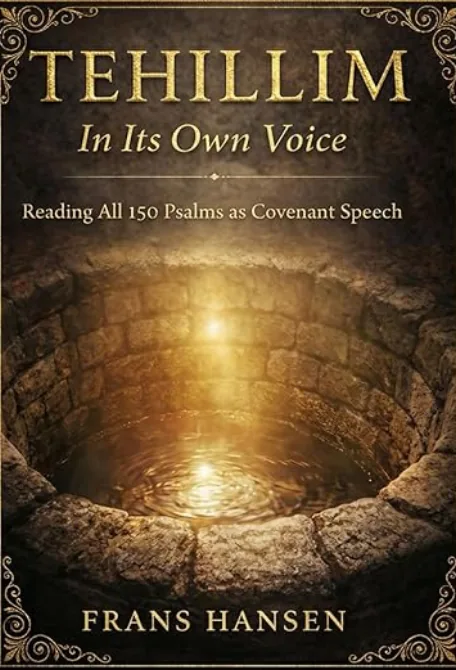
Only after the wider problem behind “Does this claim survive a Torah-first reading: Psalm 74, Redemption, and the Torah That Could Not Die?” is clear should the book enter. Here that book is TEHILLIM In Its Own Voice: Reading All 150 Psalms As Covenant Speech, built to examine All 150 Psalms read as covenant speech with structural, contextual, and Hebrew precision.