
Evidence bridge
So why should Matthew seize control of Isaiah, Paul seize control of Moses, or Hebrews seize control of Jeremiah?
The target state is evidentiary clarity: a fair Christian formulation, a controlled reading of “So why should Matthew seize control of Isaiah, Paul seize control of Moses, or Hebrews seize control of Jeremiah?”, an explicit concession, and a narrow verdict.
What this article established
They may interpret those earlier texts. What they cannot do, while their own authority is still under examination, is use their later interpretation as proof of what the earlier text originally meant. That is the jurisdiction problem.
- Verified: the earlier texts have their own speakers, audiences, covenant categories, and contexts.
- Possible as Christian theology: later inspired revelation can disclose a fuller meaning.
- Not available as neutral proof: assuming the later writer's inspiration in order to establish the later writer's interpretation.
The question that still remains
If the evidence settles “So why should Matthew seize control of Isaiah, Paul seize control of Moses, or Hebrews seize control of Jeremiah?”, does Better covenant, priesthood, covenant and atonement tested inside Torah rules confirm the same conclusion once Jeremiah 31, Torah’s priesthood and atonement rules, the named covenant partners is kept in control?
Why this book is the next step
Read the evidence in chronological order before judging the doctrine. 31 / new / covenant / Torah’s: the problem has moved from one Jeremiah 31 ruling into the exact scope of THE EPISTLE TO THE HEBREWS VS. THE HEBREW BIBLE: How the New Testament Rewrites the Tanakh - A Line-by-line Investigation. A wider verdict needs a fresh source. Sequence the legal category before the verdict widens.
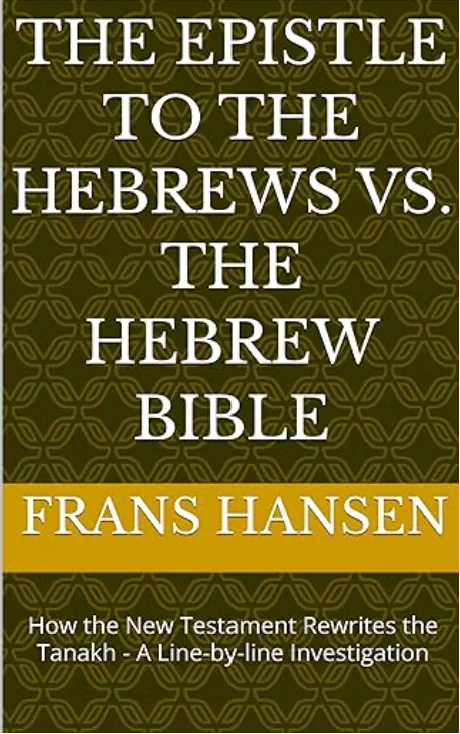
From the wider question raised by “So why should Matthew seize control of Isaiah, Paul seize control of Moses, or Hebrews seize control of Jeremiah?”, the book choice becomes specific: THE EPISTLE TO THE HEBREWS VS. THE HEBREW BIBLE: How the New Testament Rewrites the Tanakh - A Line-by-line Investigation carries the investigation into Better covenant, priesthood, covenant and atonement tested inside Torah rules.