
Evidence bridge
Some respond, “It was fulfilled in meaning.” Meaning?
The target state is evidentiary clarity: a fair Christian formulation, a controlled reading of “Some respond, “It was fulfilled in meaning.” Meaning?”, an explicit concession, and a narrow verdict.
What this article established
Isaiah 7:14 is a sign inside the Syro-Ephraimite crisis, with a child whose early development marks the timeline for the collapse of Ahaz’s enemies. Matthew can reapply the text typologically, but “fulfilled in meaning” cannot erase the Hebrew wording and original horizon.
- Verified: Isaiah 7 addresses Ahaz during the Syro-Ephraimite crisis.
- Verified: the child’s early development supplies a near-term timeline for the fate of the kings Ahaz fears.
- Verified: the Masoretic Text uses עַלְמָה, not the technical Hebrew term that most directly denotes a virgin.
- Verified: Matthew uses the Greek quotation form and reapplies the sign to Jesus.
- Possible within Christian theology: Matthew can be read typologically, with Jesus embodying a deeper “God with us” motif.
- Unsupported: the claim that saying “fulfilled in meaning” converts Matthew’s later reapplication into the original historical meaning of Isaiah 7:14.
- After resolving “Some respond, ‘It was fulfilled in meaning.’ Meaning?”, does the wider case across Matthew's quotations, fulfillment claims, and messianic arguments against the Hebrew text survive the same test, especially the Masoretic wording, the cited passage’s historical horizon, Matthew’s quotation form?
The question that still remains
After resolving “Some respond, “It was fulfilled in meaning.” Meaning?”, does the wider case across Matthew's quotations, fulfillment claims, and messianic arguments against the Hebrew text survive the same test, especially the Masoretic wording, the cited passage’s historical horizon, Matthew’s quotation form?
Why this book is the next step
The reason for this book is structural, not topical coincidence: Some, respond, fulfilled, meaning opens into After resolving “Some respond, “It was fulfilled in meaning.” Meaning?”, does the wider case across Matthew's quotations, fulfillment claims, and messianic arguments against the Hebrew text survive the same test, especially the Masoretic wording, the cited passage’s historical horizon, Matthew’s quotation form? and the book is specifically organized around Matthew's quotations, fulfillment claims, and messianic arguments against the Hebrew text. A broader title would dilute the Some / respond / fulfilled / meaning evidence family; a narrower article would not reach the cross-text question. The worked hinge that makes this assignment specific is Some / respond / fulfilled / meaning.
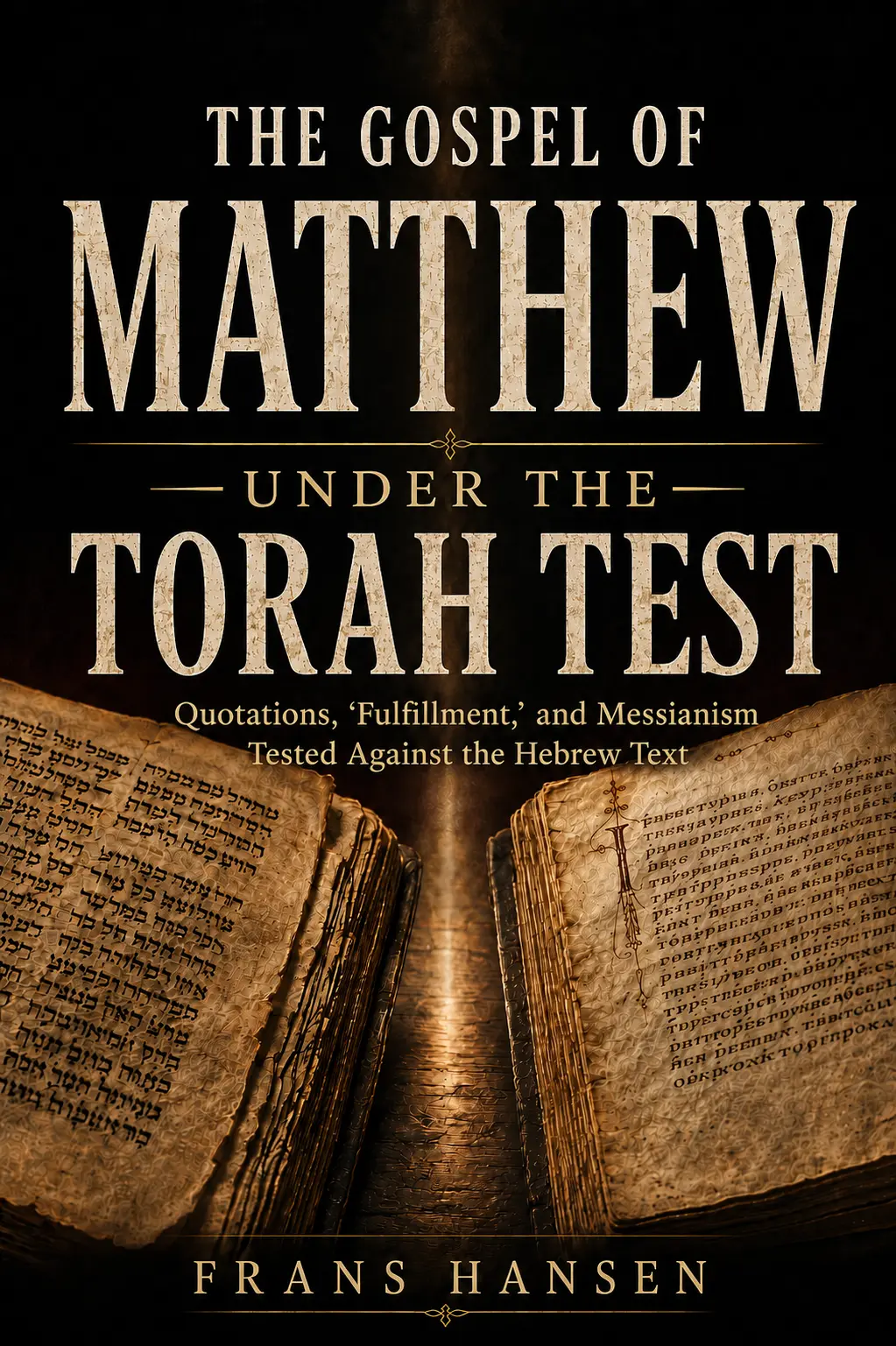
If the wider question after “Some respond, “It was fulfilled in meaning.” Meaning?” is genuinely After resolving “Some respond, “It was fulfilled in meaning.” Meaning?”, does the wider case across Matthew's quotations, fulfillment claims, and messianic arguments against the Hebrew text survive the same test, especially the Masoretic wording, the cited passage’s historical horizon, Matthew’s quotation form?, the next destination is THE GOSPEL OF MATTHEW UNDER THE TORAH TEST: Quotations, “Fulfillment,” and Messianism Tested Against the Hebrew Text, because its scope is Matthew's quotations, fulfillment claims, and messianic arguments against the Hebrew text.