
Evidence bridge
That raises a deeper question: if God’s law can expire, what cannot expire?
The reader wants a bounded verdict: what “That raises a deeper question: if God’s law can expire, what cannot expire?” establishes, what remains possible, and what it does not authorize, using Jeremiah 31, Torah’s priesthood and atonement rules, the named covenant partners, and Hebrews’ interpretive steps.
What this article established
Hebrews can argue that covenant administration changed, but Jeremiah 31 does not say Torah expires. It names Israel and Judah, promises an internalized Torah, and leaves Hebrews to supply the extra conclusion that the former covenant is obsolete.
- Verified: Jeremiah 31 promises a new covenant with Israel and Judah.
- Verified: the promised covenant includes Torah written within the people, knowledge of God, and forgiveness.
- Verified: Torah can contain commandments whose present applicability depends on land, Temple, office, or circumstance without declaring those commandments repealed.
- Verified: Torah uses enduring covenant language for the priesthood.
- Possible within Christian theology: Hebrews can interpret these texts through fulfillment and argue for a changed covenant administration.
- Unsupported by Jeremiah 31 itself: the proposition that God’s Torah expires or that the new covenant means Torah is abolished.
- After resolving “That raises a deeper question: if God’s law can expire, what cannot expire?”, does the wider case across Better covenant, priesthood, covenant and atonement tested inside Torah rules survive the same test, especially Jeremiah 31, Torah’s priesthood and atonement rules, the named covenant partners?
The question that still remains
After resolving “That raises a deeper question: if God’s law can expire, what cannot expire?”, does the wider case across Better covenant, priesthood, covenant and atonement tested inside Torah rules survive the same test, especially Jeremiah 31, Torah’s priesthood and atonement rules, the named covenant partners?
Why this book is the next step
THE EPISTLE TO THE HEBREWS VS. THE HEBREW BIBLE: How the New Testament Rewrites the Tanakh - A Line-by-line Investigation earns the slot because the reader's unresolved question moves from raises, deeper, law, expire to Better covenant, priesthood, covenant and atonement tested inside Torah rules, precisely the domain this title was built to audit. This keeps the sale downstream of the evidence: first raises / deeper / law / expire, then the larger Better covenant, priesthood, covenant and atonement tested inside Torah rules audit. The worked hinge that makes this assignment specific is raises / deeper / law / expire / cannot.
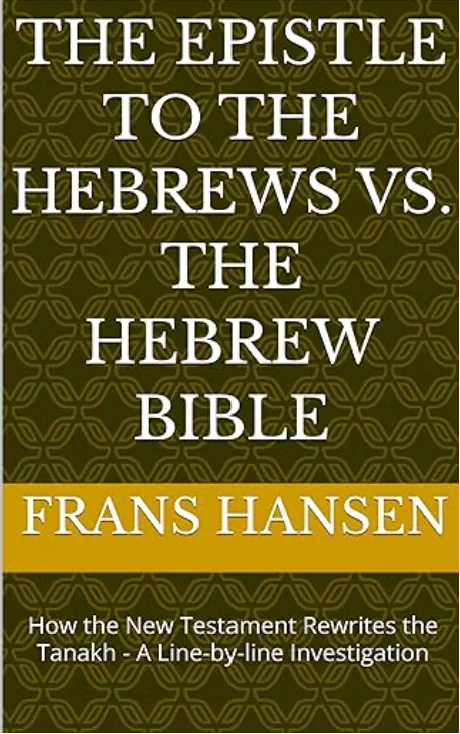
From the wider question raised by “That raises a deeper question: if God’s law can expire, what cannot expire?”, the book choice becomes specific: THE EPISTLE TO THE HEBREWS VS. THE HEBREW BIBLE: How the New Testament Rewrites the Tanakh - A Line-by-line Investigation carries the investigation into Better covenant, priesthood, covenant and atonement tested inside Torah rules.