
Evidence bridge
THE DECISIVE QUESTION On what legal basis does Israel accuse God in Psalm 74 if the law governing the relationship no longer exists?
The goal is to know exactly where the evidence ends at “THE DECISIVE QUESTION On what legal basis does Israel accuse God in Psalm 74 if the law governing the relationship no longer exists?”, so later theology cannot borrow certainty from a source that never supplied it.
What this article established
Psalm 74 is a national lament over sanctuary destruction, yet it still tells Hashem to remember His congregation and to “look to the covenant.” The Psalm alone does not prove every Torah command applies identically in every age, but its argument presupposes a covenant relationship that disaster has not erased.
- Verified: Psalm 74 is a communal lament over the destruction or desecration of the sanctuary.
- Verified: the Psalm appeals to Israel as Hashem’s acquired congregation and explicitly says, “Look to the covenant.”
- Verified: Leviticus 26 and Deuteronomy 4 already distinguish severe covenant punishment from total covenant annulment.
- Possible: Christians may argue that later fulfillment changes the administration or application of Mosaic law.
- Unsupported: using Israel’s catastrophe itself as proof that the covenant relationship or Torah framework had already expired.
The question that still remains
Beyond “THE DECISIVE QUESTION On what legal basis does Israel accuse God in Psalm 74 if the law governing the relationship no longer exists?”, can the larger claim be established across All 150 Psalms read as covenant speech with structural, contextual, and Hebrew precision while the Psalm in full, its superscription and literary voice where relevant, parallelism remains controlling?
Why this book is the next step
This assignment is justified by the unresolved evidence field, not by keyword overlap. The next task after DECISIVE, legal, basis, Israel is Beyond “THE DECISIVE QUESTION On what legal basis does Israel accuse God in Psalm 74 if the law governing the relationship no longer exists?”, can the larger claim be established across All 150 Psalms read as covenant speech with structural, contextual, and Hebrew precision while the Psalm in full, its superscription and literary voice where relevant, parallelism remains controlling?; TEHILLIM In Its Own Voice: Reading All 150 Psalms As Covenant Speech covers All 150 Psalms read as covenant speech with structural, contextual, and Hebrew precision. That distinction matters here because psalm speaker, genre, royal language, and covenant setting requires more than another isolated response to DECISIVE / legal / basis / Israel. The worked hinge that makes this assignment specific is Psalm 74 / DECISIVE / legal / basis / Israel.
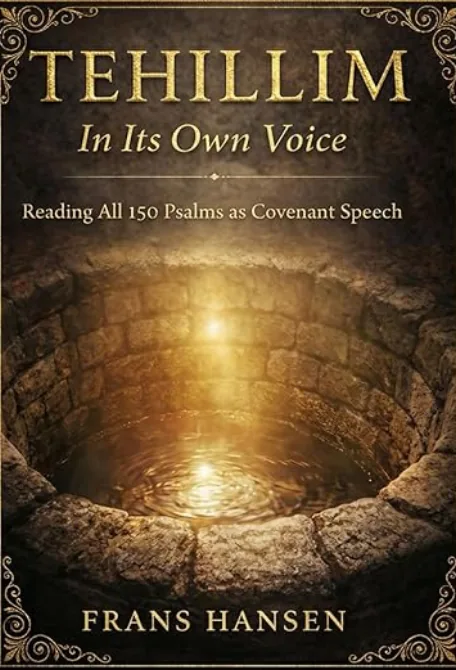
Only after the wider problem behind “THE DECISIVE QUESTION On what legal basis does Israel accuse God in Psalm 74 if the law governing the relationship no longer exists?” is clear should the book enter. Here that book is TEHILLIM In Its Own Voice: Reading All 150 Psalms As Covenant Speech, built to examine All 150 Psalms read as covenant speech with structural, contextual, and Hebrew precision.