
Evidence bridge
The Temple still stood and the sacrificial system was in place long after Jesus died Acts 24:14-19 Acts 21:20-27 These topics were not on the list, why?
The target state is evidentiary clarity: a fair Christian formulation, a controlled reading of “The Temple still stood and the sacrificial system was in place long after Jesus died Acts 24:14-19 Acts 21:20-27 These topics were not on the list, why?”, an explicit concession, and a narrow verdict.
What this article established
Acts 15’s four requirements are not a complete Christian creed. Acts itself continues to depict Temple worship, purification, offerings, baptism, and distinct Jewish Torah observance. The list addresses a specific Gentile dispute, so what is absent from the list cannot automatically be declared abolished.
- Verified: Acts 15 gives four specific Gentile requirements in response to a circumcision/Torah dispute.
- Verified: Acts later depicts Jewish believers, Paul, Temple purification, and offerings.
- Verified: baptism exists elsewhere in Acts despite being absent from the four-item list.
- Therefore: absence from Acts 15 cannot by itself establish abolition.
- How much of the wider case remains once Where theology becomes policy and breaks from Torah categories are justified is examined under the Torah/Tanakh text Acts invokes, the exact policy conclusion drawn from it, and the covenant or legal category…?
The question that still remains
If “The Temple still stood and the sacrificial system was in place long after Jesus died Acts 24:14-19 Acts 21:20-27 These topics were not on the list, why?” is settled from the sources, what survives when the inquiry expands to Where theology becomes policy and breaks from Torah categories are justified under the Torah/Tanakh text Acts invokes, the exact policy conclusion drawn from it?
Why this book is the next step
THE BOOK OF ACTS VS. THE HEBREW BIBLE: How the New Testament Rewrites the Tanakh earns the slot because the reader's unresolved question moves from Temple, still, stood, sacrificial to Where theology becomes policy and breaks from Torah categories are justified, precisely the domain this title was built to audit. The reader is not being moved sideways to a related product; the same unresolved Acts, Gentile policy, and Torah categories problem is being followed outward. The worked hinge that makes this assignment specific is Acts 24:14 / Temple / still / stood / sacrificial.
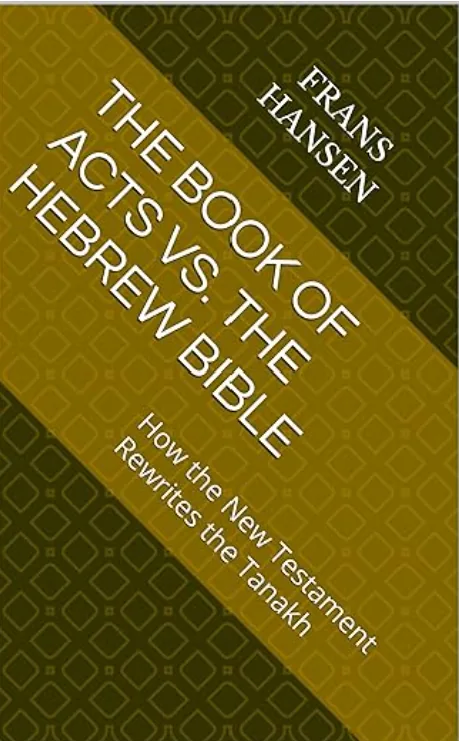
The source map beyond “The Temple still stood and the sacrificial system was in place long after Jesus died Acts 24:14-19 Acts 21:20-27 These topics were not on the list, why?” points to one book-length continuation: THE BOOK OF ACTS VS. THE HEBREW BIBLE: How the New Testament Rewrites the Tanakh, whose scope is Where theology becomes policy and breaks from Torah categories are justified. Open the book page for the full treatment.