
Evidence bridge
Does this claim survive a Torah-first reading: Torah Never Cancelled Its Own Law — Not Once?
The target state is evidentiary clarity: a fair Christian formulation, a controlled reading of “Torah Never Cancelled Its Own Law — Not Once”, an explicit concession, and a narrow verdict.
What this article established
“Torah never cancelled its own law.” Does that claim survive a Torah-first reading?
- Verified: Torah forbids unauthorized addition and subtraction.
- Verified: Torah contains commands with different people, places and conditions, so “eternal Torah” does not mean every individual performs every command at every moment.
- Verified: Torah’s own restoration passages call Israel back to Hashem and His commandments.
- Christian claim: Messiah fulfills and transforms the covenantal administration of Torah.
- Torah-first verdict: that transformation cannot be assumed from later Christian theology. The warrant must be shown from the prior revelation.
The question that still remains
Does the method used to answer “Does this claim survive a Torah-first reading: Torah Never Cancelled Its Own Law — Not Once?” produce the same result across Better covenant, priesthood, covenant and atonement tested inside Torah rules when Jeremiah 31, Torah’s priesthood and atonement rules, the named covenant partners controls the test?
Why this book is the next step
The article's next legitimate scope matches this book's scope: Better covenant, priesthood, covenant and atonement tested inside Torah rules. That makes THE EPISTLE TO THE HEBREWS VS. THE HEBREW BIBLE: How the New Testament Rewrites the Tanakh - A Line-by-line Investigation a continuation of the same inquiry rather than an unrelated sale. The book earns the bridge by expanding the evidence set while keeping the same burden of proof used at Never / Cancelled / Its / Own. The worked hinge that makes this assignment specific is Never / Cancelled / Its / Own / Law.
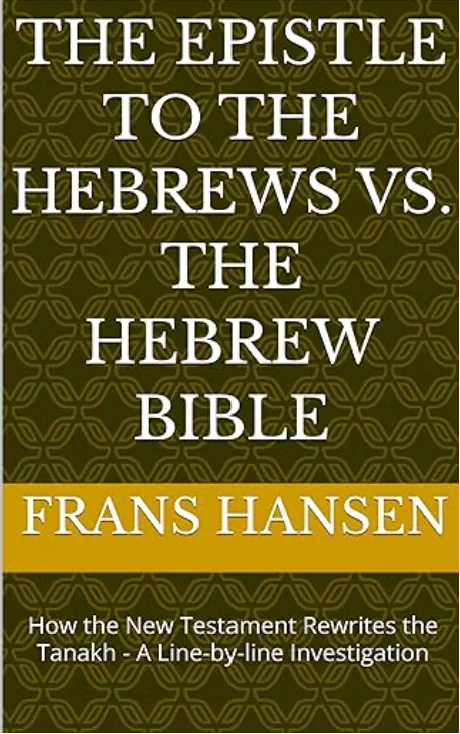
The landing page for “Does this claim survive a Torah-first reading: Torah Never Cancelled Its Own Law — Not Once?” has done its job when the reader can see why THE EPISTLE TO THE HEBREWS VS. THE HEBREW BIBLE: How the New Testament Rewrites the Tanakh - A Line-by-line Investigation—not a generic anti-Christian title—continues this exact problem across Better covenant, priesthood, covenant and atonement tested inside Torah rules.