
Evidence bridge
What is the Torah difference between hishtachavah, bowing, and avodah, sacred service?
The goal is to know exactly where the evidence ends at “What is the Torah difference between hishtachavah, bowing, and avodah, sacred service?”, so later theology cannot borrow certainty from a source that never supplied it.
What this article established
Hebrew does not collapse every act of bowing into divine worship. Hishtachavah can describe prostration before God or before human beings, while avodah marks service and, in religious context, sacred service. Lexical category matters before theology is built from a Greek verb.
- Verified: hishtachavah can describe bowing before God or human beings.
- Verified: avodah/service is a distinct Hebrew category and in religious contexts can mean sacred service.
- Unsupported: “They bowed to Jesus, therefore the verb itself proves Jesus is God.”
- Still open: whether a particular New Testament scene adds other evidence that turns homage into divine worship.
The question that still remains
If “What is the Torah difference between hishtachavah, bowing, and avodah, sacred service?” is settled from the sources, what survives when the inquiry expands to Where Greek religious categories pull readers away from Hebrew Bible controls and reshape Hebrew concepts under the lexical range of hishtachavah/proskuneō, the separate vocabulary of sacred service?
Why this book is the next step
Start with speaker, audience, and horizon; let doctrine wait outside the text. hishtachavah / bowing / avodah / sacred: the problem has moved from one Worship language, Greek verbs and Torah categories ruling into the exact scope of Hebrew Words, Greek Religion: The Greek Testament Under Torah's Court. The same rule must govern the next text as governed this one. Compare the chronology before later application is admitted.
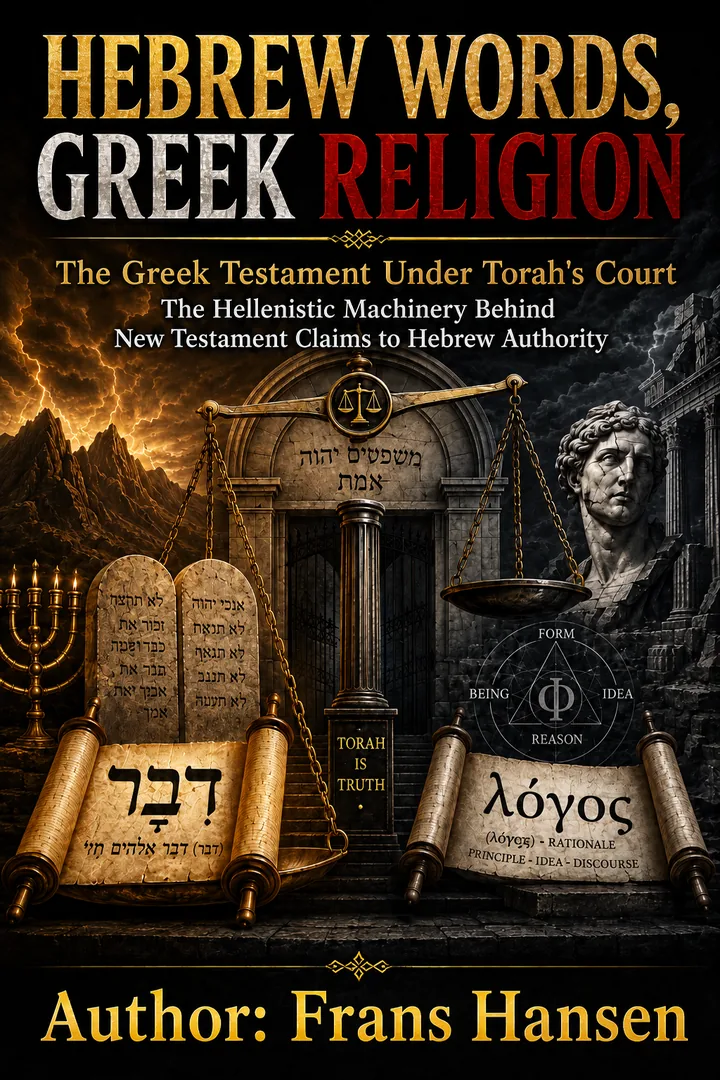
From the wider question raised by “What is the Torah difference between hishtachavah, bowing, and avodah, sacred service?”, the book choice becomes specific: Hebrew Words, Greek Religion: The Greek Testament Under Torah's Court carries the investigation into Where Greek religious categories pull readers away from Hebrew Bible controls and reshape Hebrew concepts.