
Evidence bridge
What makes Sinai different from a private vision claimed by one prophet, apostle, or mystic?
The reader wants to be able to explain “What makes Sinai different from a private vision claimed by one prophet, apostle, or mystic?” from Sinai’s public revelation, Torah’s prophet tests, covenant continuity, and the evidentiary status of later visions or apostolic claims without relying on denominational authority or counter-missionary slogans.
What this article established
Within Torah’s own narrative, Sinai is presented as a public covenant event heard by the nation, explicitly designed to establish Moses’ authority. Later prophets arise inside that already-given covenant and are tested by it. A private vision may be sincere or even true, but it does not possess the same covenantal evidentiary status merely because the claimant says God spoke.
- Verified: Torah presents Sinai as a national covenant revelation in which the people hear the divine communication connected with Moses' authority.
- Verified: Torah places later prophets under prior tests rather than allowing them to redefine the covenant by private authority.
- Possible: later private revelations can be genuine within a Torah framework.
- Disputed: how a modern historian should compare the historical evidence for Sinai with later religious events.
- Unsupported: the claim that a private vision, apostolic experience or mystical report receives authority equal to Sinai merely because the claimant says God spoke.
The question that still remains
Beyond “What makes Sinai different from a private vision claimed by one prophet, apostle, or mystic?”, can the larger claim be established across Method for testing religious claims by text, context, covenant, prophetic outcome and burden of proof while Sinai’s public revelation, Torah’s prophet tests, covenant continuity remains controlling?
Why this book is the next step
The fit is narrower than 'same biblical book' or 'same doctrine.' The unresolved test is Beyond “What makes Sinai different from a private vision claimed by one prophet, apostle, or mystic?”, can the larger claim be established across Method for testing religious claims by text, context, covenant, prophetic outcome and burden of proof while Sinai’s public revelation, Torah’s prophet tests, covenant continuity remains controlling?, and The Frans Hansen Seven Gate Torah Verification System: A Torah-based procedure for testing any religious claim by text, context, covenant, prophetic outcome, and burden of proof. supplies the broader treatment of Method for testing religious claims by text, context, covenant, prophetic outcome and burden of proof needed to run it. That distinction matters here because prophet tests, revelation, and authority claims requires more than another isolated response to makes / Sinai / different / private. The worked hinge that makes this assignment specific is makes / Sinai / different / private / vision.
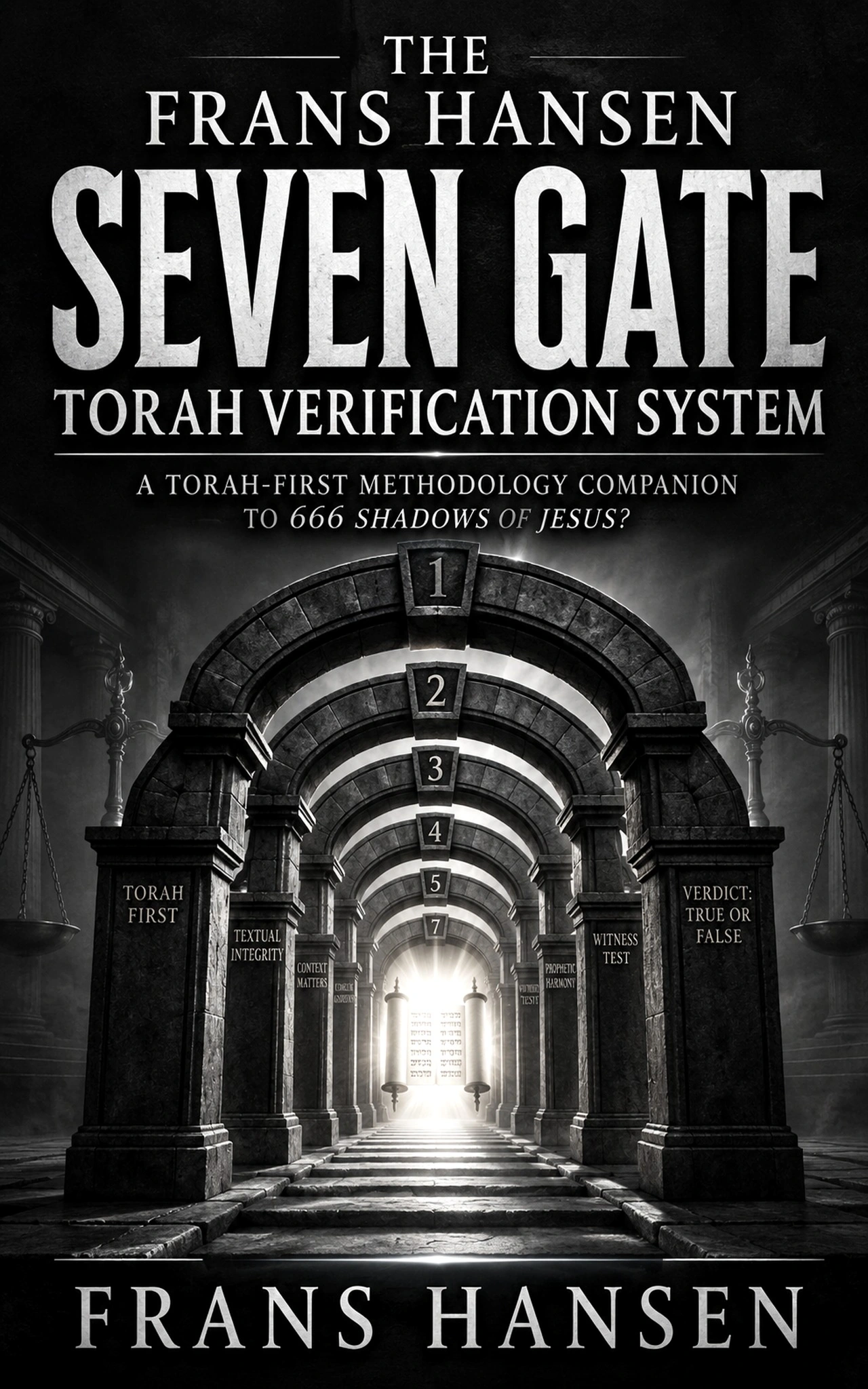
If the wider question after “What makes Sinai different from a private vision claimed by one prophet, apostle, or mystic?” is genuinely Beyond “What makes Sinai different from a private vision claimed by one prophet, apostle, or mystic?”, can the larger claim be established across Method for testing religious claims by text, context, covenant, prophetic outcome and burden of proof while Sinai’s public revelation, Torah’s prophet tests, covenant continuity remains controlling?, the next destination is The Frans Hansen Seven Gate Torah Verification System: A Torah-based procedure for testing any religious claim by text, context, covenant, prophetic outcome, and burden of proof., because its scope is Method for testing religious claims by text, context, covenant, prophetic outcome and burden of proof.