
Evidence bridge
What textual evidence is required before ‘dual fulfillment’ becomes more than a theological escape hatch?
The reader wants to be able to explain “What textual evidence is required before ‘dual fulfillment’ becomes more than a theological escape hatch?” from peshat, original speaker/audience, textual markers of futurity, literary category, and the later application without relying on denominational authority or counter-missionary slogans.
What this article established
A prophecy can have patterns, recurrences or later applications. But “dual fulfillment” becomes evidence only when the controlling text supplies a reason to expect more than its original horizon. Without a marker, the second fulfillment is a theological possibility, not a verified prediction.
- Verified: an original historical horizon must be established before later application is evaluated.
- Possible: a prophecy can have recurring or layered significance.
- Required for a verified dual prediction: textual or previously authorized evidence that the first horizon does not exhaust the prophecy.
- Possible within Christian theology: a later inspired text can reveal a fuller divine intention.
- Unsupported in a Torah-first test: calling the second application “prophecy fulfilled” when the only evidence for the second horizon is the later application itself.
The question that still remains
After resolving “What textual evidence is required before ‘dual fulfillment’ becomes more than a theological escape hatch?”, does the wider case across A field guide to disputed New Testament prophecy claims using the Hebrew Bible, Septuagint, Masoretic Text, and classical Jewish source controls survive the same test, especially peshat, original speaker/audience, textual markers of futurity, literary category?
Why this book is the next step
The 50 Most Disputed Old Testament Prophecies in the New Testament: A Hebrew Bible Field Guide to the Septuagint, Masoretic Text, Greek Testament Claims, and Classical Jewish Source Controls is the narrowest catalogue match because its stated scope is A field guide to disputed New Testament prophecy claims using the Hebrew Bible, Septuagint, Masoretic Text, and classical Jewish source controls; that directly answers the remaining problem after textual, required, dual, fulfillment, whereas a general counter-missionary title would broaden too far. The reader is not being moved sideways to a related product; the same unresolved peshat, reapplication, typology, and claimed fulfillment problem is being followed outward. The worked hinge that makes this assignment specific is textual / required / dual / fulfillment / becomes.
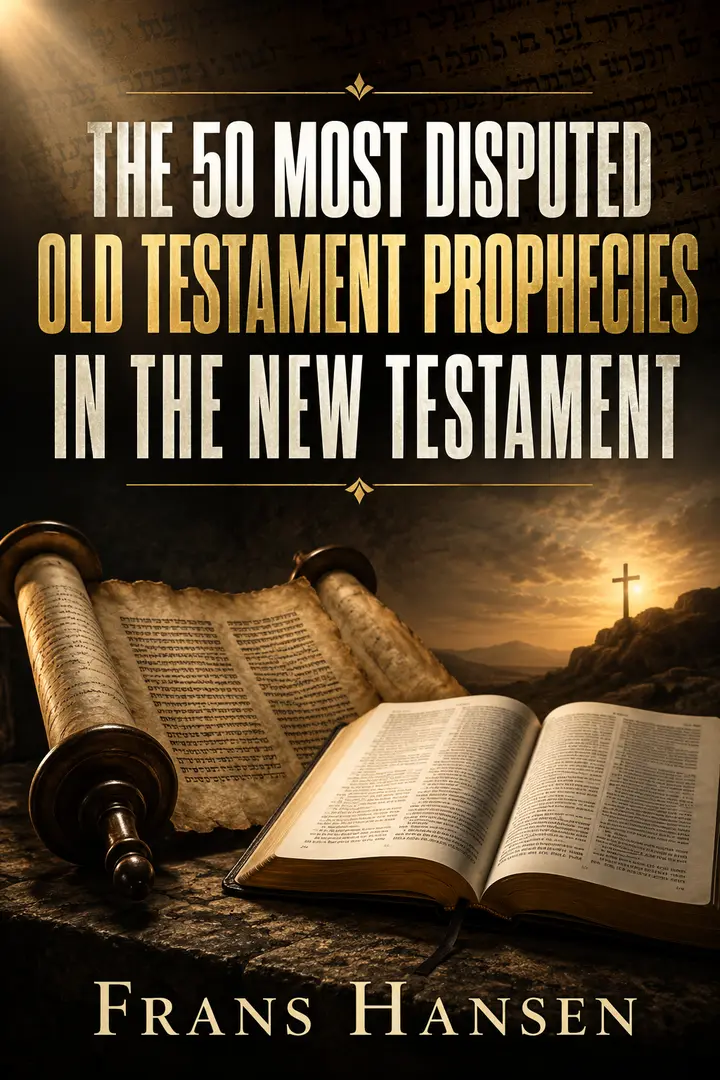
If the wider question after “What textual evidence is required before ‘dual fulfillment’ becomes more than a theological escape hatch?” is genuinely After resolving “What textual evidence is required before ‘dual fulfillment’ becomes more than a theological escape hatch?”, does the wider case across A field guide to disputed New Testament prophecy claims using the Hebrew Bible, Septuagint, Masoretic Text, and classical Jewish source controls survive the same test, especially peshat, original speaker/audience, textual markers of futurity, literary category?, the next destination is The 50 Most Disputed Old Testament Prophecies in the New Testament: A Hebrew Bible Field Guide to the Septuagint, Masoretic Text, Greek Testament Claims, and Classical Jewish Source Controls, because its scope is A field guide to disputed New Testament prophecy claims using the Hebrew Bible, Septuagint, Masoretic Text, and classical Jewish source controls.