
Evidence bridge
Why does the New Testament reserve latreuō, sacred service, overwhelmingly for God if Jesus is supposed to receive Torah-level worship?
The desired certainty is not absolute certainty about every doctrine. It is enough precision to say why “Why does the New Testament reserve latreuō, sacred service, overwhelmingly for God if Jesus is supposed to receive Torah-level worship?” is Verified, Possible, Disputed, Unsupported, or Contradicted by the controlling source.
What this article established
The Greek New Testament uses proskuneō for bowing and homage in contexts that do not automatically establish deity, while latreuō carries a stronger cultic-service sense and is overwhelmingly directed to God. That lexical pattern does not by itself disprove Christology, but it breaks the simplistic equation “Jesus was worshiped, therefore Jesus is God.”
- The New Testament’s worship vocabulary is differentiated. Proskuneō toward Jesus cannot automatically be translated into Torah-level avodah. Latreuō strengthens the distinction, though Revelation 22:3 and wider Christological evidence keep the question from being settled by one verb alone.
The question that still remains
Beyond “Why does the New Testament reserve latreuō, sacred service, overwhelmingly for God if Jesus is supposed to receive Torah-level worship?”, can the larger claim be established across Whether Trinitarian doctrine coheres with Sinai and divine simplicity while the lexical range of hishtachavah/proskuneō, the separate vocabulary of sacred service remains controlling?
Why this book is the next step
The reason for this book is structural, not topical coincidence: Why, Testament, reserve, latreu opens into Beyond “Why does the New Testament reserve latreuō, sacred service, overwhelmingly for God if Jesus is supposed to receive Torah-level worship?”, can the larger claim be established across Whether Trinitarian doctrine coheres with Sinai and divine simplicity while the lexical range of hishtachavah/proskuneō, the separate vocabulary of sacred service remains controlling? and the book is specifically organized around Whether Trinitarian doctrine coheres with Sinai and divine simplicity. The book earns the bridge by expanding the evidence set while keeping the same burden of proof used at Why / Testament / reserve / latreu. The worked hinge that makes this assignment specific is Why / Testament / reserve / latreu / sacred.
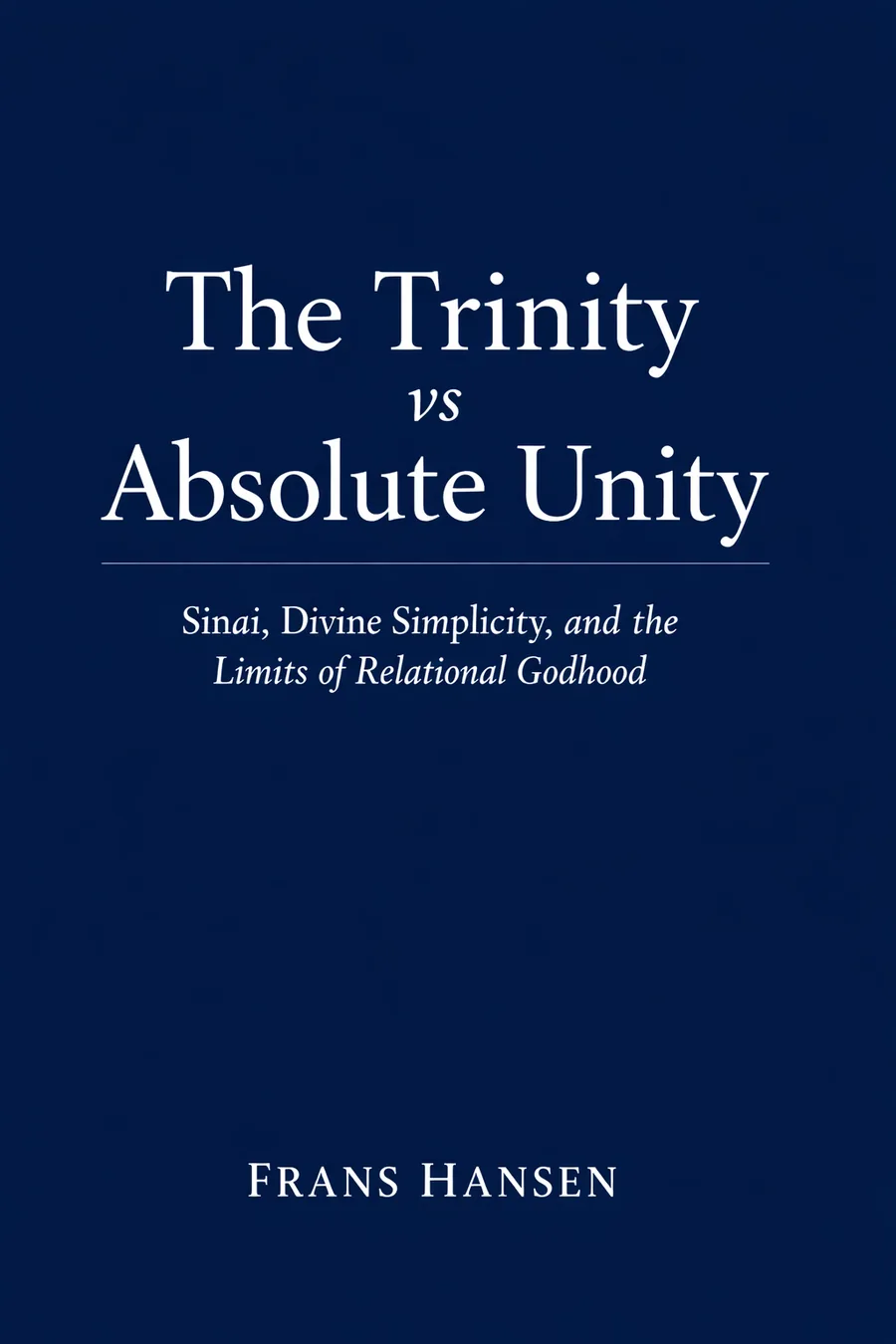
If the wider question after “Why does the New Testament reserve latreuō, sacred service, overwhelmingly for God if Jesus is supposed to receive Torah-level worship?” is genuinely Can the larger claim still stand when Whether Trinitarian doctrine coheres with Sinai and divine simplicity is tested with the lexical range of hishtachavah/proskuneō, the separate vocabulary of sacred service, and the action actually described in context kept in control?, the next destination is The Trinity vs Absolute Unity: Sinai, Divine Simplicity, and the Limits of Relational Godhood, because its scope is Whether Trinitarian doctrine coheres with Sinai and divine simplicity.