
Evidence bridge
What does the controlling Tanakh evidence establish about this claim: Zechariah 12:10 “YHWH pierced?” grammar/textual variants?
The reader wants to be able to explain “Zechariah 12:10 “YHWH pierced?” grammar/textual variants” from the prophetic descriptions of the messianic king and era, the claimed evidence, and whether the stated outcomes occurred without relying on denominational authority or counter-missionary slogans.
What this article established
The Masoretic Text can be read, strikingly, as God saying they will look “to Me whom they pierced,” followed immediately by mourning “for him.” The ancient Greek differs, and the Hebrew pronoun shift is real. This is a serious disputed text, not a clean one-verse proof of incarnation.
- Verified: The Masoretic Text contains the difficult “to Me … whom they pierced … mourn for him” sequence.
- Verified: the ancient Greek tradition differs materially.
- Disputed: the exact syntactic relation between the first-person divine speaker and the pierced figure.
- Possible: a Christian reading identifies the pierced figure with Messiah and links the first-person language to divine identity.
- Unsupported as a one-verse conclusion: Zechariah 12:10 alone proves the incarnation.
The question that still remains
Does the method used to answer “What does the controlling Tanakh evidence establish about this claim: Zechariah 12:10 “YHWH pierced?” grammar/textual variants?” produce the same result across A field guide to disputed New Testament prophecy claims using the Hebrew Bible, Septuagint, Masoretic Text, and classical Jewish source controls when the prophetic descriptions of the messianic king and era, the claimed evidence, and whether the stated outcomes occurred controls the test?
Why this book is the next step
The article's next legitimate scope matches this book's scope: A field guide to disputed New Testament prophecy claims using the Hebrew Bible, Septuagint, Masoretic Text, and classical Jewish source controls. That makes The 50 Most Disputed Old Testament Prophecies in the New Testament: A Hebrew Bible Field Guide to the Septuagint, Masoretic Text, Greek Testament Claims, and Classical Jewish Source Controls a continuation of the same inquiry rather than an unrelated sale. This keeps the sale downstream of the evidence: first Zechariah / 12:10 / YHWH / pierced, then the larger A field guide to disputed New Testament prophecy claims using the Hebrew Bible, Septuagint, Masoretic Text, and classical Jewish source controls audit. The worked hinge that makes this assignment specific is Zechariah 12:10 / Zechariah / 12:10 / YHWH / pierced.
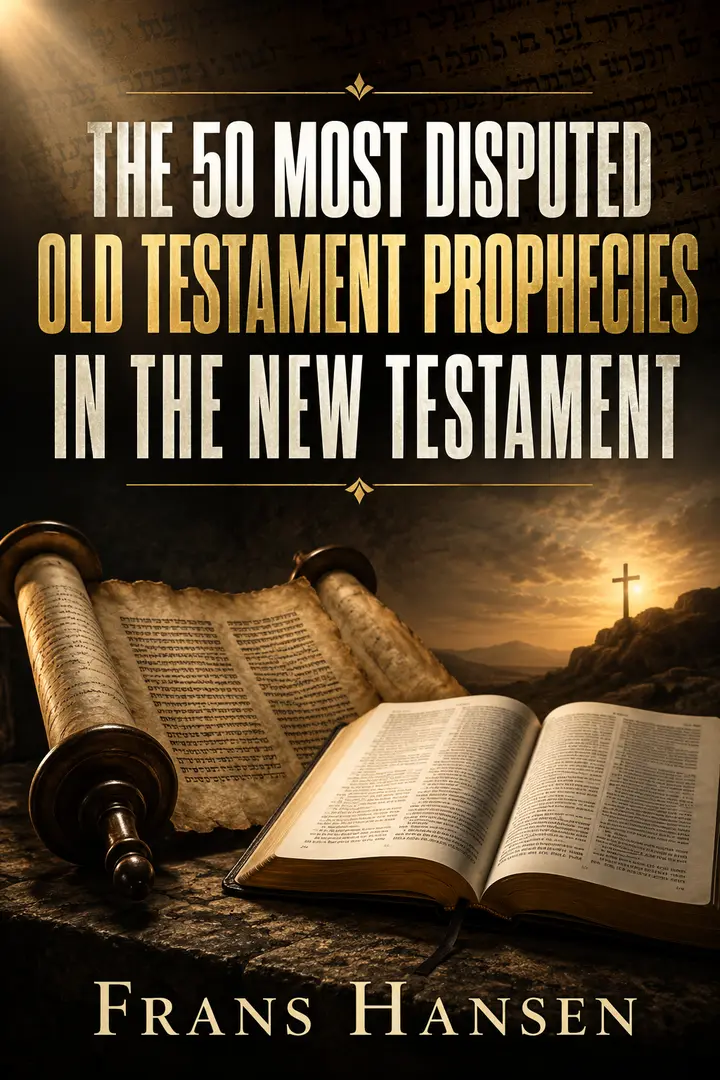
From the wider question raised by “What does the controlling Tanakh evidence establish about this claim: Zechariah 12:10 “YHWH pierced?” grammar/textual variants?”, the book choice becomes specific: The 50 Most Disputed Old Testament Prophecies in the New Testament: A Hebrew Bible Field Guide to the Septuagint, Masoretic Text, Greek Testament Claims, and Classical Jewish Source Controls carries the investigation into A field guide to disputed New Testament prophecy claims using the Hebrew Bible, Septuagint, Masoretic Text, and classical Jewish source controls.