
Evidence bridge
Does sincerity make missionary error harmless when the result is persuading Jews to abandon Torah?
The desired certainty is not absolute certainty about every doctrine. It is enough precision to say why “Does sincerity make missionary error harmless when the result is persuading Jews to abandon Torah?” is Verified, Possible, Disputed, Unsupported, or Contradicted by the controlling source.
What this article established
A missionary can be sincere, compassionate, and still be wrong. Torah tests claims by covenant content, worship boundaries, and prophetic truth—not by the speaker’s emotional certainty. Sincerity may matter when judging a person’s motives; it does not change whether a Jew is being urged to abandon a Torah obligation.
- Verified: sincerity does not determine the truth of a religious claim.
- Verified: Torah tests religious claims by content, covenant loyalty, worship boundaries, and prophetic reliability.
- Possible: a missionary may be completely sincere and believe conversion is an act of love.
- Disputed: the moral culpability of any individual missionary; that depends on knowledge, intent, conduct, and circumstance.
- Contradicted by Torah’s method: the idea that sincere conviction alone makes a Torah-conflicting claim safe or authoritative.
The question that still remains
If the evidence settles “Does sincerity make missionary error harmless when the result is persuading Jews to abandon Torah?”, does Doctrines, methods and historical claims tested under Torah categories confirm the same conclusion once Torah’s covenant duties, prophet/worship tests, the concrete practices a convert is asked to abandon is kept in control?
Why this book is the next step
Court Case Christianity: A Torah-Law Indictment of Doctrine, Method, and History earns the slot because the reader's unresolved question moves from sincerity, make, missionary, error to Doctrines, methods and historical claims tested under Torah categories, precisely the domain this title was built to audit. That distinction matters here because missionary burden of proof and ethical responsibility requires more than another isolated response to sincerity / make / missionary / error. The worked hinge that makes this assignment specific is sincerity / make / missionary / error / harmless.
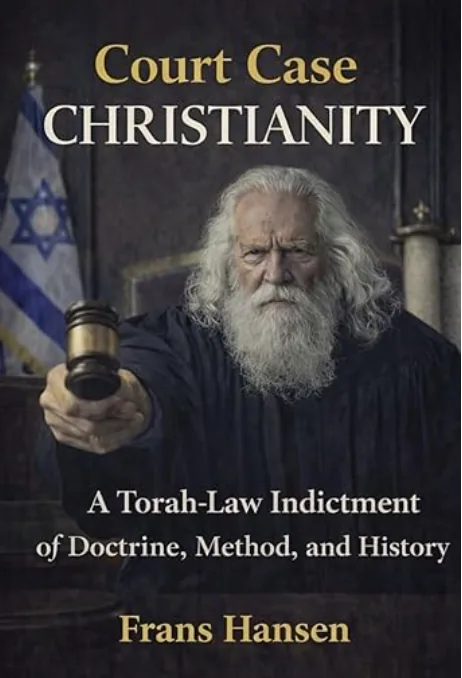
The landing page for “Does sincerity make missionary error harmless when the result is persuading Jews to abandon Torah?” has done its job when the reader can see why Court Case Christianity: A Torah-Law Indictment of Doctrine, Method, and History—not a generic anti-Christian title—continues this exact problem across Doctrines, methods and historical claims tested under Torah categories.