
Evidence bridge
How did baptism move from repentance and cleansing into mystical participation in Christ’s death and resurrection?
The reader wants to be able to explain “How did baptism move from repentance and cleansing into mystical participation in Christ’s death and resurrection?” from the relevant sayings/actions attributed to Jesus, Paul’s later formulation, and Torah’s pre-existing categories without relying on denominational authority or counter-missionary slogans.
What this article established
Early Gospel baptism is presented around repentance, forgiveness, and cleansing. Romans 6 gives baptism a different theological function: participation in Christ’s death and resurrection. The shift is visible in the texts; whether it is authorized is a separate question.
- Verified: John’s baptism is described in repentance/forgiveness language.
- Verified: Romans 6 explicitly gives baptism participation-in-Christ’s-death-and-resurrection meaning.
- Verified: Torah’s immersion categories do not themselves state that later christological function.
- Possible within Christian theology: Paul is authoritatively explaining the fuller meaning of baptism after the resurrection.
- Not established by the earlier Torah category alone: that mystical participation in Christ is what immersion always meant.
The question that still remains
Beyond “How did baptism move from repentance and cleansing into mystical participation in Christ’s death and resurrection?”, can the larger claim be established across Romans tested under stable Torah categories and legal terms while the relevant sayings/actions attributed to Jesus, Paul’s later formulation, and Torah’s pre-existing categories remains controlling?
Why this book is the next step
The commercial bridge is valid only because the evidence bridge is valid: from the local How, baptism, move, repentance verdict to the wider Romans tested under stable Torah categories and legal terms audit handled by THE BOOK OF ROMANS VS. THE HEBREW BIBLE: How the New Testament Rewrites the Tanakh - A Line-by-line Investigation. The reason is methodological continuity: the book applies the same source controls beyond the single How / baptism / move / repentance hinge. The worked hinge that makes this assignment specific is How / baptism / move / repentance / cleansing.
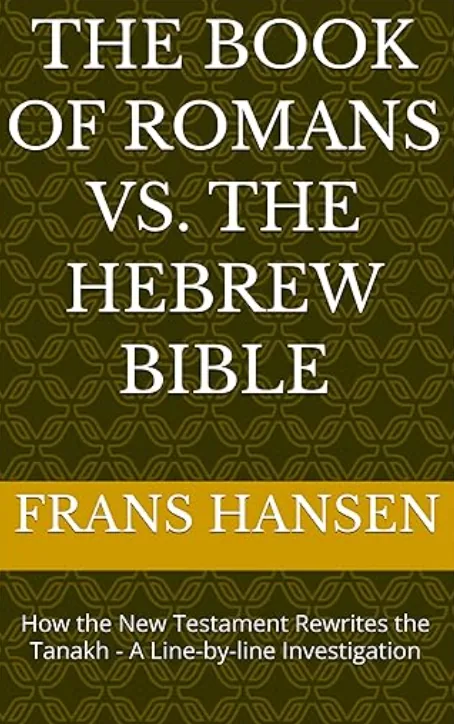
The source map beyond “How did baptism move from repentance and cleansing into mystical participation in Christ’s death and resurrection?” points to one book-length continuation: THE BOOK OF ROMANS VS. THE HEBREW BIBLE: How the New Testament Rewrites the Tanakh - A Line-by-line Investigation, whose scope is Romans tested under stable Torah categories and legal terms. Open the book page for the full treatment.