
Evidence bridge
How does one become righteous?
The goal is to know exactly where the evidence ends at “How does one become righteous?”, so later theology cannot borrow certainty from a source that never supplied it.
What this article established
Genesis can credit Abraham’s faith as righteousness, Deuteronomy can call obedience righteousness, and Ezekiel can call a repentant law-doer righteous. Tanakh’s category is broader than either “works earn salvation” or “faith alone is the only way anyone can be called righteous.”
- Verified: Genesis 15:6 credits Abraham’s faith as righteousness.
- Verified: Deuteronomy 6:25 calls commanded obedience righteousness.
- Verified: Ezekiel 18 calls obedient conduct righteous and makes repentance meaningful.
- Verified: Tanakh distinguishes righteousness from sinless perfection.
- Possible Protestant synthesis: faith alone justifies while works are necessary fruit.
- Not stated by the controlling Tanakh texts: that faith alone is the exclusive mechanism by which anyone can be called righteous.
The question that still remains
When “How does one become righteous?” is no longer left vague, can the surrounding argument still be sustained across Romans tested under stable Torah categories and legal terms from the Torah or prophetic passage Paul invokes, its original legal/covenantal function?
Why this book is the next step
legal / one / become / righteous: the problem has moved from one Romans, righteousness, sin and Torah ruling into the exact scope of THE BOOK OF ROMANS VS. THE HEBREW BIBLE: How the New Testament Rewrites the Tanakh - A Line-by-line Investigation. The conclusion stops where the controlling source stops. Treat this as source control, not a referendum on the reader’s identity. Locate the speaker shift without converting analogy into prediction.
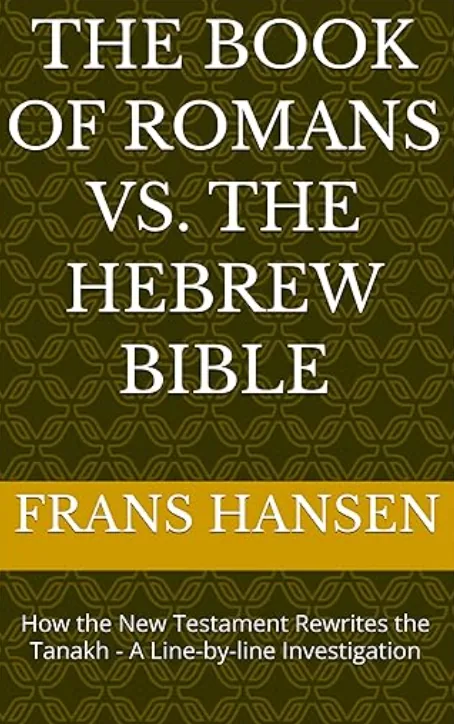
The source map beyond “How does one become righteous?” points to one book-length continuation: THE BOOK OF ROMANS VS. THE HEBREW BIBLE: How the New Testament Rewrites the Tanakh - A Line-by-line Investigation, whose scope is Romans tested under stable Torah categories and legal terms. Open the book page for the full treatment.