
Evidence bridge
If Amos says God reveals His plan through the prophets, why are Christianity’s core doctrines defended as mysteries revealed only later?
The goal is to know exactly where the evidence ends at “If Amos says God reveals His plan through the prophets, why are Christianity’s core doctrines defended as mysteries revealed only later?”, so later theology cannot borrow certainty from a source that never supplied it.
What this article established
Amos 3:7 says God reveals His counsel to His servants the prophets in a context of announced judgment. It is too broad to turn that verse alone into a rule that every later doctrine must be explicitly predicted. But Christianity still bears a serious burden when it claims Torah fulfillment while its core doctrines are absent from the prophetic message.
- Too strong: Amos 3:7 by itself proves every Christian doctrine had to be explicitly predicted.
- Textually sound: Amos presents God as warning through prophets before announced judgment.
- Still a serious challenge: Christianity claims fulfillment of Israel’s revelation while several of its central doctrines depend on later interpretive categories not plainly taught by Moses and the prophets.
The question that still remains
What happens after “If Amos says God reveals His plan through the prophets, why are Christianity’s core doctrines defended as mysteries revealed only later?” is resolved and the review widens to Christianity tested against Moses and the collective prophetic witness, including deferred messianic claims, with the prophets kept in view?
Why this book is the next step
Another book might discuss Christianity generally, but The Warnings of the Prophets: Why Christianity Fails the Collective Prophetic Witness of Israel follows the exact evidence family left open here—Christianity tested against Moses and the collective prophetic witness, including deferred messianic claims—so the transition does not manufacture a new problem. That distinction matters here because the verification method itself requires more than another isolated response to Amos / reveals / His / plan. The worked hinge that makes this assignment specific is Amos / reveals / His / plan / prophets.
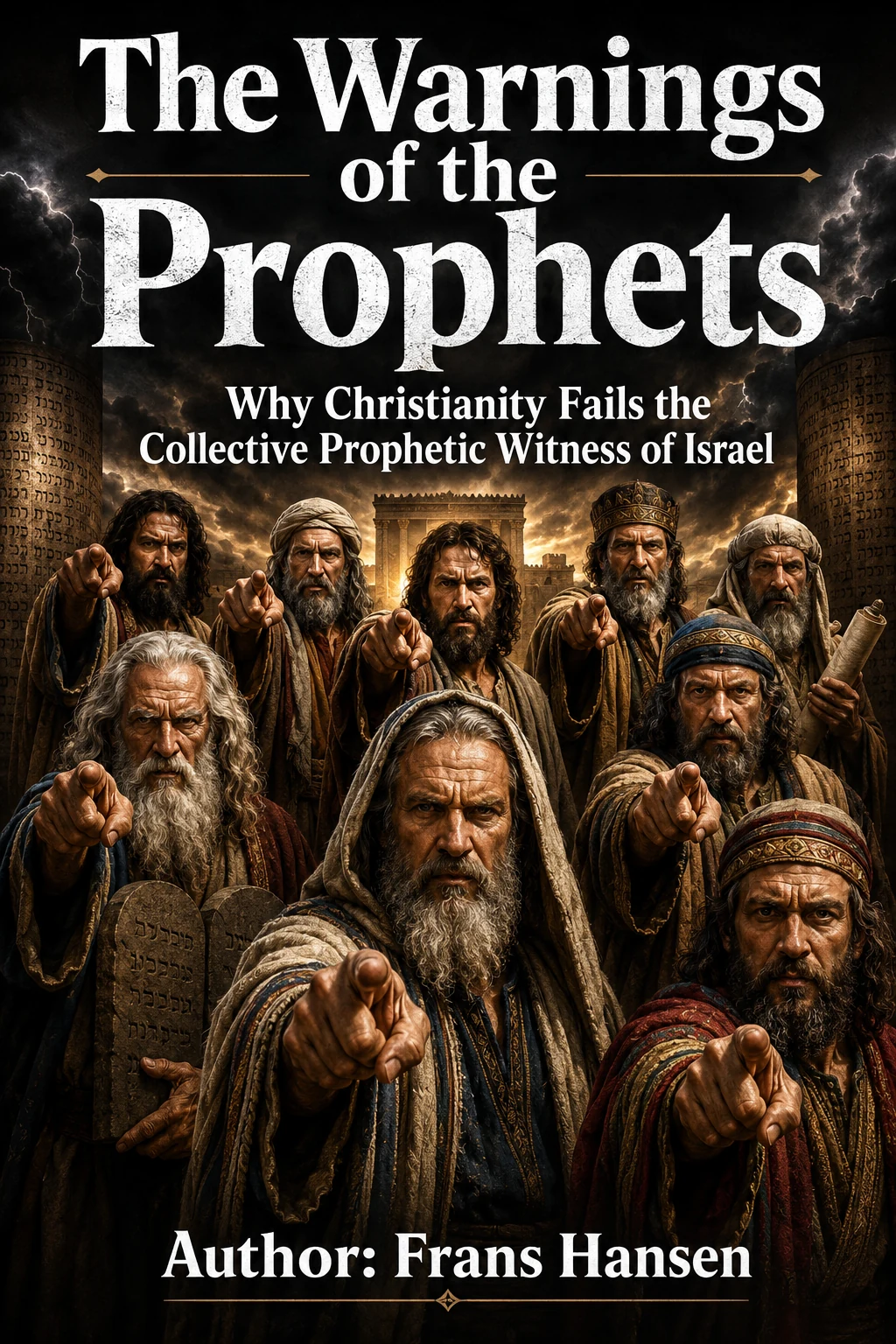
The landing page for “If Amos says God reveals His plan through the prophets, why are Christianity’s core doctrines defended as mysteries revealed only later?” has done its job when the reader can see why The Warnings of the Prophets: Why Christianity Fails the Collective Prophetic Witness of Israel—not a generic anti-Christian title—continues this exact problem across Christianity tested against Moses and the collective prophetic witness, including deferred messianic claims.