
Evidence bridge
If Deuteronomy 12 forbids worshiping God by forbidden religious forms, can a new religion sanctify those forms by calling them fulfillment?
The reader wants to be able to explain “If Deuteronomy 12 forbids worshiping God by forbidden religious forms, can a new religion sanctify those forms by calling them fulfillment?” from the named Torah or prophetic control text, its legal or covenant function, and the exact exception Christianity would need without relying on denominational authority or counter-missionary slogans.
What this article established
Deuteronomy 12 forbids Israel from copying prohibited pagan modes of worship and redirecting them toward Hashem. The chapter does not decide every later Christian rite, but it does block a shortcut: calling a practice “fulfilled” does not create a Torah exception.
- Verified: Deuteronomy 12 forbids Israel from imitating prohibited modes of pagan worship and applying them to Hashem.
- Verified: the chapter’s immediate context includes specific Canaanite abominations, so it cannot honestly be used as a blanket proof against every later religious form.
- Possible: a later practice may fall outside the Deuteronomy 12 prohibition if its category, origin, and function are materially different.
- Unsupported: the claim that calling a practice “fulfilled,” “transformed,” or “Christian” automatically supplies Torah authorization.
- Once “If Deuteronomy 12 forbids worshiping God by forbidden religious forms, can a new religion sanctify those forms by calling them fulfillment?” is settled, what remains defensible across Doctrines, methods and historical claims tested under Torah categories when the test is controlled by the named Torah or prophetic control text, its legal or covenant function?
The question that still remains
Once “If Deuteronomy 12 forbids worshiping God by forbidden religious forms, can a new religion sanctify those forms by calling them fulfillment?” is settled, what remains defensible across Doctrines, methods and historical claims tested under Torah categories when the test is controlled by the named Torah or prophetic control text, its legal or covenant function?
Why this book is the next step
Another book might discuss Christianity generally, but Court Case Christianity: A Torah-Law Indictment of Doctrine, Method, and History follows the exact evidence family left open here—Doctrines, methods and historical claims tested under Torah categories—so the transition does not manufacture a new problem. The reader is not being moved sideways to a related product; the same unresolved the verification method itself problem is being followed outward. The worked hinge that makes this assignment specific is Deuteronomy 12 / Deuteronomy / forbids / worshiping / forbidden.
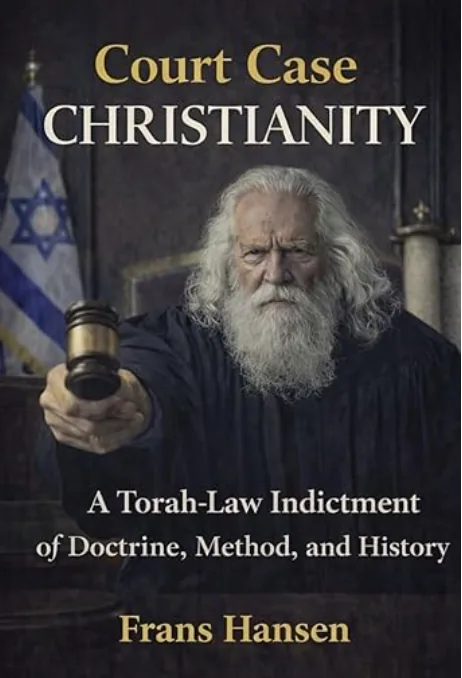
The landing page for “If Deuteronomy 12 forbids worshiping God by forbidden religious forms, can a new religion sanctify those forms by calling them fulfillment?” has done its job when the reader can see why Court Case Christianity: A Torah-Law Indictment of Doctrine, Method, and History—not a generic anti-Christian title—continues this exact problem across Doctrines, methods and historical claims tested under Torah categories.