
Evidence bridge
If someone else fulfilled your covenant — why give it to you?
The reader wants a bounded verdict: what “If someone else fulfilled your covenant — why give it to you?” establishes, what remains possible, and what it does not authorize, using the Masoretic wording, the cited passage’s historical horizon, Matthew’s quotation form, and any material Septuagint difference.
What this article established
If someone else fulfilled your covenant, why was the covenant given to you? That question cuts through one of Christianity’s most comforting ideas:
- Verified: Torah places covenant obedience and repentance on the person and nation addressed.
- Verified: Ezekiel strongly affirms personal moral responsibility.
- Verified: Torah also contains representative and sacrificial institutions, so the argument must not deny them.
- Christian claim: Messiah is the covenant representative whose righteousness grounds the believer’s justification.
- Torah-first verdict: that comprehensive transfer requires a warrant Torah itself does not plainly provide.
- What, if anything, changes when the test moves from this one claim into Romans tested under stable Torah categories and legal terms?
The question that still remains
When “If someone else fulfilled your covenant — why give it to you?” is no longer left vague, can the surrounding argument still be sustained across Romans tested under stable Torah categories and legal terms from the Masoretic wording, the cited passage’s historical horizon, Matthew’s quotation form?
Why this book is the next step
The commercial bridge is valid only because the evidence bridge is valid: from the local someone, else, fulfilled, your verdict to the wider Romans tested under stable Torah categories and legal terms audit handled by THE BOOK OF ROMANS VS. THE HEBREW BIBLE: How the New Testament Rewrites the Tanakh - A Line-by-line Investigation. The reason is methodological continuity: the book applies the same source controls beyond the single someone / else / fulfilled / your hinge. The worked hinge that makes this assignment specific is someone / else / fulfilled / your / covenant.
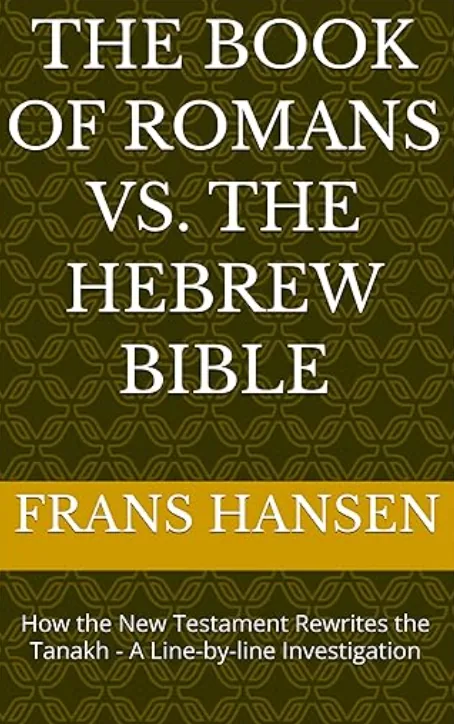
The source map beyond “If someone else fulfilled your covenant — why give it to you?” points to one book-length continuation: THE BOOK OF ROMANS VS. THE HEBREW BIBLE: How the New Testament Rewrites the Tanakh - A Line-by-line Investigation, whose scope is Romans tested under stable Torah categories and legal terms. Open the book page for the full treatment.