
Evidence bridge
Romans 7 Torah holy/good: what died or changed?
The target state is evidentiary clarity: a fair Christian formulation, a controlled reading of “Romans 7 Torah holy/good: what died or changed?”, an explicit concession, and a narrow verdict.
What this article established
Paul does not call Torah evil in Romans 7. He calls the commandment holy, righteous and good, while arguing that believers have “died to the law” and been released from it through Christ. The tension is jurisdictional: what authorizes release from a covenant law Paul still calls good?
- Verified: Romans 7 calls Torah holy and the commandment holy, righteous and good.
- Verified: Paul also says believers have died to or been released from the law through Christ.
- Supported Christian reading: the law’s goodness remains while the believer’s covenantal relation changes.
- Not supplied by Torah itself: a rule that Messiah’s death releases Israel from Torah jurisdiction.
- Still requiring proof: the authority for Paul’s legal transition.
The question that still remains
When “Romans 7 Torah holy/good: what died or changed?” is no longer left vague, can the surrounding argument still be sustained across Romans tested under stable Torah categories and legal terms from the Torah or prophetic passage Paul invokes, its original legal/covenantal function?
Why this book is the next step
Another book might discuss Christianity generally, but THE BOOK OF ROMANS VS. THE HEBREW BIBLE: How the New Testament Rewrites the Tanakh - A Line-by-line Investigation follows the exact evidence family left open here—Romans tested under stable Torah categories and legal terms—so the transition does not manufacture a new problem. The assignment would fail if the remaining question were different; its fit depends on the exact move from Romans / holy / good / died into Romans tested under stable Torah categories and legal terms. The worked hinge that makes this assignment specific is Romans 7 / Romans / holy / good / died.
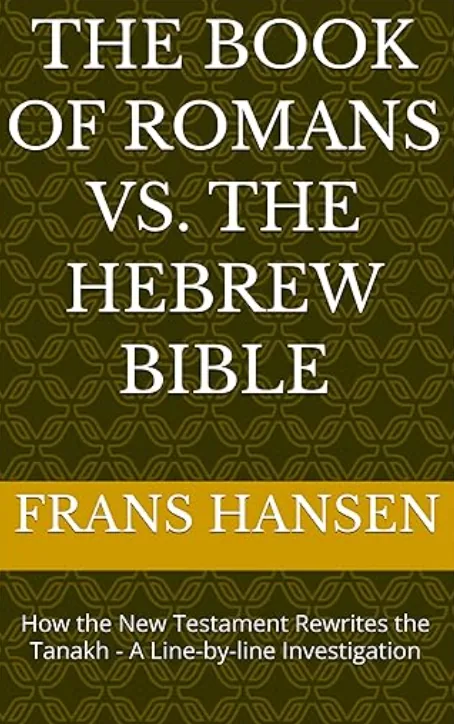
Only after the wider problem behind “Romans 7 Torah holy/good: what died or changed?” is clear should the book enter. Here that book is THE BOOK OF ROMANS VS. THE HEBREW BIBLE: How the New Testament Rewrites the Tanakh - A Line-by-line Investigation, built to examine Romans tested under stable Torah categories and legal terms.