
Evidence bridge
 So now the final questions: If righteousness can be transferred — why command?
The desired certainty is not absolute certainty about every doctrine. It is enough precision to say why “ So now the final questions: If righteousness can be transferred — why command?” is Verified, Possible, Disputed, Unsupported, or Contradicted by the controlling source.
What this article established
Christian theology has an internal answer for why commands remain after imputed righteousness: sanctification and grateful obedience. The Torah-first challenge is not that commands become logically pointless, but that Torah defines righteousness through a person’s own faithfulness, conduct and repentance rather than another person’s moral record being transferred.
- Verified: Torah commands obedience as genuine covenant duty.
- Verified: Deuteronomy 6:25 can call commanded observance “righteousness for us.”
- Verified: Ezekiel 18 preserves personal moral responsibility and allows repentance to change the sinner’s standing.
- Verified: Genesis 15:6 credits Abraham’s own faith as righteousness.
- Possible within Christian theology: commands remain meaningful after imputed justification as sanctification.
- Unsupported by these Torah controls: the transfer of another person’s moral righteousness to the sinner as the legal mechanism of justification.
The question that still remains
Beyond “ So now the final questions: If righteousness can be transferred — why command?”, can the larger claim be established across Romans tested under stable Torah categories and legal terms while the Torah or prophetic passage Paul invokes, its original legal/covenantal function remains controlling?
Why this book is the next step
The commercial bridge is valid only because the evidence bridge is valid: from the local now, final, questions, righteousness verdict to the wider Romans tested under stable Torah categories and legal terms audit handled by THE BOOK OF ROMANS VS. THE HEBREW BIBLE: How the New Testament Rewrites the Tanakh - A Line-by-line Investigation. The reader is not being moved sideways to a related product; the same unresolved Torah law, covenant status, righteousness, and Paul's inference problem is being followed outward. The worked hinge that makes this assignment specific is now / final / questions / righteousness / transferred.
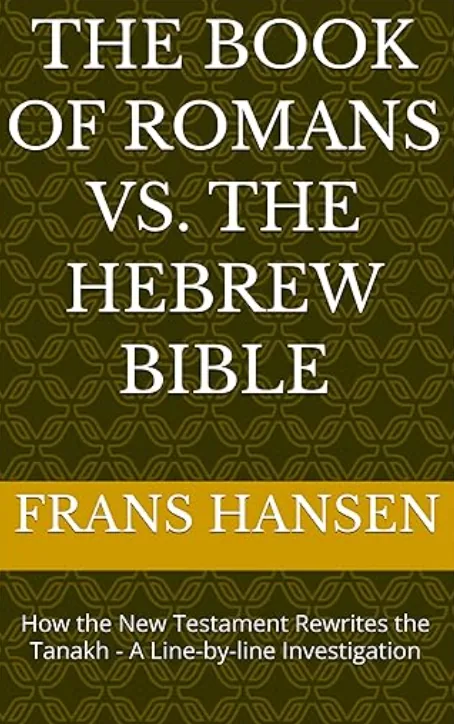
The landing page for “ So now the final questions: If righteousness can be transferred — why command?” has done its job when the reader can see why THE BOOK OF ROMANS VS. THE HEBREW BIBLE: How the New Testament Rewrites the Tanakh - A Line-by-line Investigation—not a generic anti-Christian title—continues this exact problem across Romans tested under stable Torah categories and legal terms.