
Evidence bridge
Does this claim survive a Torah-first reading: The Light of One Righteous Person?
The reader wants a bounded verdict: what “The Light of One Righteous Person” establishes, what remains possible, and what it does not authorize, using the Torah or prophetic passage Paul invokes, its original legal/covenantal function, and the exact logical step Romans adds.
What this article established
Tanakh gives righteous people enormous influence: Abraham intercedes, one person’s conduct can preserve or guide others, and righteous leadership matters. Yet Ezekiel 14 and 18 sharply limit moral transfer: even Noah, Daniel and Job cannot make another person righteous by possessing righteousness themselves.
- Verified: righteous people can benefit, guide and intercede for others.
- Verified: Genesis 18 gives righteousness corporate significance without calling the wicked righteous.
- Verified: Ezekiel 14 says even paradigmatic righteous people cannot deliver others by their righteousness in the judgment described.
- Verified: Ezekiel 18 keeps righteousness and wickedness morally attached to the person.
- Possible as later Pauline theology: Christ functions as a unique representative head whose obedience benefits those united to him.
- Unsupported by these Tanakh controls: treating ordinary biblical examples of righteous influence as proof that righteousness itself transfers from one person to another.
The question that still remains
When “Does this claim survive a Torah-first reading: The Light of One Righteous Person?” is no longer left vague, can the surrounding argument still be sustained across Romans tested under stable Torah categories and legal terms from the Torah or prophetic passage Paul invokes, its original legal/covenantal function?
Why this book is the next step
The article's next legitimate scope matches this book's scope: Romans tested under stable Torah categories and legal terms. That makes THE BOOK OF ROMANS VS. THE HEBREW BIBLE: How the New Testament Rewrites the Tanakh - A Line-by-line Investigation a continuation of the same inquiry rather than an unrelated sale. That distinction matters here because Torah law, covenant status, righteousness, and Paul's inference requires more than another isolated response to Light / One / Righteous / Person. The worked hinge that makes this assignment specific is Light / One / Righteous / Person.
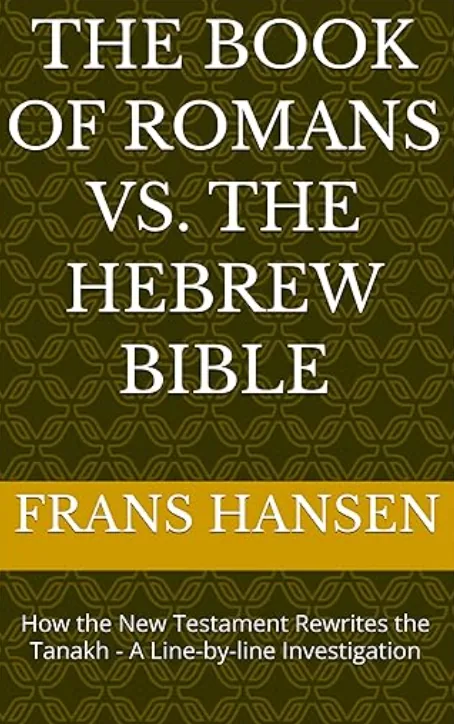
After the wider source map for “Does this claim survive a Torah-first reading: The Light of One Righteous Person?”, the book fit becomes testable: THE BOOK OF ROMANS VS. THE HEBREW BIBLE: How the New Testament Rewrites the Tanakh - A Line-by-line Investigation is the book-length investigation for Romans tested under stable Torah categories and legal terms. Open the book page only if that is the field you still need examined.