
Evidence bridge
Which Tanakh passages define the Messiah before the New Testament enters the discussion?
The reader wants to be able to explain “What scriptures does Judaism hold to about him?” from the controlling Tanakh passages, the exact Christian premise, covenant context, and the burden of proof for any added doctrine without relying on denominational authority or counter-missionary slogans.
What this article established
Judaism does not rest its messianic expectation on one isolated prooftext. Major Tanakh passages converge on a Davidic ruler, Torah fidelity, Israel’s restoration, justice, peace and knowledge of Hashem. The public outcomes matter as much as the title.
- Verified: Tanakh contains a future Davidic royal hope.
- Verified: major passages connect that hope to Israel’s restoration, righteous rule and public transformation.
- Verified: Torah fidelity remains positive in the future prophetic vision.
- Possible Christian theology: the unfulfilled public conditions await a second coming.
- Not explicitly supplied by the controlling Tanakh passages: the two-coming mechanism or a divine-incarnation definition of Messiah.
The question that still remains
When “Which Tanakh passages define the Messiah before the New Testament enters the discussion?” is no longer left vague, can the surrounding argument still be sustained across Christianity tested against Moses and the collective prophetic witness, including deferred messianic claims from the controlling Tanakh passages, the exact Christian premise, covenant context?
Why this book is the next step
This assignment is justified by the unresolved evidence field, not by keyword overlap. The next task after scriptures, Judaism, hold, him is When “Which Tanakh passages define the Messiah before the New Testament enters the discussion?” is no longer left vague, can the surrounding argument still be sustained across Christianity tested against Moses and the collective prophetic witness, including deferred messianic claims from the controlling Tanakh passages, the exact Christian premise, covenant context?; The Warnings of the Prophets: Why Christianity Fails the Collective Prophetic Witness of Israel covers Christianity tested against Moses and the collective prophetic witness, including deferred messianic claims. The reader is not being moved sideways to a related product; the same unresolved burden of proof and Torah jurisdiction problem is being followed outward. The worked hinge that makes this assignment specific is scriptures / Judaism / hold / him.
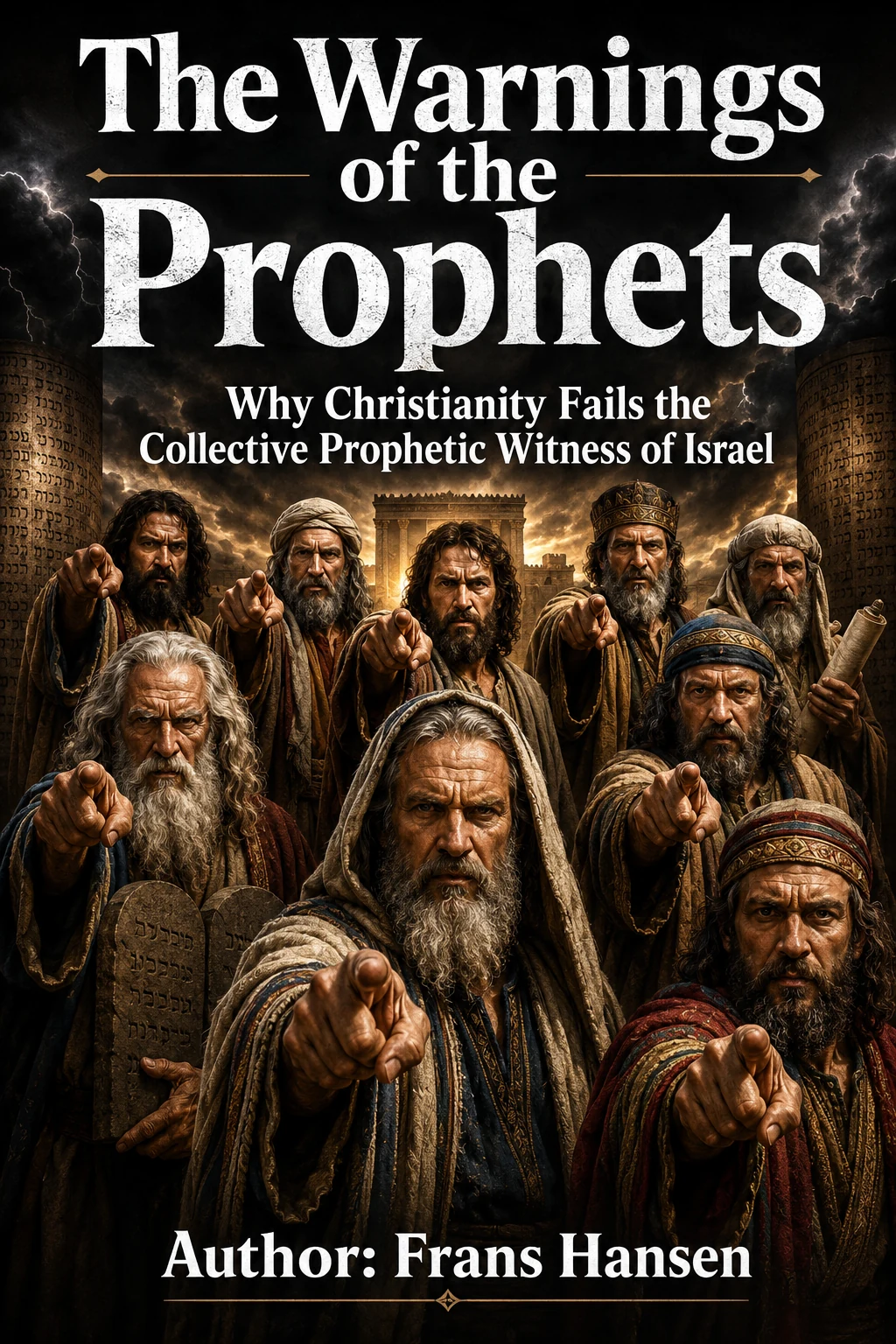
From the wider question raised by “Which Tanakh passages define the Messiah before the New Testament enters the discussion?”, the book choice becomes specific: The Warnings of the Prophets: Why Christianity Fails the Collective Prophetic Witness of Israel carries the investigation into Christianity tested against Moses and the collective prophetic witness, including deferred messianic claims.