
Evidence bridge
When does being sincerely wrong become moral responsibility: when you learn the evidence, or when you start recruiting others anyway?
The reader wants a bounded verdict: what “When does being sincerely wrong become moral responsibility: when you learn the evidence, or when you start recruiting others anyway?” establishes, what remains possible, and what it does not authorize, using Torah’s covenant duties, prophet/worship tests, the concrete practices a convert is asked to abandon, and the evidence missionaries present.
What this article established
Torah distinguishes inadvertent wrongdoing from high-handed rebellion, so sincerity and knowledge matter. But once a person knows serious evidence against a claim and continues recruiting others without answering it, moral responsibility increases. Outcome alone is not the whole test; knowledge, intent and conduct all matter.
- Verified: Torah distinguishes inadvertent wrongdoing from deliberate rebellion.
- Supported moral principle: responsibility increases when relevant knowledge becomes available and is ignored.
- Supported: public teachers carry responsibility for claims they spread.
- Possible: a missionary can be sincere and still wrong.
- Unsupported: “sincerity makes false teaching harmless.”
- Also unsupported: “any wrong belief automatically proves bad faith.”
The question that still remains
Beyond “When does being sincerely wrong become moral responsibility: when you learn the evidence, or when you start recruiting others anyway?”, can the larger claim be established across Doctrines, methods and historical claims tested under Torah categories while Torah’s covenant duties, prophet/worship tests, the concrete practices a convert is asked to abandon remains controlling?
Why this book is the next step
The article's next legitimate scope matches this book's scope: Doctrines, methods and historical claims tested under Torah categories. That makes Court Case Christianity: A Torah-Law Indictment of Doctrine, Method, and History a continuation of the same inquiry rather than an unrelated sale. This keeps the sale downstream of the evidence: first When / sincerely / wrong / become, then the larger Doctrines, methods and historical claims tested under Torah categories audit. The worked hinge that makes this assignment specific is When / sincerely / wrong / become / moral.
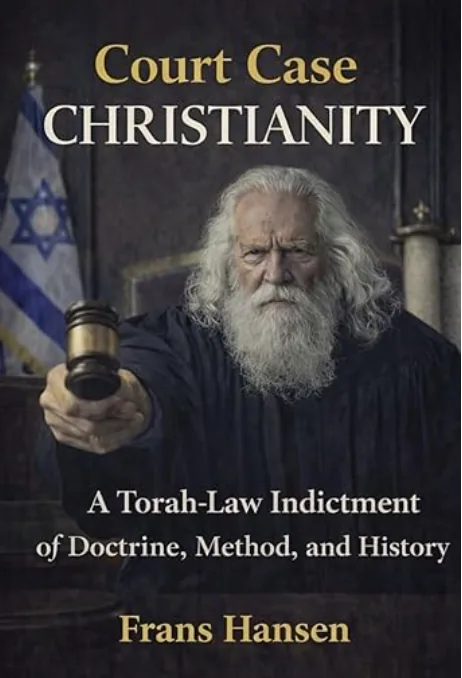
From the wider question raised by “When does being sincerely wrong become moral responsibility: when you learn the evidence, or when you start recruiting others anyway?”, the book choice becomes specific: Court Case Christianity: A Torah-Law Indictment of Doctrine, Method, and History carries the investigation into Doctrines, methods and historical claims tested under Torah categories.