
Evidence bridge
Who does not insert a new center into the covenant order?
The goal is to know exactly where the evidence ends at “Who does not insert a new center into the covenant order?”, so later theology cannot borrow certainty from a source that never supplied it.
What this article established
Who does not insert a new center into the covenant order? That is a better question than “Who sounds more spiritual, Jesus or Paul?”
- Verified: Torah centers Israel’s covenant loyalty directly on Hashem.
- Verified: repentance is described as return to Hashem and His commandments.
- Christian claim: Jesus is not a competing center but the divinely authorized Messiah through whom the same God completes His covenant purposes.
- Torah-first verdict: that authorization must be established before Jesus can become the interpretive center.
- Who leaves Hashem, Torah and covenant in the position where the public revelation placed them?
The question that still remains
What happens after “Who does not insert a new center into the covenant order?” is resolved and the review widens to Doctrines, methods and historical claims tested under Torah categories, with Torah’s own descriptions of commandment, covenant duration, obedience, righteousness kept in view?
Why this book is the next step
Court Case Christianity: A Torah-Law Indictment of Doctrine, Method, and History is the narrowest catalogue match because its stated scope is Doctrines, methods and historical claims tested under Torah categories; that directly answers the remaining problem after Who, not, insert, center, whereas a general counter-missionary title would broaden too far. The reader is not being moved sideways to a related product; the same unresolved Paul's claims about Torah, faith, circumcision, and covenant obligation problem is being followed outward. The worked hinge that makes this assignment specific is Who / not / insert / center / covenant.
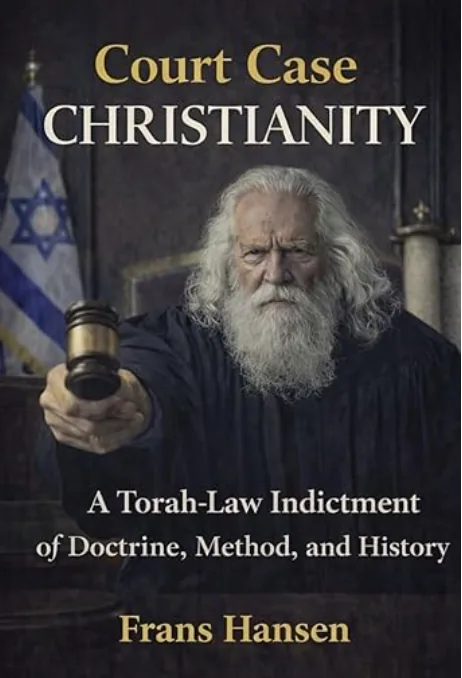
Only after the wider problem behind “Who does not insert a new center into the covenant order?” is clear should the book enter. Here that book is Court Case Christianity: A Torah-Law Indictment of Doctrine, Method, and History, built to examine Doctrines, methods and historical claims tested under Torah categories.