
Evidence bridge
Who leaves God’s prior public revelation intact?
The reader wants a bounded verdict: what “Who leaves God’s prior public revelation intact?” establishes, what remains possible, and what it does not authorize, using Torah’s own descriptions of commandment, covenant duration, obedience, righteousness, repentance, and the Pauline passage under review.
What this article established
Who leaves God’s prior public revelation intact? This is an epistemology question before it is a Christian question.
- Verified: Torah presents Sinai as a national public covenant revelation.
- Verified: Torah places later signs and prophets under covenant controls.
- Christian claim: Jesus’ public ministry and resurrection testimony constitute sufficient divine vindication to authorize the new-covenant interpretation.
- Torah-first verdict: even a strong later claim must preserve the boundaries of the prior public revelation unless that prior revelation itself authorizes the change.
The question that still remains
What happens after “Who leaves God’s prior public revelation intact?” is resolved and the review widens to Doctrines, methods and historical claims tested under Torah categories, with Torah’s own descriptions of commandment, covenant duration, obedience, righteousness kept in view?
Why this book is the next step
Torah’s / own / descriptions / commandment: the problem has moved from one Paul versus Moses ruling into the exact scope of Court Case Christianity: A Torah-Law Indictment of Doctrine, Method, and History. The concession survives; the extra inference keeps its own burden. Test the claim under the same rule that would be accepted if the conclusion were reversed. Audit the typological link under the same rule for both sides. Interrogate the claimed fulfillment before any Christological reuse; keep the concrete markers public, revelation, intact, Paul, Moses visible.
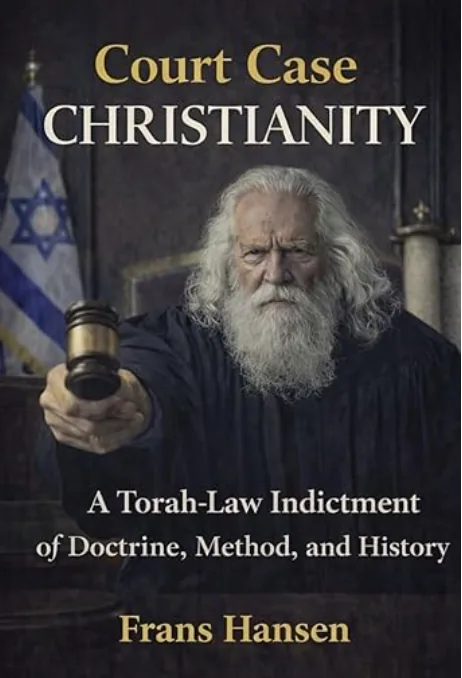
The landing page for “Who leaves God’s prior public revelation intact?” has done its job when the reader can see why Court Case Christianity: A Torah-Law Indictment of Doctrine, Method, and History—not a generic anti-Christian title—continues this exact problem across Doctrines, methods and historical claims tested under Torah categories.