
Evidence bridge
Who leaves Torah standing as Torah?
The reader wants a bounded verdict: what “Who leaves Torah standing as Torah?” establishes, what remains possible, and what it does not authorize, using Torah’s own descriptions of commandment, covenant duration, obedience, righteousness, repentance, and the Pauline passage under review.
What this article established
Who leaves Torah standing as Torah? That question is different from:
- Verified: Jesus traditions include strong Torah-affirming language.
- Verified: Paul’s letters introduce a Christ-centered account of Torah’s function, especially around justification and Gentile identity.
- Christian claim: this is fulfillment, not abolition.
- Torah-first question: where does Torah authorize a later Messiah to become the court that determines which covenant obligations have reached their end?
The question that still remains
If the evidence settles “Who leaves Torah standing as Torah?”, does Doctrines, methods and historical claims tested under Torah categories confirm the same conclusion once Torah’s own descriptions of commandment, covenant duration, obedience, righteousness is kept in control?
Why this book is the next step
Separate what the passage says, what it permits, and what a later reader adds. own / descriptions / commandment / covenant: the problem has moved from one Paul versus Moses ruling into the exact scope of Court Case Christianity: A Torah-Law Indictment of Doctrine, Method, and History. The concession survives; the extra inference keeps its own burden. Map the textual horizon without converting analogy into prediction. Re-read the original horizon with every concession left intact; keep the concrete markers duration, obedience, righteousness, leaves, standing visible.
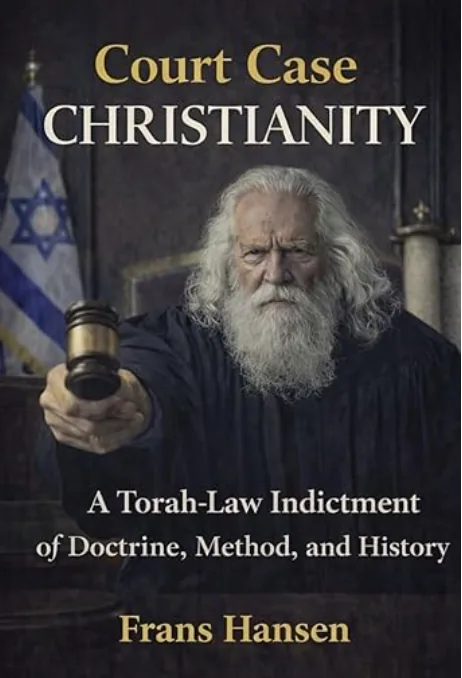
If the wider question after “Who leaves Torah standing as Torah?” is genuinely Can the larger claim still stand when Doctrines, methods and historical claims tested under Torah categories is tested with Torah’s own descriptions of commandment, covenant duration, obedience kept in control?, the next destination is Court Case Christianity: A Torah-Law Indictment of Doctrine, Method, and History, because its scope is Doctrines, methods and historical claims tested under Torah categories.