
Evidence bridge
Why is converting a Jew not merely changing beliefs, but dismantling Shabbat, mitzvot, calendar, marriage, burial, and covenant identity?
The reader wants to be able to explain “Why is converting a Jew not merely changing beliefs, but dismantling Shabbat, mitzvot, calendar, marriage, burial, and covenant identity?” from Torah’s covenant duties, prophet/worship tests, the concrete practices a convert is asked to abandon, and the evidence missionaries present without relying on denominational authority or counter-missionary slogans.
What this article established
For a Jew, covenant is embodied in commanded time, food, family, worship and communal life. A conversion that teaches a Jew to abandon Shabbat, mitzvot or Israel’s covenant obligations is therefore not merely an intellectual change. The exact practical damage varies by church and convert, and that distinction must remain explicit.
- Verified: Torah binds Israel to concrete covenant practices, including Shabbat and festival observance.
- Verified: conversion can alter how those practices are understood—from divine obligation to optional identity marker.
- Variable in practice: different Christian and Messianic communities preserve or abandon different Jewish customs.
- Unsupported as a universal statistic: every convert necessarily abandons every item listed in the source hook.
- Verified as a structural consequence: conversion is capable of changing worship, calendar, family, community and covenant identity—not merely one private belief.
The question that still remains
If the evidence settles “Why is converting a Jew not merely changing beliefs, but dismantling Shabbat, mitzvot, calendar, marriage, burial, and covenant identity?”, does Doctrines, methods and historical claims tested under Torah categories confirm the same conclusion once Torah’s covenant duties, prophet/worship tests, the concrete practices a convert is asked to abandon is kept in control?
Why this book is the next step
The reason for this book is structural, not topical coincidence: Why, converting, Jew, not opens into If the evidence settles “Why is converting a Jew not merely changing beliefs, but dismantling Shabbat, mitzvot, calendar, marriage, burial, and covenant identity?”, does Doctrines, methods and historical claims tested under Torah categories confirm the same conclusion once Torah’s covenant duties, prophet/worship tests, the concrete practices a convert is asked to abandon is kept in control? and the book is specifically organized around Doctrines, methods and historical claims tested under Torah categories. A broader title would dilute the Why / converting / Jew / not evidence family; a narrower article would not reach the cross-text question. The worked hinge that makes this assignment specific is Why / converting / Jew / not / merely.
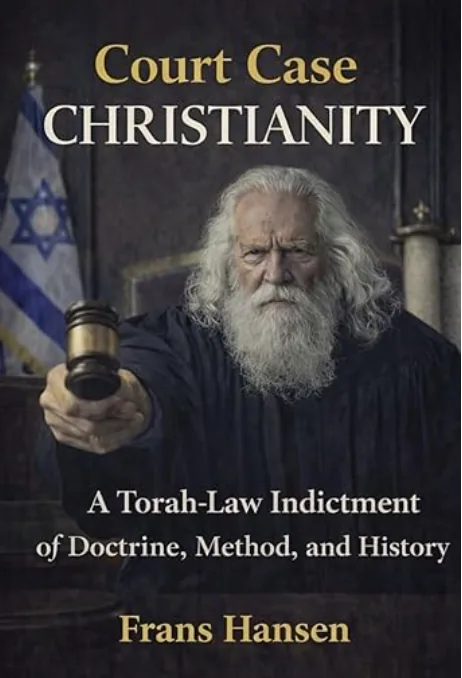
The landing page for “Why is converting a Jew not merely changing beliefs, but dismantling Shabbat, mitzvot, calendar, marriage, burial, and covenant identity?” has done its job when the reader can see why Court Case Christianity: A Torah-Law Indictment of Doctrine, Method, and History—not a generic anti-Christian title—continues this exact problem across Doctrines, methods and historical claims tested under Torah categories.